
India is underinvesting in the startups that could strengthen national security: Sai Pattabiram
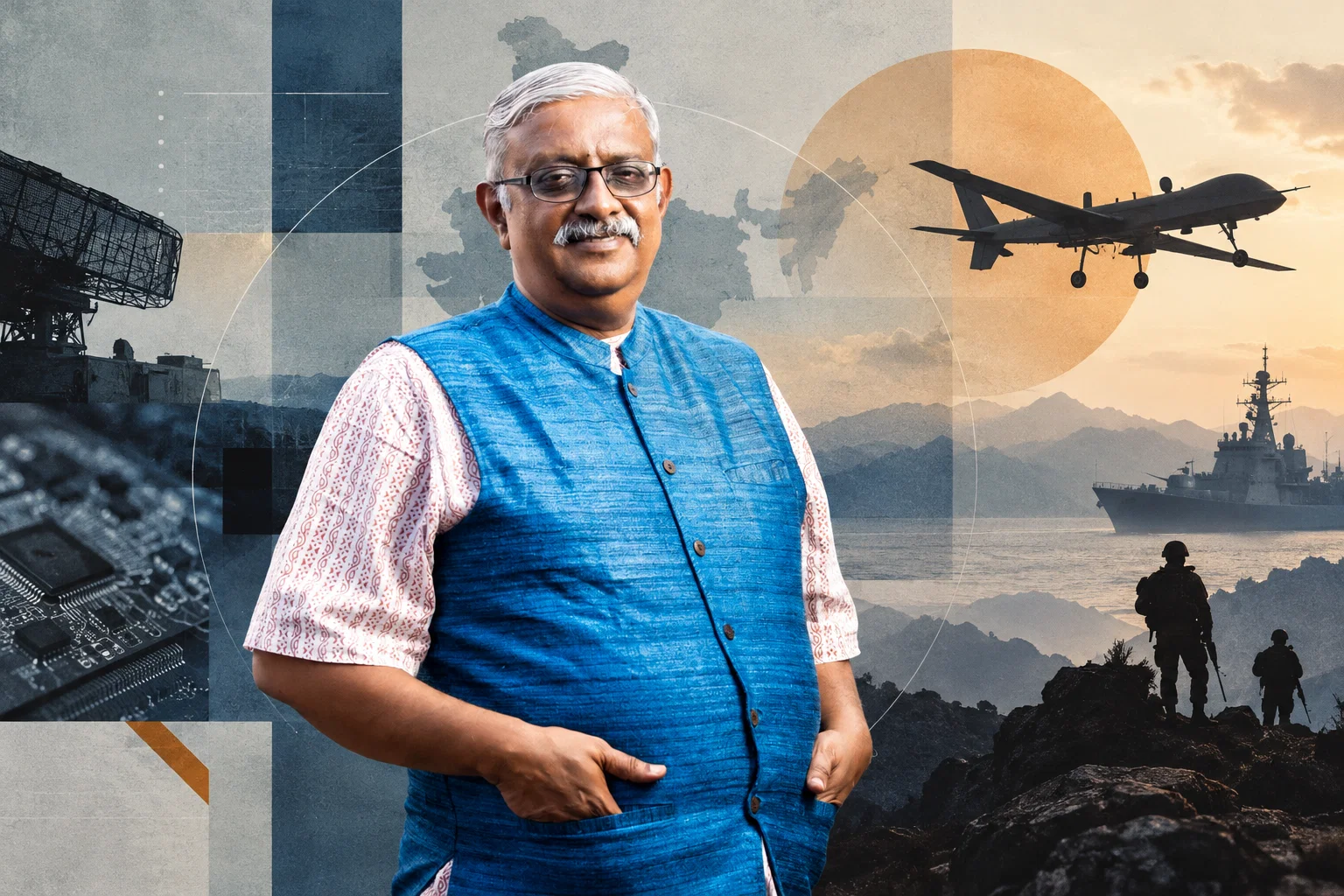
India's startup ecosystem has emerged as one of the world's largest, producing globally recognised companies across fintech, software and consumer technology. Yet defence and national security remain relatively underrepresented within the country's innovation landscape.
In a conversation with People Matters, Sai Pattabiram, Founder and Managing Director, ZUPPA Geo Navigation Technologies, examined why defence innovation continues to face structural barriers despite growing policy support. He discussed procurement reform, deep-tech funding, talent shortages and the ecosystem changes required to build globally competitive defence technology companies from India.
Why defence remains a difficult startup sector
According to Pattabiram, government initiatives such as iDEX, TDF, Make I, Make II and ANRF have expanded access to innovation funding. However, he believes commercialisation mechanisms have not evolved at the same pace.
"While programmes like IDEX, TDF, Make I, Make II and now ANRF have created multiple paths to fund innovation, the defence procurement process that's meant to commercialise that innovation hasn't kept pace."
He pointed to procurement requirements, licensing structures and capital-intensive eligibility conditions as factors making defence a challenging sector for young companies and investors.
"It still runs on outdated requirements, a Defence Industrial Licence, capital-intensive financial conditions that make procurement cycles long and opaque compared to commercial markets."
Pattabiram noted that security clearances, export controls and classification requirements create additional complexity for early-stage ventures.
"Defence simply doesn't have an established startup playbook in India yet."
He also highlighted the historical dominance of DRDO and defence public sector undertakings in research and development, which limited the emergence of entrepreneurial capability within the sector.
A structural gap between ambition and capacity
Asked whether India is producing enough defence-focused startups to meet future strategic requirements, Pattabiram's assessment was clear.
"Not yet, and the gap is structural."
He argued that India's investment ecosystem has traditionally prioritised rapid revenue growth and shorter commercial cycles, while defence technologies often require long development timelines and significant research investment.
"Our funding ecosystem inherited that DNA. It's built for rapid revenue scaling, minimal R&D led innovation, which simply isn't what the future of defence looks like going forward."
Pattabiram linked the challenge to India's broader security environment, including border tensions, maritime security requirements and evolving forms of warfare.
"India is clearly under-producing relative to its strategic requirements."
While acknowledging progress through iDEX-backed ventures, drone startups and counter-UAS companies, he said several critical technology domains continue to depend heavily on imports.
"These are categories that need seven-to-ten-year runways, and most Indian capital simply isn't structured for that kind of patience."
Why defence startups operate differently
Pattabiram described defence technology companies as fundamentally different from consumer technology and SaaS businesses.
"Almost everything about the go-to-market changes."
Unlike commercial startups serving large customer bases, defence ventures typically engage with a limited set of government buyers and face lengthy procurement cycles.
"Sales cycles run in years, not weeks or months."
He noted that investors often see few conventional growth signals during early stages, making capital deployment more complex.
"Your moat isn't virality or growth loops. It's trust, relationships and a track record with program managers."
At the same time, he believes technological convergence is narrowing some traditional barriers.
"Commercial-style hardware and software is now viable for defence use."
Referencing developments seen globally, Pattabiram said advances in drones, satellite imagery and commercial electronics have demonstrated the growing overlap between commercial and defence innovation.
"The narrowing applies to product development speed and technical approach. What's still wide open is the sales motion and capital structure."
His conclusion was straightforward.
"You can build like a startup, but you still can't sell like one."
Procurement is the critical growth lever
Throughout the discussion, procurement emerged as the central theme shaping the future of defence startups.
"Procurement is the primary lever."
Pattabiram argued that procurement, rather than funding alone, determines whether innovation converts into sustainable businesses.
"It's what turns startup technology into bookable revenue."
He advocated creating dedicated procurement pathways for startups rather than requiring them to compete directly with established defence contractors.
"The single biggest reform needed is separate procurement routes for startups versus primes."
According to Pattabiram, expanding eligibility criteria and creating faster startup-focused procurement tracks could improve commercial viability while maintaining safeguards for larger defence programmes.
"Long-term capital follows procurement, not the other way around."
He added that predictable processes are more important than policy announcements when it comes to building investor confidence.
"A startup-specific procurement track is really the hook that builds the revenue record patient capital needs."
Encouraging more founders to enter defence technology
Pattabiram believes several targeted interventions could attract more entrepreneurs and engineers into national security innovation.
Among the measures he identified:
He stressed the importance of visible success stories.
"Founders enter a sector when they see peers build something large and valuable in it."
Pattabiram also sees a broader narrative opportunity for the sector.
"Positioning defence innovation as mission-driven, technically demanding, nationally consequential work also matters."
Talent and ecosystem constraints remain significant
Beyond funding and procurement, Pattabiram identified several capability gaps limiting ecosystem growth.
"Embedded systems talent is in short supply, even though the future of defence tech runs on electronic hardware platforms carrying AI, ML, autonomy and mission-critical software."
He also pointed to operational challenges affecting startups after receiving initial support.
Key ecosystem challenges include:
"Founder mentorship is thin, simply because India has relatively few entrepreneurs who've successfully scaled a defence company."
He added that certification frameworks for autonomous systems and other emerging categories continue to create uncertainty for both startups and procurement agencies.
What success could look like by 2035
Looking ahead, Pattabiram outlined a vision of an ecosystem capable of producing globally competitive defence technology companies rather than focusing solely on import substitution.
"Success looks like a handful of Indian defence-tech companies operating at global scale and exporting."
He also called for the creation of specialised investment ecosystems comparable in scale to India's fintech funding landscape.
Perhaps most importantly, Pattabiram believes India needs a cultural shift in how defence innovation is perceived.
"Working on national security is seen as a top-tier career path for India's best engineers, not a fallback."
As India pursues self-reliance across strategic sectors, the next phase of defence innovation may depend less on generating ideas and more on building the systems capable of turning those ideas into scalable businesses. For Pattabiram, procurement reform, patient capital and ecosystem maturity will determine whether India's defence startup ambitions translate into long-term strategic capability.
Related Stories
 Technology
Tata Power, Ocean Sun Tie Up for Floating Solar Tech
9 minutes ago
 Technology
CSIRO Technology Honoured In New Australian Coin Series
1 hour ago
 Technology
Hyundai Chung Mong Koo Foundation supports climate
4 hours ago
 Technology
Pirate Life taps fixed
4 hours ago
 Technology
Zeiss to Highlight Ophthalmic Workflow Innovations, Technology Milestones at AAO
4 hours ago
 Technology
Trump awarding medals to Musk, Dell, Nadella and other tech execs at science summit
4 hours ago
 Technology
Margaret Hamilton, computing pioneer who led software development for the Apollo program, dies at 90
4 hours ago
 Technology
Optical Atomic Clock Tech Could Move From Lab to Consumers
5 hours ago