
Indian Democracy: Why Multi
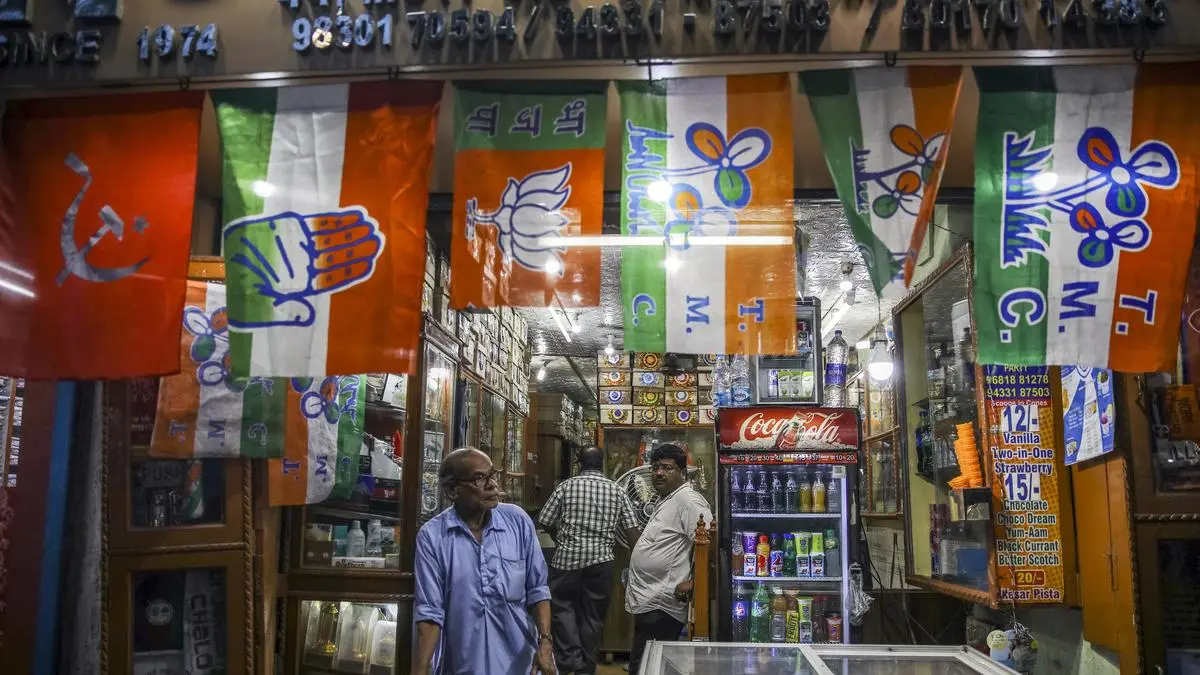
India is often described as the world’s largest democracy, but numbers alone do not explain the extraordinary complexity of Indian democracy. To understand India, one must begin with a simple truth: it is not a single political community or an idea. It is a coalition of groups, regions, histories, cultures, languages, and memories. Our democracy becomes stronger when this diversity finds political representation, and weaker when it is forced into a single political mould. This is why India’s multi-party system should not be regarded as an inconvenience, a sign of political fragmentation, or an obstacle to decisive governance. It is one of the most authentic expressions of the Indian democratic experience.
There is a persistent temptation in political discourse to imagine that a mature democracy should eventually become simpler: just two parties, clearer choices, stronger governments, and perhaps one dominant political narrative. Such an understanding may suit some political systems, but it is potentially damaging to the idea of India.
This pattern extends well beyond India. Across the democratic world, power has grown increasingly plural. Coalition governments have become the ordinary form of rule in much of Europe, where parties of differing creeds learn to govern through negotiation and mutual accommodation. Even in classically two-party systems such as the US and the UK, the parties themselves have become arenas of internal contest, with progressive caucuses, regional blocs, and insurgent factions pressing their claims for a more inclusive agenda from within.
Elsewhere, regional and identity-based parties have risen to hold decisive weight in national legislatures, carrying to the centre the concerns of provinces, languages, and communities that once spoke only at the margins. The common lesson holds across these systems: representation extends beyond any single victorious party, and government functions as a single voice within a much broader political community.
India was never built as a homogeneous political community because its unity has historically been negotiated, contested, and continuously renewed. The Constitution, instead of attempting to erase difference, created an institutional framework within which difference could coexist. The genius of Indian democracy lies precisely there.
From the beginning, there were multiple Indias: of villages and cities, peasants and workers, industrialists and small traders, linguistic communities and tribal societies, caste groups and religious minorities, regions with dramatically different histories and aspirations. There were competing visions of modernity, development, justice, freedom, and democracy that gave them a constitutional and political vocabulary.
Also Read | Dr Jekyll, Mr Hyde, and the constitutional state
Indeed, the freedom movement itself offers an important lesson. The Congress of the nationalist era was not a conventional political party in the contemporary sense. It was a broad coalition of ideological and social currents: moderates and radicals, constitutionalists and revolutionaries, socialists and conservatives, industrialists and workers, reformers and traditionalists. The freedom struggle succeeded because a sufficiently broad political space was created in which disagreement could coexist with a shared commitment to freedom, and that lesson remains relevant even today.
The emergence of a multi-party system after Independence was, in many ways, the natural consequence of India’s extraordinarily diverse social reality. As democracy deepened, communities that had long remained on the margins of political power began demanding a voice in shaping the political order. Regional aspirations grew more assertive, linguistic identities sought recognition, and backward classes, Dalits, tribal communities, minorities, farmers, workers, and new urban constituencies entered political negotiations with greater confidence. The political map of India consequently became more diverse as democracy began to reach those previously excluded from its centre.
Some observers interpreted this growing diversity as political fragmentation, but that interpretation overlooked a crucial distinction: fragmentation does not equal disintegration. Sometimes it is representation becoming more accurate, more closely aligned with a country’s changing social realities and political aspirations. A democracy as vast and heterogeneous as India was unlikely to remain permanently confined to a single political imagination. Its diversity was bound to find political expression, and the multi-party system became one of the principal instruments through which that expression could occur.
Prime Minister Narendra Modi shows a victory sign while posing for a group picture with Bihar Chief Minister Nitish Kumar, Telugu Desam Party chief N. Chandrababu Naidu, Defence Minister Rajnath Singh, BJP national president J.P. Nadda, Jana Sena Party chief Pawan Kalyan, Lok Janshakti Party (Ram Vilas) chief Chirag Paswan and other NDA leaders during a meeting, at his residence, in New Delhi on June 5, 2024. | Photo Credit: ANI
Indeed, the rise of regional and other smaller political parties strengthened the democratic compact by giving different sections of society a stake in the political process. The expansion of political representation allowed citizens to see themselves as part of a national political narrative and as active participants in defining what that narrative should mean.
A Parliament in which several parties sit is, in one sense, a political map of the country itself. A regional party may articulate an aspiration that a national party cannot adequately capture, and a smaller ideological party may keep alive an issue that larger formations would prefer to ignore. A party rooted in a social movement may bring into legislative debate experiences that would otherwise remain invisible. The multi-party system, therefore, performs a democratic function that cannot be reduced to electoral arithmetic. It tells citizens that there is more than one legitimate way of imagining the republic. This matters enormously in a country as large and unequal as India.
The concerns of a farmer in Punjab cannot always be identical to those of an industrial worker in Tamil Nadu, a tribal community in Jharkhand, a migrant from Bihar, a fisherman in Kerala, or a small entrepreneur in Gujarat. There may be common national interests, but there are also particular histories, identities, and anxieties. Democracy becomes meaningful when both are allowed to express themselves politically. Federalism, therefore, is not merely an administrative arrangement but a political recognition of India’s plurality. This is why regional parties deserve to be understood differently from the way they are often portrayed. They are routinely dismissed as narrow, parochial, or merely transactional. Regional parties, like national parties, must be judged critically; however, their historical significance cannot be dismissed.
Many regional parties emerged because national political formations failed to adequately acknowledge regional aspirations. Their rise was, in considerable measure, a democratic correction, and collectively they reminded New Delhi that India does not end at the borders of the national capital.
Coalition governments at the Centre, whatever their shortcomings, have repeatedly demonstrated this principle. They compel national parties to negotiate with regions, communities, and other political formations, making consultation unavoidable. There is a deeper democratic virtue in that, because power that must negotiate is different from power that believes it possesses a monopoly on legitimacy.
Coalition politics can certainly be messy at times, and governments can be unstable. Bargaining can also become transactional, and constituent parties can disagree over ministerial positions, policies, and priorities, but democracy is not a contest of efficiency. A democracy is a political system designed to make power answerable to those over whom it is exercised. This distinction is increasingly important in an age when political efficiency is sometimes presented as the highest democratic virtue. The fastest decision-making government is not necessarily the most democratic government. A government that can make decisions without consultation may appear strong, but the absence of negotiation can also mean the absence of accountability.
The real threat to democracy is the belief that disagreement itself is illegitimate. A healthy democracy requires institutions in which competing claims can meet without one side being required to disappear. Parliament should be such a place, and elections should support such a process. The federal structure should be an arrangement in which the multi-party system provides the political architecture for precisely this contestation.
Also Read | The architecture of democratic memory
There is another distinction that deserves far greater attention, and one that I have been making for a long time: the difference between majority rule and majoritarianism. A majority is, ultimately, a numerical fact produced by an election. It confers upon a political party the democratic mandate to form and govern. Majoritarianism, however, is something altogether different. It is a political philosophy that can turn numerical strength into a claim of cultural, moral, or even national superiority. Democracy accepts the first; it must remain perpetually vigilant against the second. An electoral majority gives a government the authority to govern; it does not give it the authority to define the nation. Winning an election cannot confer ownership of the country, because a government may speak in the name of the people, but it can never legitimately claim to speak as though it were the nation itself.
Prime Minister Manmohan Singh, United Progressive Alliance (UPA) chairperson Sonia Gandhi, founding president of Rashtriya Janata Dal (RJD) Lalu Prasad Yadav, and founding president of Nationalist Congress Party (NCP) Sharad Pawar in New Delhi on May 22, 2008. | Photo Credit: Rajeev Bhatt
This distinction matters especially in a diverse democracy such as India. Those who voted for other parties remain equally citizens and equally important stakeholders. Their rights stay whole regardless of which party won the election; constitutional citizenship rests on the Constitution alone, independent of electoral outcomes. The opposition, minorities, dissenters, and critics of the government belong fully within the national community. The nation, therefore, is always larger than the government—larger than any government of the present, as it was larger than every government of the past and will remain larger than every government of the future. Governments are temporary custodians of power; the nation is a continuing constitutional community.
That is why democracy is not reducible to the arithmetic of elections. Elections determine who governs, but constitutionalism determines how they govern. And democracy survives only when electoral majorities understand that their mandate is a responsibility to the whole nation, not a licence to subordinate those who happen to be in the minority. This is why the opposition is one of its institutions: regional parties are participants in the national conversation, and they do represent citizens whose concerns would otherwise remain unheard.
Consequently, the health of Indian democracy depends on asking whether elections offer meaningful political choice; whether opposition parties can function freely; whether regional aspirations receive institutional respect; whether Parliament permits disagreement; and whether citizens can organise politically without being treated as enemies of the nation. India’s constitutional architecture anticipated this plurality: the Constitution does not ask Indians to become identical before becoming equal. It promises equality while recognising difference. Its vision of fraternity is one in which citizens remain different yet belong to the same republic. This may be the most remarkable feature of the Indian experiment: unity without uniformity.
The challenge before contemporary India, therefore, is not to eliminate political diversity but to relearn how to live with it and, more importantly, to recognise that diversity is not a problem to be solved but a democratic reality to be accommodated. A democracy in which one party permanently dominates the political landscape and gradually comes to dominate every institution may appear orderly, efficient, and stable. But history offers substantial evidence that order without contestation can easily become political stagnation. Authoritarianism can begin to acquire the appearance of normalcy if dissent is treated as disruption, opposition as obstruction, and institutional independence as an inconvenience.
A multi-party democracy, by contrast, can sometimes look untidy as several parties compete, disagree, negotiate, criticise, and, when circumstances demand, cooperate. Governments may have to listen to voices they would rather ignore; legislation may require persuasion rather than mere numbers; and political consensus may have to be built rather than announced. To those accustomed to equating political efficiency with political uniformity, this may appear chaotic. But perhaps that is precisely the point: democratic disagreement is the sound of a living society arguing with itself. India’s diversity is far from being silent, nor should it be.
Its democracy must have room for competing aspirations, conflicting histories, different regions, social movements, and alternative visions of the future. The task is to ensure that it remains constitutional, peaceful, and inclusive. A democracy does not become stronger when everyone agrees; it becomes stronger when disagreement can coexist with fraternity, and when political competition does not become a struggle over who gets to belong to the nation.
India should resist the idea that democratic maturity requires the disappearance of political diversity. On the contrary, democratic maturity may mean becoming comfortable with disagreement. It needs the constitutional confidence to protect many cultures. And it certainly does not need one political party to speak in the name of the entire nation. The multi-party system gave social diversity a chance to become political representation, with equal rights to speak on behalf of the nation.
This is why the multi-party system, instead of being viewed as a weakness of Indian democracy, should be understood as one of the ways India becomes visible to itself. When many parties sit across the aisle, we see the many Indias that constitute India in one frame. In regional voices entering national politics, the republic hears itself more clearly. India is, and has always been, a coalition, and the task of democracy is to make this coalition work well.
Manoj Kumar Jha is a Member of Parliament (Rajya Sabha) representing the Rashtriya Janata Dal.
Related Stories
 India
India
Starlink, Ambani’s venture should get equal treatment, let consumers decide: Shashi Tharoor
1 day ago
 India
India
Lawrence Bishnoi’s rise: Student politics, first murder and a sprawling crime network | India News
1 day ago
 India
India
India’s finance minister says market liquidity makes it easier for investors to exit
1 day ago
 India
India
India news: CJP alleges 'deliberate' delay in leaders' release
1 day ago
 India
India
Indian Diaspora Holds Pro-Modi Counter
1 day ago
 India
India
Clashes Erupt in London as Diaspora Divided Over India's Election Chief and Electoral Roll Controversy
1 day ago
 India
India
London: Indian diaspora rallies in support of PM Modi, criticises CJP protesters
1 day ago
 India
India
Cabinet Approves Go
1 day ago