
Indonesia’s ‘Ring of Fire’: Key facts about the world's most volcanic nation
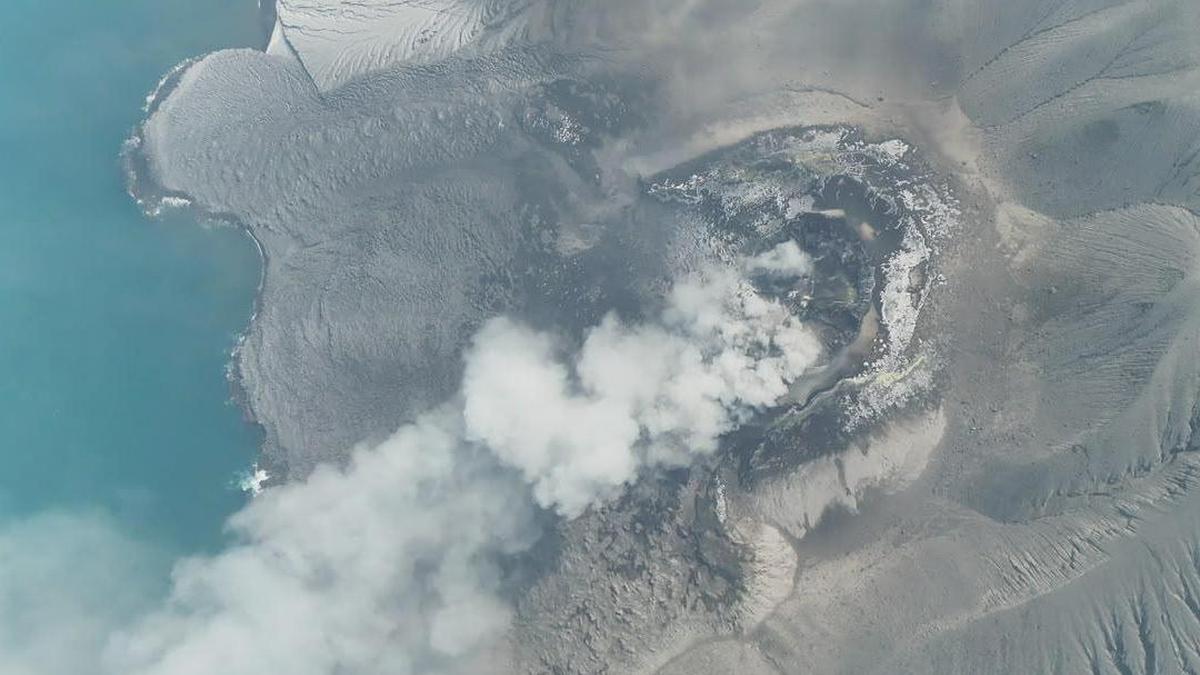
The latest eruptions of Indonesia’s Mount Anak Krakatau disrupted air travel, affecting more than 270,000 people, and underscored the threat posed by the Southeast Asian country’s more than 100 active volcanoes — the highest number of any country in the world.
Here are key facts about volcanoes in Indonesia, a sprawling archipelago of over 17,000 islands that sits on the Pacific “Ring of Fire”, resulting in frequent volcanic eruptions and earthquakes:
Indonesia has 500 volcanoes, 127 of which are active, according to the country’s volcanology agency.
Of those active volcanoes, the agency closely monitors 69, through a network of 74 observation points.
According to the Washington-based Smithsonian Institution’s Global Volcanism Program, Indonesia is followed by the United States and Japan with the most active volcanoes.
Five of Indonesia’s active volcanoes are currently at the second-highest alert status, including Mount Anak Krakatau, Mount Lewotobi Laki-laki in East Nusa Tenggara, Mount Merapi in Yogyakarta, Mount Semeru in East Java, and Mount Sinabung in North Sumatra.
None of the volcanoes are at the highest-level status.
The recent series of Anak Krakatau’s eruptions was the most severe in terms of the spread of ash emissions. It spewed volcanic ash as high as 50,000 feet (15,240 metres), which spread as far as 400 kilometres (250 miles) on one side, also hitting the capital, Jakarta, which is about 150 km away.
The latest eruptions have had the greatest impact on Indonesia’s largest airport, Soekarno-Hatta, located on the outskirts of Jakarta, in recent years. In 2008, floods forced the airport to close for several hours.
In terms of fatalities, the volcano’s 2018 eruption triggered a tsunami that killed more than 400 people on the islands of Java and Sumatra, making it the deadliest volcanic disaster in Indonesia in recent years. No deaths have been reported from the latest eruptions.
Anak Krakatau’s predecessor, Krakatau, was destroyed by massive eruptions in 1883, which triggered tsunamis that killed more than 36,000 people.
Mount Semeru also erupted on Sunday (September 5, 2026), sending ash about 1 km above its summit. The eruption caused no evacuations or flight disruptions.
Related Stories
 World
World
Hungary expels 10 Russian diplomats
28 minutes ago
 World
World
Why Nepal is demanding climate justice and compensation after deadly floods
29 minutes ago
 World
World
New map could reshape the way you see the world
4 hours ago
 World
World
Trump claims firefighters carried him away from Ground Zero right after 9/11
4 hours ago
 World
World
New Yorkers were 'lied' to about toxic air after 9/11 attacks, says Mamdani
5 hours ago
 World
World
EU blasts Serbia, which wants to join the bloc, over 'shocking' funeral for war criminal Mladic
5 hours ago
 World
World
U.S. family missing after small plane flying from Bahamas to Miami vanishes
5 hours ago
 World
World
Singapore boosts PM’s salary by $1m amid major pay rise for ministers
6 hours ago