
Iran defiant in face of new U.S. sanctions, promises to respond forcefully
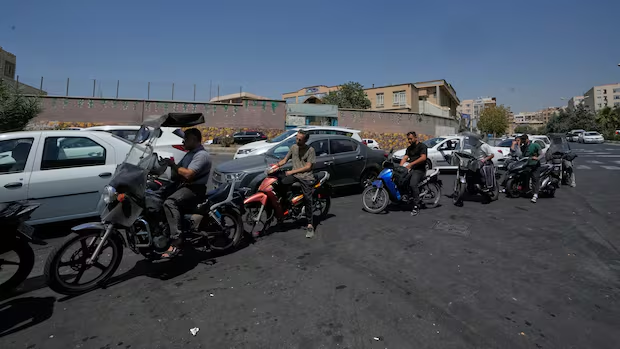
Iran defiant in face of new U.S. sanctions, promises to respond forcefully
U.S. Treasury Secretary Scott Bessent unveiled new sanctions Monday, but many details remain unclear
U.S. threatens to block all revenue to Iran
Iran pledged to fight back against expanded U.S. sanctions aimed at isolating its economy, expressing confidence that major trading partners would resist Washington's pressure campaign.
Almost six months into a conflict the U.S. has struggled to resolve, Treasury Secretary Scott Bessent unveiled the measures on Monday, but stopped short of the most punishing sanctions.
Iran has spent decades under layers of U.S. and international sanctions that have battered its economy but have not deterred its leadership.
Iran threatened both a possible military response and further reduction in oil exports from the Gulf in retaliation for any U.S. economic measures. After they were unveiled, Iranian Economy Minister Ali Madanizadeh said that Iran was prepared.
"Our defence is no longer so defensive; the enemies should wait for an attack," he told state television. Neither China nor Russia had "accepted" the U.S. measures, he added, predicting that other countries would resist them.
Trump administration expands U.S. sanctions on Iran targeting countries with business ties to Tehran
Brig.-Gen. Hossein Mohebbi, a spokesperson for Iran's Islamic Revolutionary Guard Corps, vowed heavy blows to U.S. vital interests and energy chokepoints if Iran's infrastructure is threatened, Press TV reported.
Bessent made the announcement as Iran's rial hit a record low. The currency had already been under pressure before the outbreak of war, as Iran faced double-digit inflation and negative growth.
Iranians find daily staples increasingly unaffordable. Since the war began, rice is up some 60 per cent and beef prices are more than 150 per cent higher. The International Monetary Fund forecasts that gross domestic product will contract more than five per cent.
Ahead of the announcement, Trump posted on social media that "IRAN IS COMPLETELY COLLAPSING!!!"
It was a far cry from his message in January, when protesters took to the streets across Iran to demonstrate against corruption and economic conditions. Trump posted at the time that "help is on its way," and six weeks later, at the outbreak of war, told Iranians the government "will be yours to take" after the U.S. finished its military operation.
China says it's compliant with international law
Iran and the United States signed an interim deal in June aimed at ending the war that began with U.S. and Israeli attacks on Iran on Feb. 28. But it quickly faltered and Iran resumed attacks that have blocked most energy exports from the Gulf.
While Bessent said countries that continued trading with Iran risked being forced out of the dollar-based financial system, he declined to give a timeline or identify which may be targeted, saying he would give them time to comply with the new directive.
"Why would I want to blow up the global financial system?" he said when asked why the measures had not gone further.
The Treasury Department did announce new sanctions on 60 individuals, entities and vessels, but the list did not feature any of the Chinese financial institutions suspected of facilitating Iran's oil trade.
"We want to make clear here today that no one is above the reach of U.S. sanctions," Bessent said in response to a question about Chinese banks.
China has been the biggest buyer of Iranian oil for several years, although the U.S. blockade of Iran's ports has cut Iranian oil flows to China since Washington renewed it in mid-July.
Experts say Washington is wary of Chinese retaliation for any sanctions on its banks ahead of expected talks next month between President Donald Trump and Chinese President Xi Jinping, with any curbs on China's exports of critical minerals especially sensitive.
China said on Tuesday that its co-operation with Iran is conducted within the framework of international law and should not be interfered with or disrupted.
No sign of Hormuz impasse ending
Oil prices fell for a second day as traders brushed off the impact of the sanctions, although market participants remained wary of Iran's continued ability to disrupt shipping.
An oil tanker was struck on Tuesday by an unidentified projectile and disabled about nine nautical miles (17 km) northeast of Oman's Ash Shishah, which lies at the entrance to the Strait of Hormuz, the United Kingdom Maritime Trade Operations said.
Oil transits through the Strait of Hormuz were at five million barrels per day on Monday, provisional tracking from shiptracker Vortexa showed, down from more than 20 million per day before the war, or about one of every five barrels consumed worldwide.
$30K US dead or alive: Iran's new bounty on U.S. soldiers | About That
Despite no major strikes by either side in a few weeks, there is little sign of a diplomatic solution.
Iran is still able to attack Gulf neighbours and threaten oil tankers. The exact state of its nuclear program, which the U.S. and Israel aim to wipe out, remains unknown.
Trump threatens to bomb Oman if it 'gets in the way' with Iran
U.S. signals it can keep up naval blockade indefinitely, increase economic pressure on Iran
Mediator Pakistan made "significant progress" in the latest talks with Tehran that focused on preventing further escalation and the reopening of the Strait of Hormuz, the Pakistani military said on Tuesday.
"We had a very constructive exchange," Pakistani Interior Minister Mohsin Naqvi, who accompanied army chief Asim Munir to Tehran, said on X.
An official at the Iranian president's office, Mehdi Tabatabaei, said on X that Munir's visit to Iran "yielded highly valuable diplomatic achievements, the results of which will soon be revealed."
Thousands of people have died in the conflict, most of them in Iran and Lebanon, while much of Iran's conventional military capacity has been degraded, its economy is struggling and then-supreme leader Ayatollah Ali Khamenei was killed. His son, Mojtaba, was appointed as a successor but has not made a public appearance after reportedly being injured in the U.S. and Israeli airstrikes.
Related Stories
 Business
Robot factories and hypersonic missiles: JPMorgan Chase’s first $5 billion of defense investments
2 days ago
 Business
Police say a car has hit an Australian lawmaker, critically injuring her; the driver was arrested
2 days ago
 Business
Boomi acquires Israeli startup Elementary for $43 million
2 days ago
 Business
Mega chicken farm expansion plan withdrawn
2 days ago
 Business
Data Breach at Hankyu Hanshin Department Store Common ID System Affects Nearly All 1.26 Million Members
2 days ago
 Business
Global Startup EXPO and Nippon Startup Awards 2026: METI Showcases Japan's Deep
2 days ago
 Business
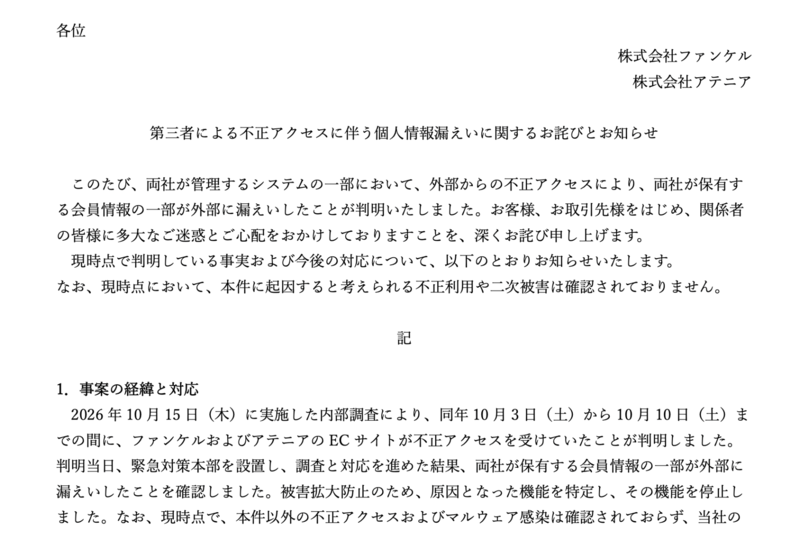
FANCL and Attenir Suffer Data Breach Affecting 780,000 Customers, Exposing Addresses, Names, Phone Numbers
2 days ago
 Business
DeepSeek Quietly Ships V4.1-Flash
2 days ago