
Iran Integrates Artificial Intelligence into Air Defense Systems -
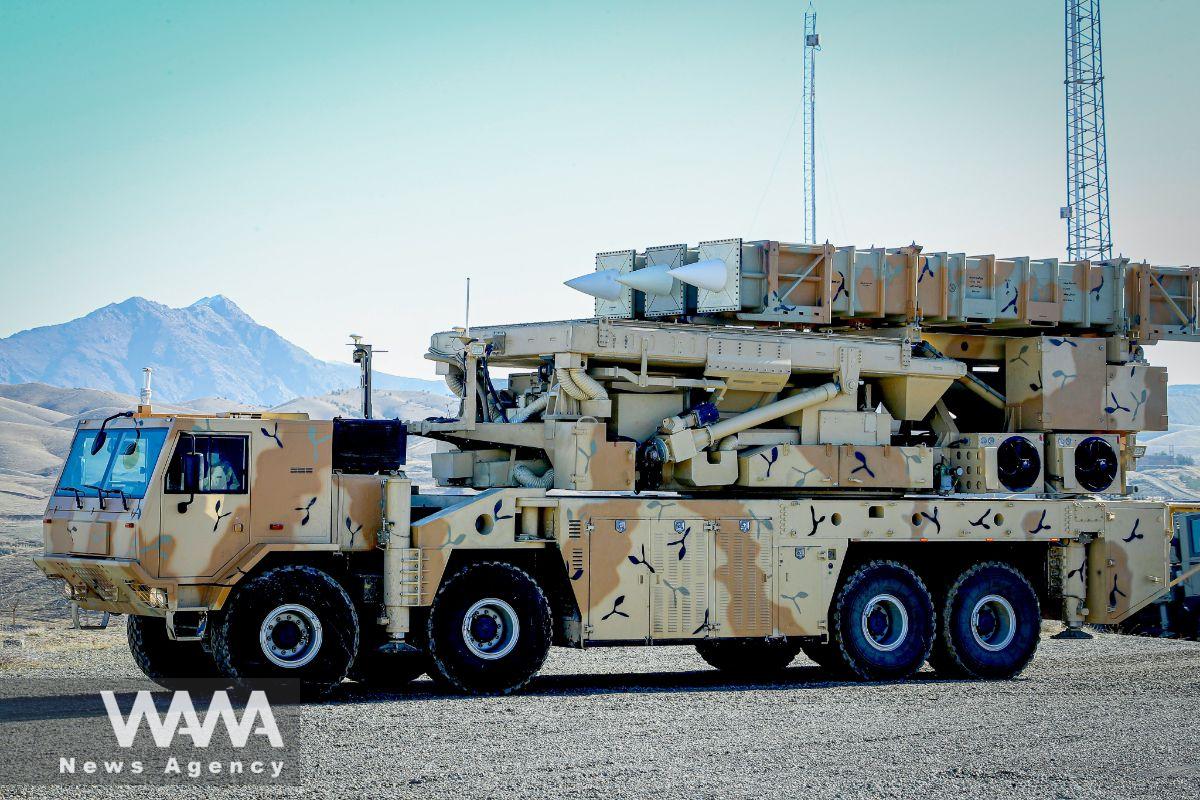
Iran Integrates Artificial Intelligence into Air Defense Systems
WANA (Sep 01) – Iran is actively equipping its domestic air defense networks with artificial intelligence to accelerate command-and-control operations and boost target precision, according to a senior military commander.
Brigadier General Ali Haddadi-Samani, Deputy Chief of Operations for the Khatam al-Anbiya Air Defense Headquarters, confirmed in a live television interview that AI technology is being deployed across native defense platforms to assist operators and speed up detection, analysis, and engagement cycles.
He noted that while AI offers significant tactical advantages by streamlining the observe-orient-decide-act loop, its implementation requires careful oversight to prevent structural vulnerabilities.
Advanced Threat Engagements and Operational Outcomes
Addressing recent military engagements, the official detailed several operational outcomes against opposing forces. Iranian air defenses downed a U.S. MQ-9 Reaper drone, with official statistics pending final debris recovery and documentation.
Defense networks also confronted high-tier U.S. and Israeli air assets, downing an American aerial refueling tanker, targeting a U.S. A-10 aircraft in the Persian Gulf, and intercepting C-130 transports attempting deep penetration into Iranian airspace.
Tactical Decoys and Airspace Management
Tactical decoys and passive measures played a critical role during the conflict, with effective deception operations drawing enemy fire toward non-operational targets, including one mock setup that was struck more than 20 times.
Alongside combat operations, defense controllers simultaneously managed safe transit corridors, evacuating roughly 80 commercial aircraft from Tehran’s Mehrabad Airport to secure facilities without incident during the first 48 hours of hostilities.
Network Resilience Against Cyber Operations
Despite face-to-face hybrid warfare involving simultaneous strikes from ballistic missiles, cruise missiles, loitering munitions, and cyberattacks, electronic operations failed to disrupt the integrated defense network.
Through centralized command and distributed execution, the system adapted quickly, reducing the time required to clear and secure national airspace down to roughly two hours in subsequent actions.
Full Reliance on Domestic Production
Built under decades of international trade restrictions, Iran’s entire air defense infrastructure—from passive and active radar detection to engagement platforms—remains completely self-reliant.
Samani highlighted that even strategic partner nations did not supply air defense equipment during recent hostilities, forcing Iranian engineers and research institutions to design, manufacture, repair, and maintain all combat-proven systems entirely within the country.
Related Stories
 AI News
Bill Gross bets AI can help mass
2 days ago
 AI News
Nigeria records 93% rise in AI micro
2 days ago
 AI News
The Italian gelato maker using AI to invent new flavours
2 days ago
 AI News
Closing the Gap Between Agentic CX Pilots and Production
2 days ago
 AI News
New Brunswick data centre debate highlights cross
2 days ago
 AI News
How to Structure an AI Agent Referral Fee Agreement Between Startups
2 days ago
 AI News
No, AI didn’t delete a Swedish reality TV series
2 days ago
 AI News
There is no AI in Armageddon. Artificial intelligence is a tool, not an apocalypse
2 days ago