
Iran says Strait of Hormuz will be closed over Israel attacks on Lebanon
Iran says Strait of Hormuz will be closed over Israel attacks on Lebanon
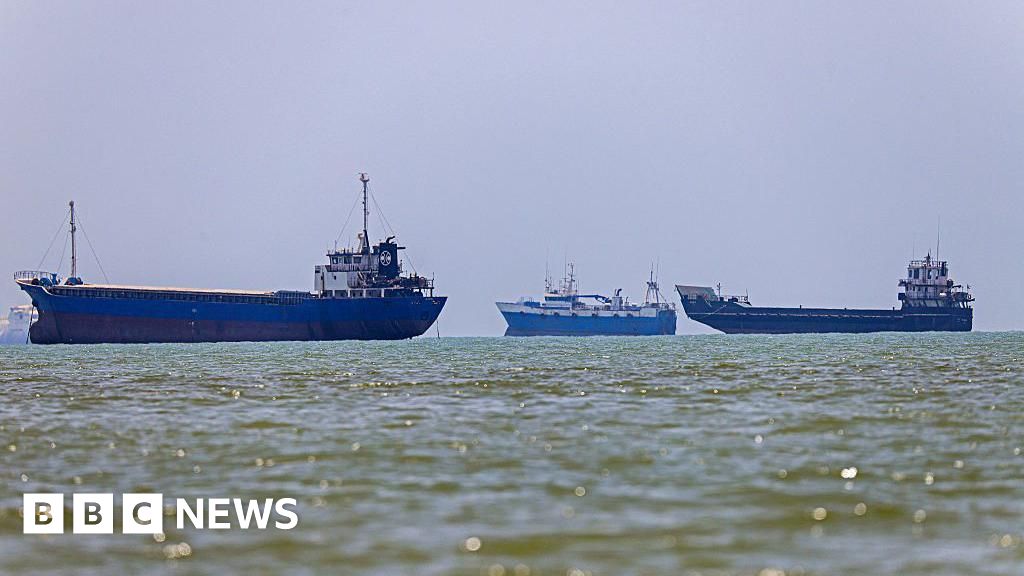
The Iranian military says it has closed the Strait of Hormuz again over Israel's attacks on southern Lebanon.
Iran said Israel's strikes in Lebanon are a breach of Tehran's agreement with the US to end the war.
"Do not approach the Strait of Hormuz; otherwise, your security will be jeopardised," Iran's Revolutionary Guard Corps Navy said.
The US-Iran deal includes the reopening of the Strait of Hormuz - a shipping channel through which about 20% of the world's oil and liquefied natural gas passes.
After Iran's statement, US Central Command (Centcom) said safe passage through the strait "remained intact" and commercial ship traffic had increased on Saturday, with 55 merchant ships transiting.
It was not clear whether Centcom was referring to marine traffic before or after Tehran's announcement.
The Iranian military accused the US of violating the US-Iran deal by not implementing the first clause of their 14-point memorandum of understanding, which agrees to "the immediate and permanent termination of military operations on all fronts, including in Lebanon".
At least 20 people have reportedly been killed by Israeli airstrikes on southern Lebanon, less than 24 hours after a new ceasefire between Israel and Hezbollah was announced. Lebanon's health ministry said 4,057 people have been killed since the re-start of conflict between Israel and Hezbollah on 2 March.
Iran's top joint military command cited what it called Israel's "continuous and relentless violation of the ceasefire in southern Lebanon" in a statement on state TV as the reason for re-closing the strait.
"It is noted that this first step is a response to the enemy's breach of promise, and if the aggression continues, further steps will be planned and taken to force the enemy to comply with its obligations."
The move comes days after the US and Iranian presidents signed an initial agreement aiming to end the war, including in Lebanon, with immediate effect. It includes a commitment to further talks to reach a final deal over the next 60 days.
At the time, Israeli officials said then they had no intention of withdrawing their forces from Lebanon and insisted the conflict with the Iran-backed group Hezbollah was separate from the war on Iran.
The Israeli military confirmed a ceasefire between Israel and Hezbollah went into effect at 16:00 local time (14:00 BST) on Friday, but later a spokesman said its forces would "continue to remove immediate threats".
Israel and Hezbollah have since accused each other of repeatedly violating Friday's ceasefire.
On Saturday the Israeli military said it had struck "dozens" of targets from Hezbollah, after it said the Iran-backed group fired more than 50 projectiles at Israeli forces in the region.
An Israeli strike killed a family of four in the town of Barich, Lebanese state media reported.
Israel's military also said an Israeli soldier was killed in battle in southern Lebanon on Saturday.
Hezbollah meanwhile said Israeli attacks in Lebanon were an attempt to "sabotage" the broader US-Iran deal.
The US government has criticised Israel's ongoing operations in Lebanon, which was drawn into the war when Hezbollah launched rockets into Israel in retaliation for US-Israeli strikes that killed Iran's supreme leader.
Washington has voiced fears that the continuing tensions between Israel and Lebanon could undermine the Iran peace deal.
Minutes before Tehran announced the latest closure of the Strait of Hormuz, US Vice-President JD Vance had said he expected to travel to Switzerland in the coming days for talks with Iran.
Iran's foreign ministry spokesman Esmail Baghaei said his country's attendance at talks in Switzerland will be aimed at "demanding that the other side fulfil its commitments".
Iran effectively blocked the Strait of Hormuz after the US and Israel attacked the country on 28 February - sending shockwaves through global energy markets.
The strait is deep enough for the world's biggest crude oil tankers, and is used by major Middle Eastern oil and liquefied natural gas producers, as well as their customers.
In 2025, about 20 million barrels of oil and oil products passed through the strait per day, according to estimates from the US Energy Information Administration. That is nearly $600bn (£447bn) worth of energy trade per year.
Related Stories
 World
World
The Latest: Isaias weakens after making landfall as Category 2 hurricane
41 minutes ago
 World
World
Isaias leaves trail of damage as it moves inland, in photos
41 minutes ago
 World
World
Hundreds of doctors demand World Medical Association suspend Israel
41 minutes ago
 World
World
Attack on Saudi airport killed 12 and wounded more than 300: authorities
42 minutes ago
 World
World
Shooting leaves 9 dead including suspect in Erie, Pennsylvania, police say
1 hour ago
 World
World
The Latest: Isaias dishes out heavy rain and strong wind gusts as it moves into northern Alabama
1 hour ago
 World
World
The 'untapped potential' of Welsh folklore in gaming
1 hour ago
 World
World
'Time for Ukraine to get a new president', says Trump
2 hours ago