
Jobs Artificial Intelligence Will Not Be Able to Replace for Now
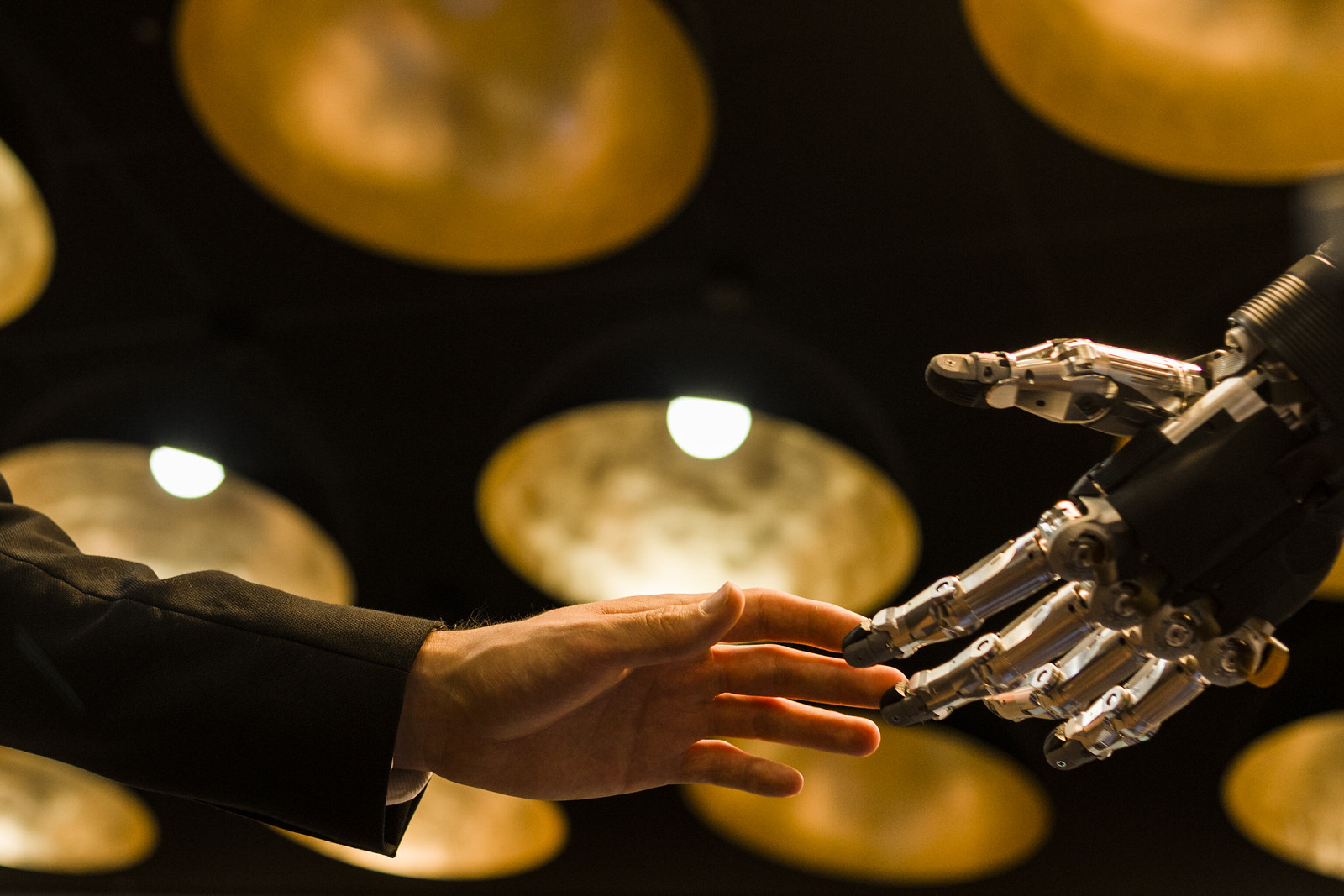
Artificial intelligence is transforming the labor market at a pace that would have seemed unlikely just a few years ago. Tools capable of writing texts, analyzing large volumes of information, generating images, programming software, and answering questions are changing how companies and workers perform numerous tasks. However, the fact that a technology can carry out an activity does not necessarily mean it is ready to completely replace the person who performs it.
The debate over the future of employment often focuses on which professions could disappear, but an equally important question is which jobs will continue to require human abilities that are difficult to automate. In many cases, the difference lies in factors such as empathy, trust, responsibility, improvisation, and physical interaction with other people.
For now, jobs that combine several of these characteristics present greater challenges for complete automation. This does not mean they are unaffected by artificial intelligence. On the contrary, many are already incorporating digital tools to reduce administrative work, improve diagnoses, organize information, or increase productivity.
Professions that depend on human interaction and that AI cannot replace yet
Jobs involving the care of other people are among those facing the greatest barriers to complete automation. Nurses, caregivers, therapists, and social workers do not simply perform procedures; they must interpret emotions, establish relationships of trust, and respond to situations that can change rapidly.
In nursing, for example, an artificial intelligence tool can help review clinical information or identify patterns in certain types of data. However, caring for a patient also involves physical contact, direct observation, and the ability to respond to unexpected circumstances. Technology can serve as a valuable support, but it cannot easily replace the human dimension of care.
Education presents a similar challenge. An AI system can explain a mathematical formula, create personalized exercises, or provide information about a particular subject. A teacher, however, must understand the individual needs of students, recognize when someone is frustrated, motivate those who are struggling, and adapt the dynamics of a classroom.
Trust is also essential in professions such as psychology, mediation, and certain areas of counseling. Although AI can help people organize their thoughts or provide general information, decisions involving complex personal situations require an understanding of context and professional responsibility.
Jobs that require physical presence and improvisation
Another group facing significant difficulties when it comes to replacement consists of workers whose jobs require constant movement, handling physical objects, and operating in environments that are not completely controlled.
Plumbers, electricians, maintenance technicians, mechanics, and construction workers encounter different situations every day. A repair may require identifying an unexpected problem, working in a confined space, or changing the procedure because of the conditions at a particular location.
Robots can perform certain physical tasks with considerable precision, especially in factories designed around repetitive processes. However, transferring that same level of automation to homes, older buildings, streets, or facilities with different characteristics is considerably more complicated.
Emergency workers also depend heavily on the ability to adapt. Firefighters, paramedics, and rescue teams must make rapid decisions in unpredictable environments, where information may be incomplete, and conditions can change within seconds.
In these situations, artificial intelligence could provide maps, analyze images, identify potential risks, or help prioritize resources. The final decision, however, may still depend on people capable of interpreting their surroundings and taking responsibility for their actions.
Professions where creativity and judgment play a central role
Artificial intelligence can already generate songs, photographs, illustrations, scripts, and written content within seconds. This has caused a particularly visible transformation across creative industries. However, generating content is not necessarily the same as having an artistic vision of one’s own.
Film directors, artists, designers, writers, and advertising creatives continue to contribute elements based on personal experiences, cultural references, and subjective decisions. AI can produce hundreds of alternatives, but determining which one has meaning for a specific audience requires context and judgment.
Human creativity is also connected to the ability to ask new questions. A tool can produce answers based on existing patterns, while a person can decide to break those patterns and develop an unexpected concept.
This does not mean creative professionals are protected from technological change. Many of their tasks can already be partially automated. The trend is more likely to involve a transformation of their responsibilities than the immediate disappearance of these professions.
Jobs where trust and responsibility are essential
There are also occupations in which people need more than a technically correct answer. Lawyers, doctors, financial advisers, and other professionals make decisions that can have significant consequences for their clients.
AI can analyze legal documents, detect anomalies in financial information, or assist in reviewing medical records. However, when a decision directly affects a person’s life, assets, or rights, professional responsibility becomes particularly important.
A client may need to know who is accountable for a recommendation and may need to explain circumstances that do not appear in a database. This relationship of responsibility is one of the factors that makes it difficult for a technological tool to completely replace a professional.
Furthermore, AI systems can make mistakes or generate inaccurate information. For that reason, high-impact sectors require people who can verify results, question recommendations, and make decisions when those choices carry real-world consequences.
AI is more likely to change many jobs before replacing them
For many industries, the most likely scenario is not the immediate replacement of workers but a transformation of their responsibilities. Repetitive and predictable tasks have greater potential for automation, while activities requiring judgment, human interaction, creativity, or adaptability are more likely to remain under human supervision.
The difference will depend, to a large extent, on who learns to work with these tools without completely delegating their own abilities. Artificial intelligence can increase a professional’s productivity, but it can also become a problem if it eliminates the need to think, verify information, and make decisions independently.
For now, the jobs most resistant to full automation are those in which being human is not simply an advantage but an essential part of the work itself.
See all the latest news from Colombia and the world at ColombiaOne.com. Contact our newsroom to report an update or send your story, photos and videos. Follow ColombiaOne on Google News, Facebook, Instagram, TikTok and subscribe here to our newsletter.
Related Stories
 AI News
AI agents force cyber insurers to rethink what counts as an attack: report
18 minutes ago
 AI News
Pennsylvanians wary of artificial intelligence and data centers
18 minutes ago
 AI News
General AI: How artificial intelligence became a key tool for the Ukrainian military
18 minutes ago
 AI News
AI coding agents vs. big balls of mud
18 minutes ago
 AI News
Artificial Intelligence
18 minutes ago
 AI News
The Real Artificial Intelligence Boom Hasn't Yet Begun
1 hour ago
 AI News
dvloper.io announces AI Factory, a framework for integrating artificial intelligence into real
1 hour ago
 AI News
Artificial Intelligence and Cybersecurity: Towards Safe and Sustainable Digital Governance
1 hour ago