
Joyner
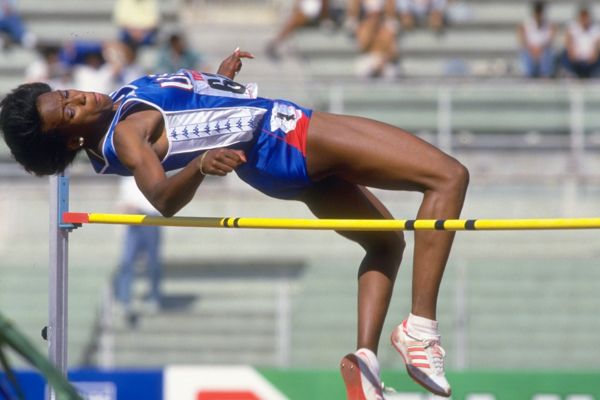
As the athletes prepared to get to their marks for the 800m at the conclusion of the 1986 Goodwill Games heptathlon, Moscow’s Lenin Central Stadium was bathed in early-evening sunshine. “The moment has come,” pronounced commentator Leandra Reilly. “A moment in the sun for Jackie Joyner. The 7000-point barrier, that’s never been achieved, is assuredly within her grasp.”
When Joyner was born, in March 1962, her parents named her Jacqueline after the wife of the US President, John F Kennedy. “Someday this girl will be the First Lady of something,” her grandmother ventured to suggest. After six of the seven events in the Goodwill Games heptathlon, held across 6-7 July in 1986, Jacqueline Joyner was poised to become the first lady to achieve the landmark tally of 7000 points.
With 6184 points already to her name, the 24-year-old Joyner – raised in East St Louis, Illinois, and by then a recent history graduate from UCLA – needed to complete two laps of the Lenin Stadium in 2:20.51 to secure her place in track and field history.
Blessed with an 800m personal best of 2:09.32, that would appear to be little more than a toddle for the East St Louis girl. “We’re trying to make it so Jackie only has to walk the 800m to get the record,” her coach and husband Bobby Kersee had joked on the eve of the competition. As the stadium announcer informed the crowd, Joyner only needed 2:24.56 to eclipse the world record score of 6867 (or 6946 on the scoring tables that came into effect from 1985) held by one of her trailing rivals, Sabine Paetz of East Germany.
Roared home by 25,000 Muscovites, Joyner crossed the line in 2:10.02 to smash the world record by more than 200 points with a momentous tally of 7148. “Jackie has set four PBs out of seven events and, in doing so, has set a standard that will not be reached by another woman for a long, long time,” proclaimed Leandra Reilly in her prescient television summary.
Forty years later, no other woman has come within 100 points of the tally Joyner-Kersee, as she became known thereafter, achieved in making a historic name for herself in Moscow in 1986.
Of course, JJK herself improved her world record to 7158 at the US Olympic Festival in Houston just a month later, then to 7215 at the US Olympic Trials in Indianapolis in July 1988 and 7291 at the Olympic Games in Seoul in September that year. Only four other women have followed her across the 7000-point threshold: Swede Carolina Kluft and Anna Hall of the US, both with 7032, plus Belgian Nafi Thiam (7013) and Russia’s Larisa Nikitina (7007).
Nikitina was one of the nominal rivals reduced to also-ran status by the trailblazing Joyner in what was then the Soviet capital, finishing eighth with 6285. Sibylle Thielle of East Germany finished a whopping 513 points down in second place (6635) with Soviet Natalya Shubenkova third (6621) and the now former world record-holder Paetz a distant fourth (6456).
Joyner began the competition in storming fashion, speeding to a personal best of 12.85 in the 100m hurdles, just 0.06 shy of Stephanie Hightower’s US record, and followed up with a best ever high jump clearance of 1.88m. A 14.76m shot was less than she hoped for but she finished the opening day with the flourish of a 23.00 200m, 0.24 inside her wind-assisted PB, to notch a record first-day score of 4151.
Photo finish of the heptathlon 200m at the 1986 Goodwill Games
“I’m very close to where I wanted to be,” said Joyner, “especially with the hurdles going well and coming back with a good 200m after the shot. I’m looking forward to tomorrow – 7000 points is my goal; that’s what I’m going for.” She got off to another flying start on day two with a world heptathlon best of 7.01m in the long jump, conserving vital energy with just the one attempt before doing likewise in the javelin, throwing a lifetime best of 49.86m.
After pushing hard in the 800m to break through the 7000-point barrier, Joyner was asked if she felt good. “Yeah, it feels marvellous,” she replied. “It even hurts too. “I knew everything depended on the long jump. I know I’m the US record-holder [with 7.24m, at the time] but I tried not to put pressure on myself. When 7m popped up, I was very happy.
“I’ve had some disappointments. In 1984, at the Olympics, I had a hamstring pull and finished second when I felt I could have won. But after all this work and concentration, I finally put it all together.”
Joyner missed out to Australia’s Glynis Nunn by a tantalising five points in Los Angeles, her elder brother Al taking a fourth-round pass en route to victory in the triple jump to root for her in the 800m. But in Seoul in 1988 she claimed double Olympic gold, winning the heptathlon with her fourth world record and the long jump with 7.40m, a Games record.
Heptathlon gold in Barcelona in 1992 plus long jump bronzes there and in Atlanta in 1996 added up to six Olympic medals in all for Joyner-Kersee, who also won two heptathlon world titles (in 1987 and 1993) and two world long jump crowns (in 1987 and 1993).
The 40th anniversary of her milestone performance in Moscow happens to fall six months after the 25th anniversary of a barrier-breaking feat in the men’s combined events world.
It was in the 2001 edition of the hallowed Hypo Meeting in Götzis, Austria, that Roman Šebrle racked up the first 9000-point decathlon score. The 26-year-old from the Czech Republic set outright PBs in four events (8.11m in the long jump, 47.92m in the discus, 70.16m in the javelin, 4:21.98 in the 1500m) and equalled another (10.64 in the 100m) to finish with 9026 points.
It survived as a world record for eleven years and only three other men have since followed him into 9000-point territory: France’s Kevin Mayer (9126), Ashton Eaton of the US (9045) and Canada’s Damian Warner (9018).
Four decades on from Moscow, Joyner-Kersee’s 7000-point breakthrough remains one of the defining frontier moments in combined events history.
Simon Turnbull for World Athletics Heritage
Related Stories
 World
World
Russian strikes across Ukraine kill 3 people as Kyiv struggles to counter escalating attacks
18 minutes ago
 World
World
How Texas landowners are fighting back against Trump's border wall
18 minutes ago
 World
World
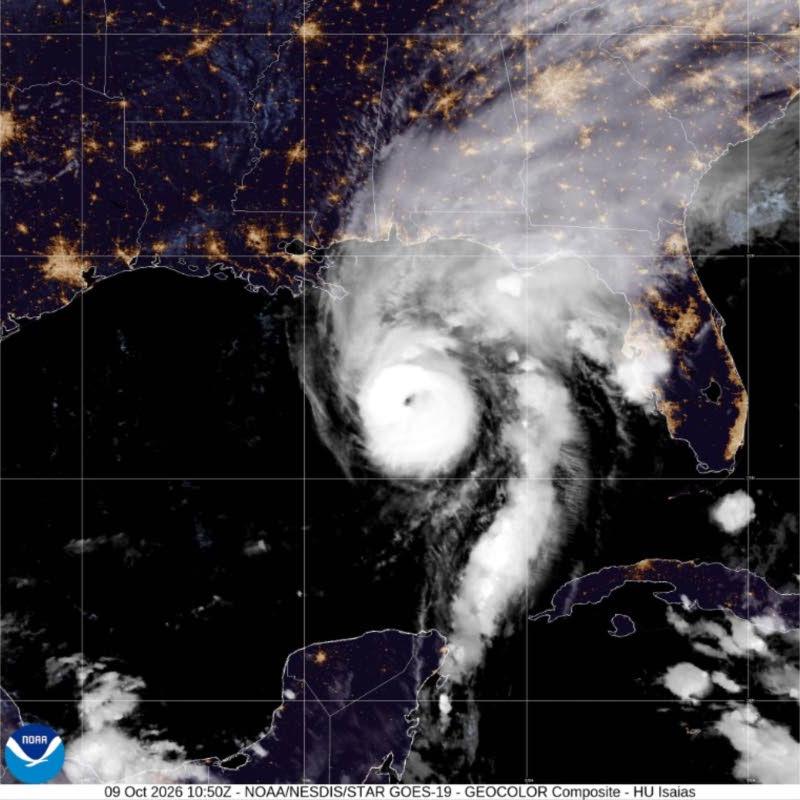
Hurricane Isaias strengthens to Category 3 ahead of expected landfall
1 hour ago
 World
World
Portugal ready for the hundredth 6DAYS® FIM Enduro of Nations
1 hour ago
 World
World
Nobel Peace Prize live: Navi Pillay wins for 'efforts to promote peace and international law'
1 hour ago
 World
World
® Kapital Bank expands access to international investment markets through bond placement
1 hour ago
 World
World
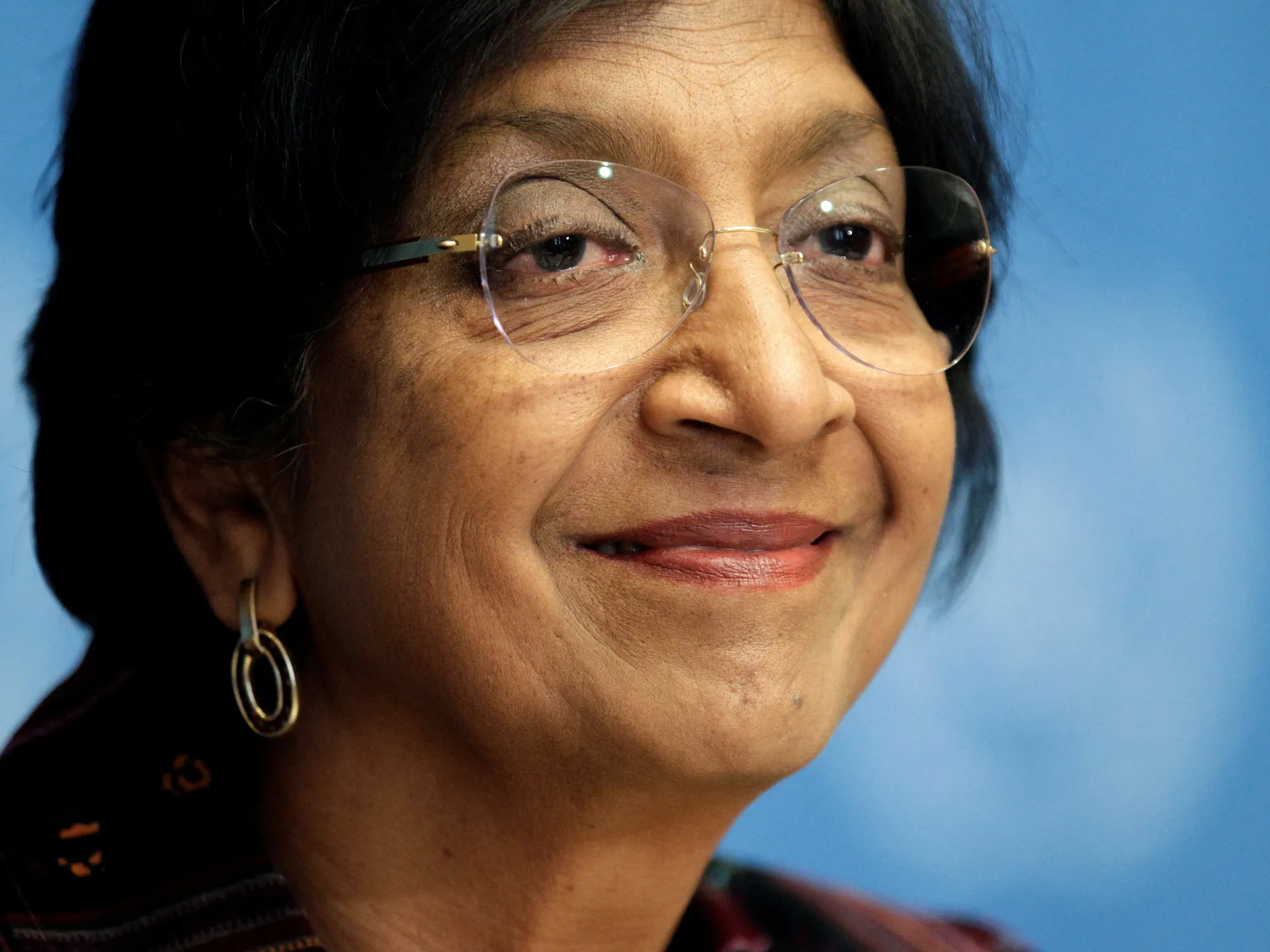
2026 Nobel Peace Prize awarded to Navi Pillay
2 hours ago
 World
World
UN says Pentagon plan to livestream execution of Fort Hood shooter would amount to torture
2 hours ago