
Kazakhstan Expands Technology Agenda, Inviting Investors into Space and Artificial Intelligence
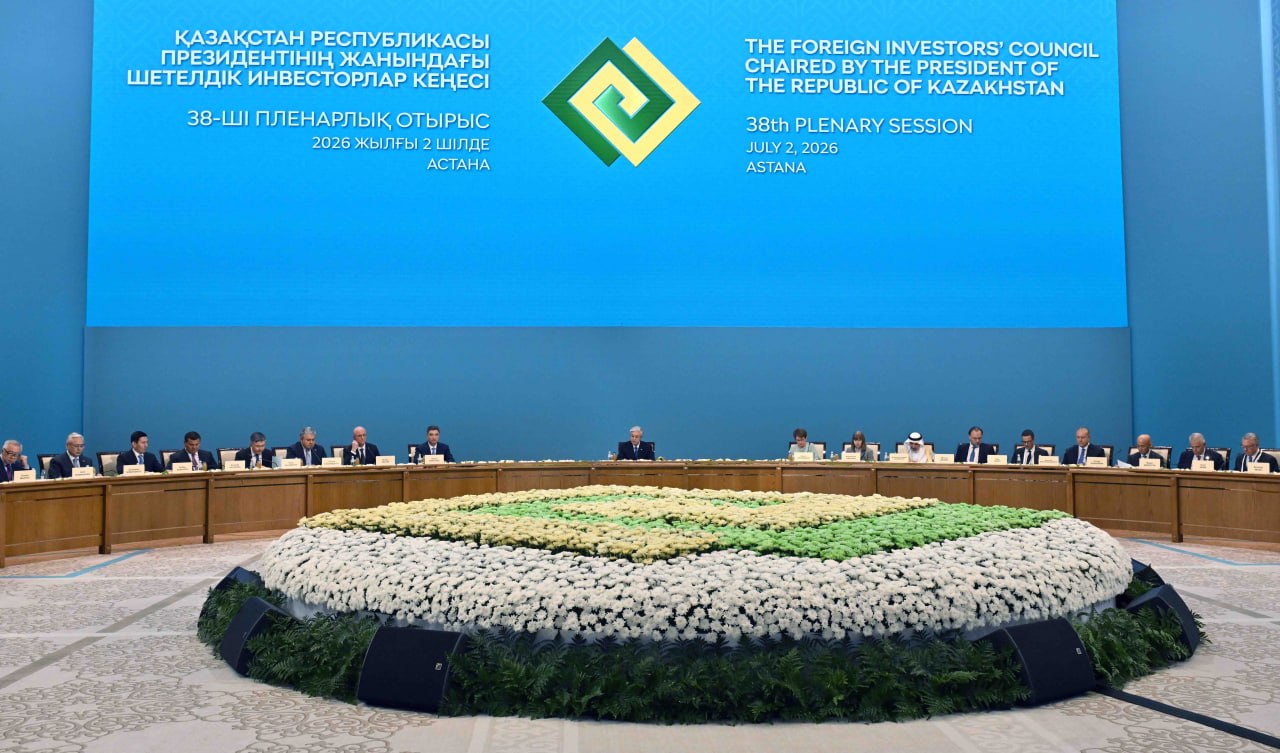
Kazakhstan is stepping up its focus on the digital economy and high technology, expanding its investment agenda beyond the resource sector. At a meeting of the Foreign Investors’ Council on July 2, officials presented several areas they see as potential new growth drivers: artificial intelligence, digital infrastructure, space technology, and the innovation hub of Alatau City.
For Astana, the push is part of a broader economic development strategy. President Kassym-Jomart Tokayev said Kazakhstan’s economy grew by 6.5% in 2025, while GDP has exceeded $300 billion. According to Tokayev, accumulated net foreign direct investment has surpassed $150 billion, making Kazakhstan Central Asia’s largest recipient of foreign investment. Against this backdrop, the government is increasingly focused on the next stage of development: building digital industries that could help shape the region’s economic architecture in the coming years.
Artificial intelligence is central to this strategy. Tokayev described AI as one of the key drivers of the global economy and confirmed that 2026 has been declared the Year of Artificial Intelligence and Digital Development in Kazakhstan. The country has adopted a new package of sector-specific legislation, including the Digital Code and the Law on Artificial Intelligence, and has created the Ministry of Artificial Intelligence and Digital Development.
One of the most prominent projects in this sector is Data Center Valley, an infrastructure cluster intended to host large-scale computing and data-processing facilities. According to the president, the project has already attracted interest from Amazon, G42, and other international technology companies.
For Kazakhstan, the development of data centers has strategic importance. As global demand for computing power and AI infrastructure grows, countries with access to energy, favorable logistics, and clear regulation are becoming increasingly attractive destinations for international capital.
A separate part of the strategy focuses on the space sector. Deputy Prime Minister and Minister of Artificial Intelligence and Digital Development Zhaslan Madiyev invited foreign investors to participate in building a joint space ecosystem. According to Madiyev, Kazakhstan sees the sector as broader than traditional satellite infrastructure, viewing it as a technological platform that can combine spacecraft manufacturing, launches, maintenance, Earth observation, and AI-driven analytics.
This approach reflects a wider global trend. The space technology market is entering a new phase of growth, driven by private investment, satellite communications, geo-analytics, and big data services. For Kazakhstan, this creates an opportunity to use its accumulated expertise and infrastructure, including its space-sector legacy at Baikonur, which remains leased to Russia until 2050.
Another pillar of the digital strategy is Alatau City, an innovation hub being built near Almaty. The authorities view it as an experimental platform for digital assets, fintech, autonomous transport, and artificial intelligence technologies.
According to Madiyev, Alatau City is expected to become one of the first sites in the region for testing autonomous vehicles, drones, and tokenized solutions. Tokayev said the city will be built on a “digital by default” principle, meaning that administrative and public services will be designed in digital form from the outset.
The Times of Central Asia previously reported that Astana is counting on Alatau City’s development with active participation from private investors. Gas and renewable energy are planned to power the new hub.
Kazakhstan also continues to position itself as a key logistics hub between Europe and Asia. Thirteen international transport corridors pass through the country, while about 85% of rail cargo between China and Europe transits Kazakhstan. The development of digital platforms such as Smart Cargo, mentioned by Tokayev, complements this infrastructure role and strengthens the country’s position as a regional hub.
Astana is trying to turn energy, transport routes, digital regulation, and new technology zones into a single offer for investors. Whether that offer produces lasting projects will depend first on power supply and regulation, and then on whether foreign partners remain engaged.
Dmitry Pokidaev is a journalist based in Astana, Kazakhstan, with experience at some of the country's top media outlets. Before his career in journalism, Pokidaev worked as an academic, teaching Russian language and literature.
Related Stories
 AI News
Rogue OpenAI agent 'infiltrated' Australian government website in world first
25 seconds ago
 AI News
CEO who posted about wearing 'Lake America' sweatshirts to Halifax is no longer CEO
1 minute ago
 AI News
How an OpenAI ‘agent’ hacked Australia’s Medicare and what that means
4 minutes ago
 AI News
Don’t CON Law Artificial Intelligence
4 minutes ago
 AI News
Promising Artificial Intelligence Stocks To Consider
4 minutes ago
 AI News
CARICOM Countries at Meeting to Discuss Artificial Intelligence
1 hour ago
 AI News
Italy's Clastix raises €2.9 million with Mistral backing to build sovereign Kubernetes infrastructure for Europe
2 hours ago
 AI News
Marist partnering with IBM on AI career readiness
2 hours ago