
Key Takeaways from the Learning Session: AI for Forecasting, Climate Services and Early Warning
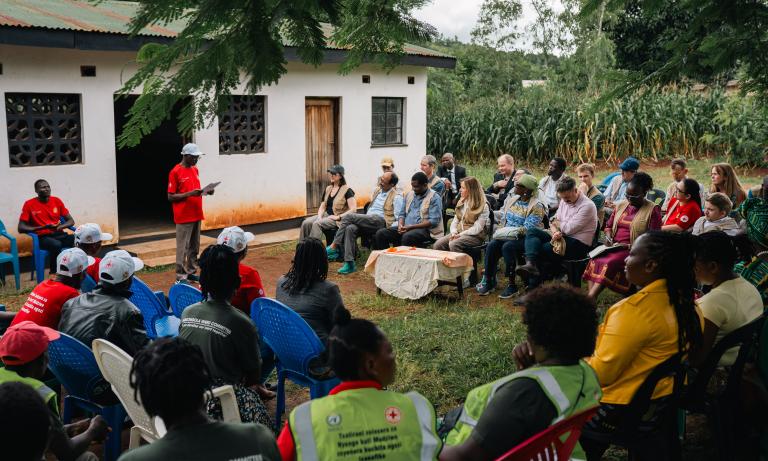
Key Takeaways from the Learning Session: AI for Forecasting, Climate Services and Early Warning – Malawi's Experience
The Technical Coordination Initiative learning session highlighted how Malawi is combining artificial intelligence (AI), strong national leadership, and strategic partnerships to modernize weather forecasting, climate services, and early warning systems. While AI offers significant opportunities across the entire weather and climate value chain, participants emphasized that its success depends on high-quality observations, skilled forecasters, supportive policies, and sustained investment. Malawi's nationally led approach—supported by partners including WMO, SOFF, CREWS, Met Norway, the World Bank, and WFP—demonstrates how coordinated investments in observing networks, operational capacity, governance, and AI innovation can strengthen meteorological services. A key message from the session was that AI should complement, not replace, human expertise, with continuous validation and long-term institutional capacity building essential to delivering more reliable and sustainable early warning services.
The latest Technical Coordination Initiative learning session brought together experts from WMO, CREWS, SOFF, and the Malawi Department of Climate Change and Meteorological Services (DCCMS) to explore how artificial intelligence (AI) is transforming forecasting, early warnings, and climate services. While AI featured prominently, the discussion underscored that successful modernization depends on much more than technology alone. It requires capable staff, enabling institutional and governance environments, and partnerships. The key takeaways from the discussion are presented below.
1. AI is transforming the entire weather and climate value chain through evidence-based innovation
Artificial intelligence is creating new opportunities across the hydrological and meteorological value chain—from observations and data quality, to forecasting, impact analysis, dissemination and climate services. WMO is taking an evidence-based approach, supporting pilot projects and national implementations to better understand where AI adds value, what conditions are needed for successful deployment, and how it can be integrated into operational services. Malawi's experience illustrates this approach in practice, demonstrating how countries can experiment with AI-powered forecasting while validating performance alongside conventional numerical weather prediction systems. The lessons emerging from these real-world applications are helping inform WMO technical guidance, standards and future investments, ensuring that AI strengthens operational services in a safe, effective and equitable way while complementing—not replacing—existing forecasting capabilities.
2. Better data is the foundation of better AI
A recurring message throughout the session was simple: AI is only as good as the data behind it. High-quality observations remain essential for enhanced forecasts and effective early warning services. In Malawi, the Systematic Observations Financing Facility (SOFF) is investing USD 3.8 million to rehabilitate four surface observation stations and install the country's first upper-air station in 15 years, helping close critical gaps in the Global Basic Observing Network (GBON). This investment demonstrates how strengthening observing networks, improving data sharing, and ensuring the long-term sustainability of meteorological stations provide the foundation for both conventional forecasting and the responsible operational use of AI. As the session emphasized, robust observations are the cornerstone for realizing the full potential of AI across the weather, climate and early warning value chain.
3. National leadership is driving a coordinated transformation
Malawi's experience demonstrated that sustainable modernization begins with strong national leadership and a clear strategic vision. Through the development of the National Framework for Water and Climate Services (NFWCS), a National Strategic Plan, an updated Meteorological Policy and a new Meteorological Bill, the DCCMS has established a coherent roadmap for strengthening weather, climate and early warning services. These national frameworks not only guide the Department's own priorities but also provide the foundation for aligning partner investments behind a shared vision. As a result, support from CREWS, SOFF, WMO, Met Norway, the World Bank, WFP and other partners is reinforcing national priorities across policy reform, observing systems, forecasting capacity, AI innovation, climate services, impact-based forecasting and community preparedness. Rather than a collection of standalone projects, Malawi has demonstrated how nationally owned strategies can coordinate diverse investments into a single, country-led programme of transformation.
The National Framework for Water and Climate Services (NFWCS) for Malawi
Strategic Plan for 2025 to 2030
4. Sustainable capacity comes through long term partnerships
One of the strongest themes was the value of long-term, peer-to-peer partnerships that extend beyond individual projects. Malawi highlighted its enduring collaboration with Met Norway, where Norway staff work alongside DCCMS staff to jointly develop operational capabilities, strengthen institutional capacity, and introduce new technologies, such as AI-powered forecasting. This trusted partnership has provided a strong foundation for initiatives supported through both CREWS and SOFF, enabling technical assistance to build on existing relationships and national priorities rather than starting from scratch. By embedding expertise within the DCCMS and promoting knowledge transfer instead of consultant-led delivery, this model builds lasting national capacity, reduces dependency on external expertise, and ensures that skills and operational capabilities remain long after projects have concluded. This is one of the benefits of the WMO Network.
5. Operational AI requires continuous validation, refinement and human expertise
Malawi's experience underscored that integrating AI into operational forecasting is an iterative process rather than a one-time technological upgrade. Through support from the CREWS initiative and the long-standing partnership with Met Norway, DCCMS is testing and validating AI-powered forecasting alongside conventional numerical weather prediction models to ensure that AI products represent local weather conditions and reliably capture high-impact events, particularly heavy rainfall and extremes. At the same time, the CREWS project is strengthening the forecasting capacity of DCCMS by enhancing technical skills, operational workflows, and forecasting tools, ensuring that forecasters remain at the centre of operations. Human expertise is essential to interpret model outputs, validate performance, calibrate AI products and determine how they are integrated into operational forecasting and early warning services. Together, these investments in technology and people are laying the foundation for AI to become a trusted, sustainable and operational component of Malawi's weather and early warning services.
CREWS Malawi enabling DCCMS capacities and operations
6. Innovation must be accompanied by sustainability
The session concluded with an important reminder that technological innovation alone is not enough. Long-term success depends on sustainable financing, supportive legislation, institutional capacity and continued maintenance of observing systems. Malawi's efforts to establish a Meteorological Bill, strengthen quality management systems, explore cost recovery mechanisms and build partnerships across sectors illustrate how countries can create the enabling environment needed to sustain investments and continue improving early warning services.
The discussion highlighted that AI presents an unprecedented opportunity to strengthen forecasting and climate services. Yet Malawi's experience demonstrates that lasting progress is achieved by combining innovation with strong national ownership, quality observations, strong technical and operation skills, coordinated partnerships, and investments that build resilient institutions capable of delivering better early warnings for all.
Related Stories
 AI News
'I applied for 200 jobs'
20 minutes ago
 AI News
Kroger to lay off 3,000 employees as it leans into artificial intelligence
20 minutes ago
 AI News
Nvidia Commits $250 Million To Strengthen Britain’s Artificial Intelligence Safety Efforts
21 minutes ago
 AI News
France carves its own path in AI race with Nvidia’s help
1 hour ago
 AI News
The Big Problem Every Artificial Intelligence Company Faces
1 hour ago
 AI News
OpenAI’s AI misalignment problem is growing
1 hour ago
 AI News
OpenAI engineer arrested, accused of planting listening device inside company's office
2 hours ago
 AI News
Helsinki’s Ambio raises €5.1 million to scale its AI-powered recycled plastics procurement platform
2 hours ago