
Korean startups have started to target the Japanese market with artificial intelligence (AI), conten..
Korean startups have started to target the Japanese market with artificial intelligence (AI), content, and tourism technology. It is trying to promote technology to Japan and find a cooperative partner to attract investment and expand local businesses.
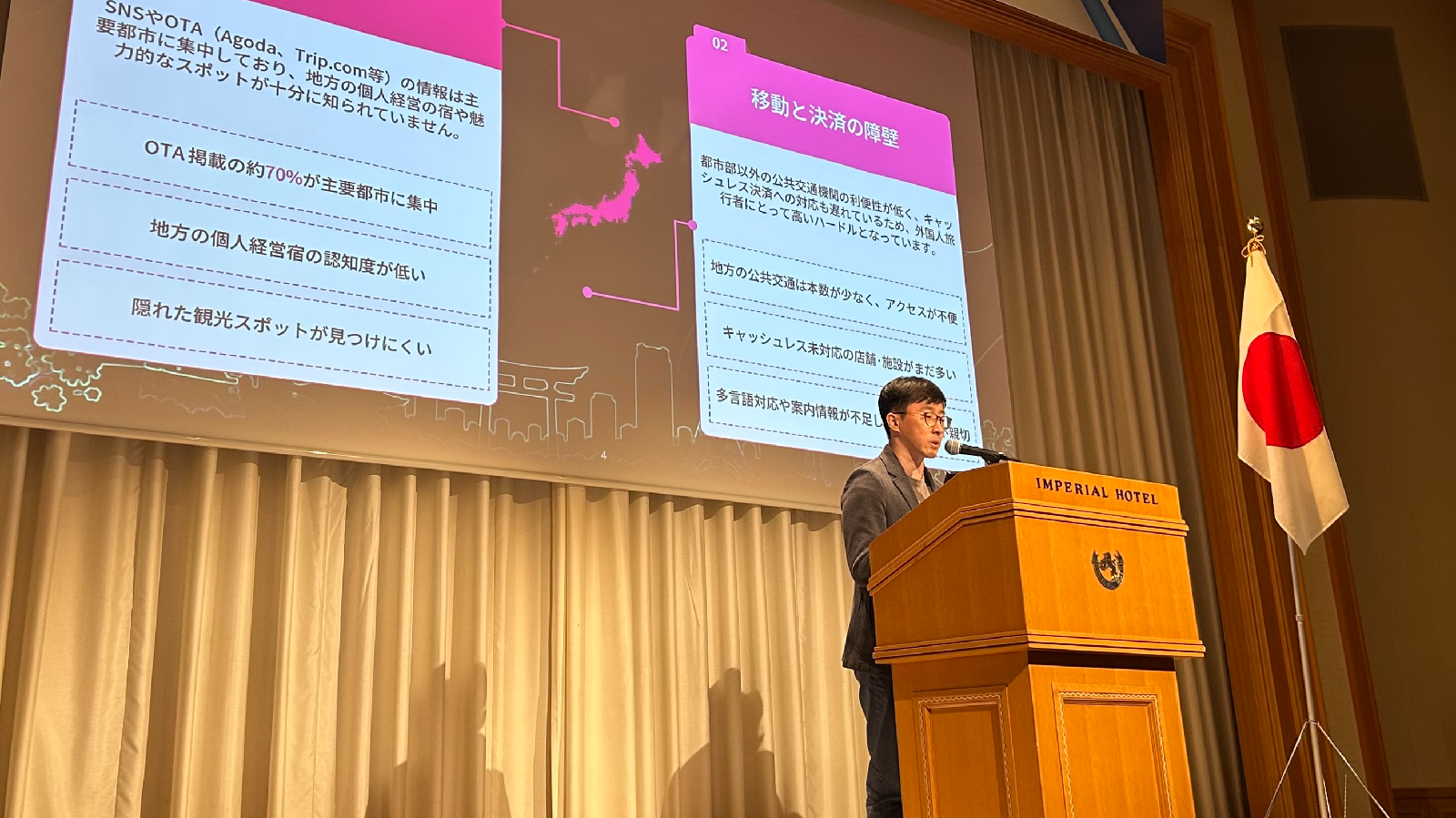
At the 'Demo Day for Promising Korean Startups in Japan' held at the Imperial Hotel in Tokyo on the 13th, 10 Korean companies announced their business models and growth strategies for Japanese venture capital (VC). At the event co-hosted by the Korean Embassy in Japan, the Korea Small and Medium Venture Business Promotion Agency (Joongjingong), and the Korea Tourism Organization, companies introduced services ranging from AI interpretation to tourism payment and logistics management.
The global fandom platform 'Hello Live' introduced a business that connects Japanese performances and artists to global fans. Based on the online live broadcasting experience of large-scale performances, the plan is to support the overseas expansion of Japanese contents, and to help overseas fan meetings and promotional activities in Korea. Seo Kang-won, director of Hello Live, said, "We will use our accumulated technology and experience to promote various contents in Japan to the world." Hello Live also plans to officially provide a real-time multilingual subtitle service using AI next month.
CrossHub launched a Travel Pass that combines identity authentication, payment, transportation, tourism information, and reservation. It is a service that enhances the convenience of foreign tourists and induces local tourism consumption with passport-based authentication and prepaid cards. Park Sung-CrossHub, manager of CrossHub, emphasized that payment fees and consumption data can be used for business in Japan in connection with the Bank of Japan issuance card. It also suggested a strategy to connect users secured in Korea to Japanese services through a joint platform between Korea and Japan.
AI companies have also introduced technologies aimed at the Japanese market. "XL8" introduced a real-time multilingual interpretation and media localization solution, and "Vcat" introduced a service that automates advertisement video production and execution with only the product Internet address (URL). Willogue introduced a logistics management technology that identifies the temperature and humidity of the transportation and storage process in real time.
In his welcoming speech, Korean Ambassador to Japan Lee Hyuk said, "Today is a place where the will to cooperate between the leaders of the two countries leads to performance between companies. Growth opportunities are opened when the technology and execution of Korean startups meet with Japanese capital and customer networks." At the same time, Ambassador Lee cited AI and content as areas that can solve common problems between the two countries and expected to expand cooperation.
"This is an event organized by overseas missions and small and medium-sized business support organizations in collaboration with the embassy," said Kim Do-hoon, head of the Tokyo office of Jungjin Gong. "We will try to help more startups enter Japan."
Meanwhile, the National Tax Service of Korea also attended the event and drew attention by guiding tax precautions for attracting Japanese investment and entering the local market. He explained that Korean start-ups that receive Japanese investment should check the investor's status as a resident and the actual subject of income under the tax law, and examine the requirements for applying tax treaties when paying dividends, interest, and usage fees. National Tax Service Officer Kim Hyun-seung also urged companies seeking to enter Japan to check their obligation to report local corporate taxes and consumption taxes and overseas financial accounts depending on their business type.
Related Stories
 AI News
BBC's Kate Phillips On AI, YouTube & 'Blue Planet III'
41 minutes ago
 AI News
Tether Is bridging the intelligence gap with free AI
41 minutes ago
 AI News
More damaging AI hacking incidents to come unless changes are made, scientists warn
41 minutes ago
 AI News
Russia's offensive ability is broken, Kyiv's former top general tells BBC
1 hour ago
 AI News
Europe cannot be AI sovereign without control of its own intelligence
1 hour ago
 AI News
Kupor: ‘Super Intelligence’ task force will press companies on AI safety
1 hour ago
 AI News
Bill Gates: Technology is a world in need of governance
2 hours ago
 AI News
Artificial intelligence can be used for good in autism community
2 hours ago