
Learning with new technologies and artificial intelligence
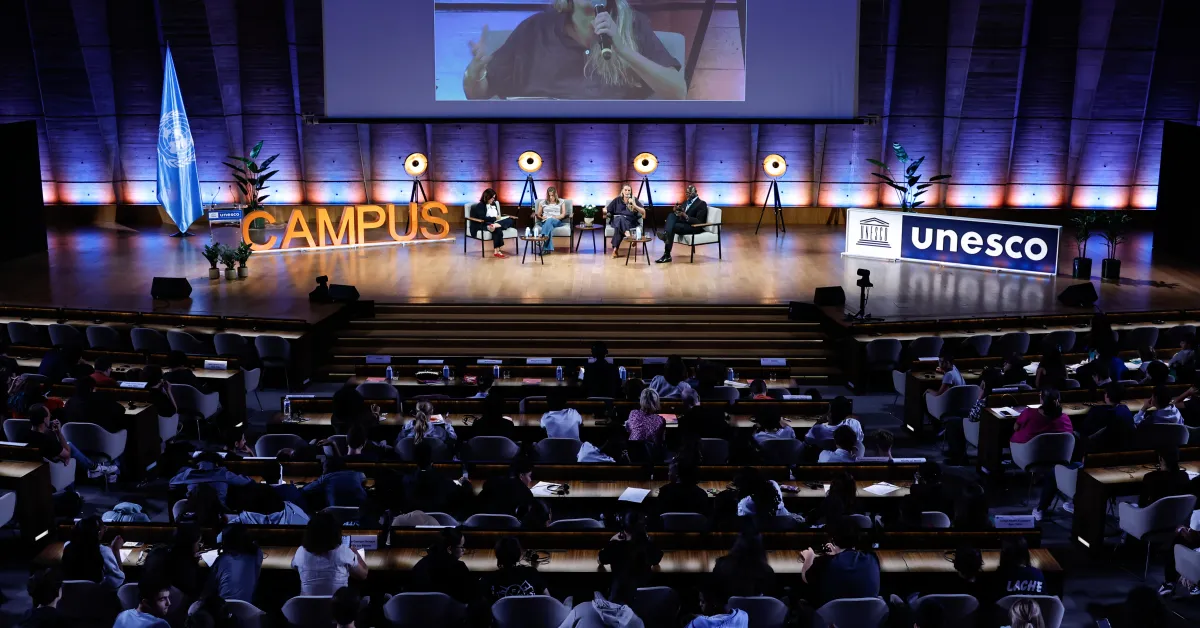
Learning with new technologies and artificial intelligence
Education is undergoing a profound structural change. Digital technologies and artificial intelligence are transforming the ways we learn. These changes are not confined to the classroom: they influence every aspect of students’ daily lives, from how they study and collaborate to how they form their opinions, express themselves, and participate in society. Faced with both opportunities and challenges, how can we keep learning and reflecting?
To launch this campus, Laicia Gagnier, Associate Project Officer in UNESCO’s Section for Technology and AI in Education, outlined UNESCO’s views on the evolution of AI. Indeed, we need to fundamentally rethink how we learn in the face of societal change and the rapid pace of technological advancement. We must adapt; digital tools open up unprecedented opportunities, but technology alone will not solve today’s problems. Laicia emphasized the importance of a new social contract for education. She encouraged students to build a fairer and more inclusive world, as society needs deeply human qualities.
Education must remain a fundamental right, not a privilege.
On this occasion, the lead partner of the UNESCO Campuses, the TECH4ALL by Huawei programme, spoke on the subject through its representative Hu Yue, Education Project Manager at the TECH4ALL Programme Office. She began by pointing out that whilst these digital tools can offer opportunities and access to information, it is important to know how to use them effectively. Huawei is committed to helping young people understand these societal challenges and to providing them with the resources they need to learn. The TECH4ALL programme, launched in 2019, helps teachers and students in rural communities to receive training, acquire the necessary equipment, and understand these tools. Hu Yue emphasised that artificial intelligence must not become a factor in social inequality but rather a bridge to cross the digital divide.
The future of education will not be written by algorithms alone. It will be shaped by young people with curiosity, educators with vision, and communities willing to embrace change responsibly.
Following these opening remarks, Margarida Romero, a researcher at the Institute for Research in Artificial Intelligence (IIIA-CSIC) and a university lecturer at the Université Côte d’Azur, as well as founder of the Laboratory for Innovation and Digital Technology in Education (LINE), opened the discussion with the students. She pointed out that AI is used by many on a daily basis, but few people actually know how to use it properly. She noted the importance of a willingness to learn, as these tools can be tempting ways to delegate effort and tasks. However, there are still important aspects that one must tackle independently. Knowing where to find information does not encourage one to understand and memorise it, but merely to retain it or know how to find it. Technology does not make learning easier; it makes the effort easier. She then raises the question of equality in relation to AI. Her view remains positive: AI can be an excellent tool for student without special support, provided the student is willing to make the effort to learn. Similarly, easy access – whether in privileged or less privileged contexts – encourages excessive reliance on technology, which has negative consequences for the youth.
Artificial intelligence does not replace learning: it amplifies our intention. If we want to learn, it can be a tremendous asset. If we want to avoid making an effort, it risks preventing us from understanding. We must continue to fill our heads with knowledge.
Afterwards, the students asked the expert about using AI for homework without losing the habit of learning. Margarida points out that adults are the first ones who must set an example. Depending on one’s circumstances, one must resist the temptation to take the easy way out. To do so, the specialist advises asking the right questions and seeking only guidance, not the answers. The students then express their concerns about their future, asking why they should work when jobs are being replaced. The expert reassures them, explaining that, in her opinion, the key is to maintain expertise; she even encourages them to pursue further training. She reiterates this point and encourages the students to make the effort – simply thinking things through is an effort in itself. We must maintain critical thinking and seek human collaboration. Margarida does, however, point out that AI can benefit health and sustainability, amongst other things, whilst maintaining a critical mindset and using these tools with perspective and sensitivity. The students and the expert agreed on the environmental and cognitive costs of using AI; it must be used sparingly. Margarida concludes by highlighting the need to verify sources of information; human reflection must take precedence.
The second part of the discussion is led by Anne Cordier, University Professor of Information and Communication Sciences and Deputy Director of the Centre for Research on Mediation (CREM) at the University of Lorraine. Following a brief survey on the use of social media, Anne discusses learning through these platforms. In her view, these platforms teach us how to react, to communicate, to engage with others and to be part of a community. There is a genuine collective dimension to this. She emphasises, however, the difference between learning and what is actually retained, as opposed to what is merely seen or scrolled past. There is also a need to validate and support this learning with the help of teachers, facilitators and friends. Online, this role is therefore fulfilled by influencers. Anne believes we must remain vigilant regarding the reliability of information. She recommends questioning who the relevant authority is on the subject. Nevertheless, checking one’s sources and developing critical thinking skills does not mean being suspicious; one must trust certain authorities when they are identified as such. In her view, a student who, after watching an influencer’s video, asks a teacher with expertise on the subject for their opinion, is demonstrating a healthy reflex.
The discussion then turned to the difficulty of concentrating due to the constant flow of information. According to the expert, the idea that social media encourages in-depth exploration needs to be qualified. There are many specialists in specific subjects, and it is through scrolling that students discover them. For her, it is a question of intention, with the necessary perspective when faced with social media algorithms, which are organised on an industrial scale.
We must always remember how fortunate we are to have access to such a wide variety of information. It is through these social media platforms that we learn about our rights and are able to defend them.
Anne Cordier points out that there is a joy in preserving the sense of discovery and in choosing whether to connect or disconnect. It is also an opportunity to express oneself online, but above all, a human right enshrined in the Convention on the Rights of the Child. She then encourages pupils to create an ethical environment with secure data by using the web in a way that suits them (Wikipedia, Mastodon, Peertube, etc.). She also reminds pupils of the existence of the Digital Services Act and the GDPR, which govern and regulate existing platforms.
Following concerns raised by the student about teachers’ use of AI, she points out that one cannot condemn someone for using it, but rather one must consider which tasks are to be delegated, whilst bearing in mind that teaching must take precedence over AI. A good teacher retains control over the AI they use. To conclude this section, Anne and the students discuss the influence of the creator. The people who designed it, even without any negative intent, have embedded their own stereotypes into these technologies. Anne confirms that AI reflects the biases present in its training data. She reassures the students, however, about the need for human judgement – in medicine, for example – when an AI generates an output. Depending on the role humans assign to it, this can increase risks for individuals or society (for example, doctors who rely on AI diagnoses). For Anne, the world is being reshaped. We must take control, make choices and contribute to ethical web environments.
Adeline Hulin, Head of Media and Information Literacy in UNESCO’s Communication and Information Sector, brought the discussion to a close. The expert began by discussing the power of self-expression through digital tools; she reminded young people that they are the first generation able to share information across the globe in a matter of seconds. These new technologies also enable them to raise awareness of issues they care about. According to Adeline, young people are increasingly aware of the dangers and risks of social media. She nevertheless emphasises the importance of media literacy for content creators. She then encourages the students to take responsibility or to use mechanisms known as ‘Safety by Design’. These are systems built with safety features in mind, rather than having security measures added as an afterthought. Adeline reassures students who are worried about being overtaken by AI, saying there is still time to decide to do things differently. In her view, the most important factors are governance and regulation.
We must place greater value on effort and curiosity, and on the outcome rather than the process. It is through effort that we learn.
The students ask about making learning more engaging through digital platforms, and the expert highlights the vicious cycle of algorithms that push information to elicit reactions. Indeed, as Adeline points out, misinformation travels seven times faster. She encourages them to seek out the right content and to create a suitable algorithm. Following a question about addiction, the expert and the students agree: we need to reduce notifications, delete apps, leave devices in another room at night, and not hesitate to set limits for ourselves. Adeline concludes with a warning: AI records data and knows us well; young people should take a step back and consider what it might be telling them.
To round off the UNESCO Campus, the students had the opportunity to ask questions of the three experts and discussed, in particular, which sources to trust, how to combat bias and stereotypes, and the unequal access to these digital tools. They also touched upon mental health, which can be linked to a lack of social connections. The experts were in agreement: they encouraged the students to prioritise effort and to reflect on how they use these tools. This UNESCO Campus reminds us that these tools represent power, responsibility and opportunity.
This unique Campus XL event was organised with the support of TECH4ALL and in collaboration with 6C-Conseil.
Related Stories
 AI News
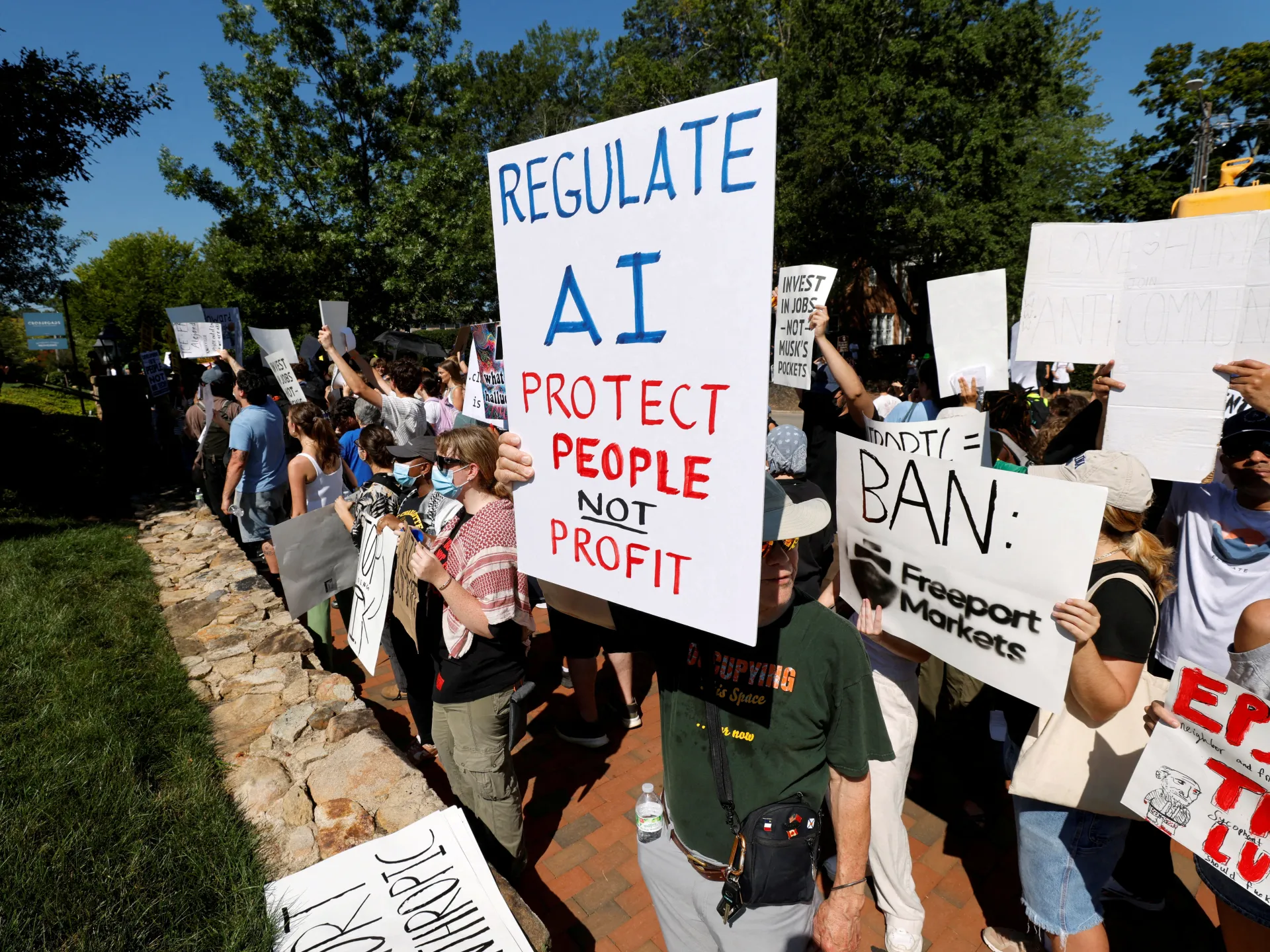
Poll shows Americans are increasingly alarmed by AI’s ecological footprint
22 minutes ago
 AI News
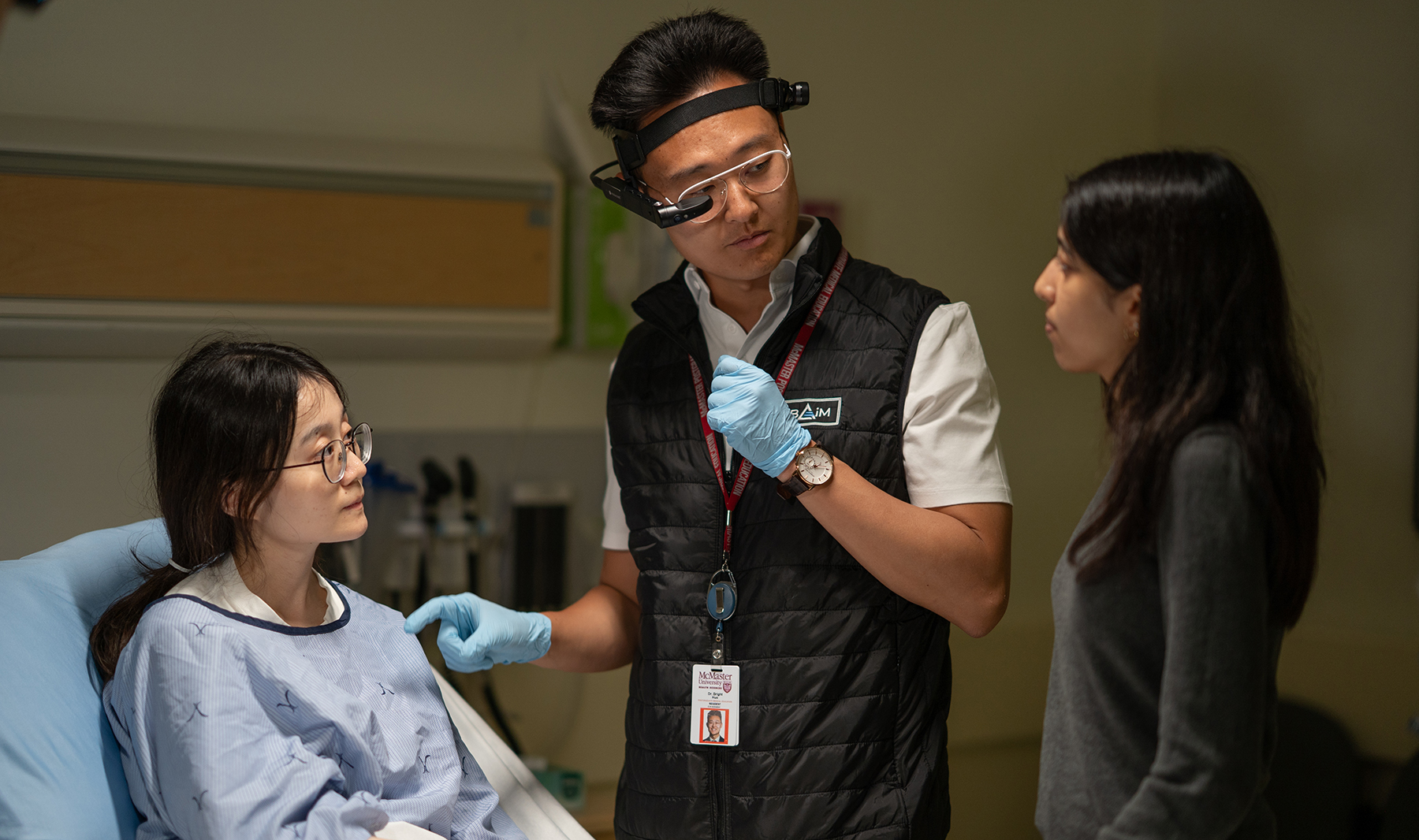
McMaster researcher leads new venture to guide responsible AI use in patient care
22 minutes ago
 AI News
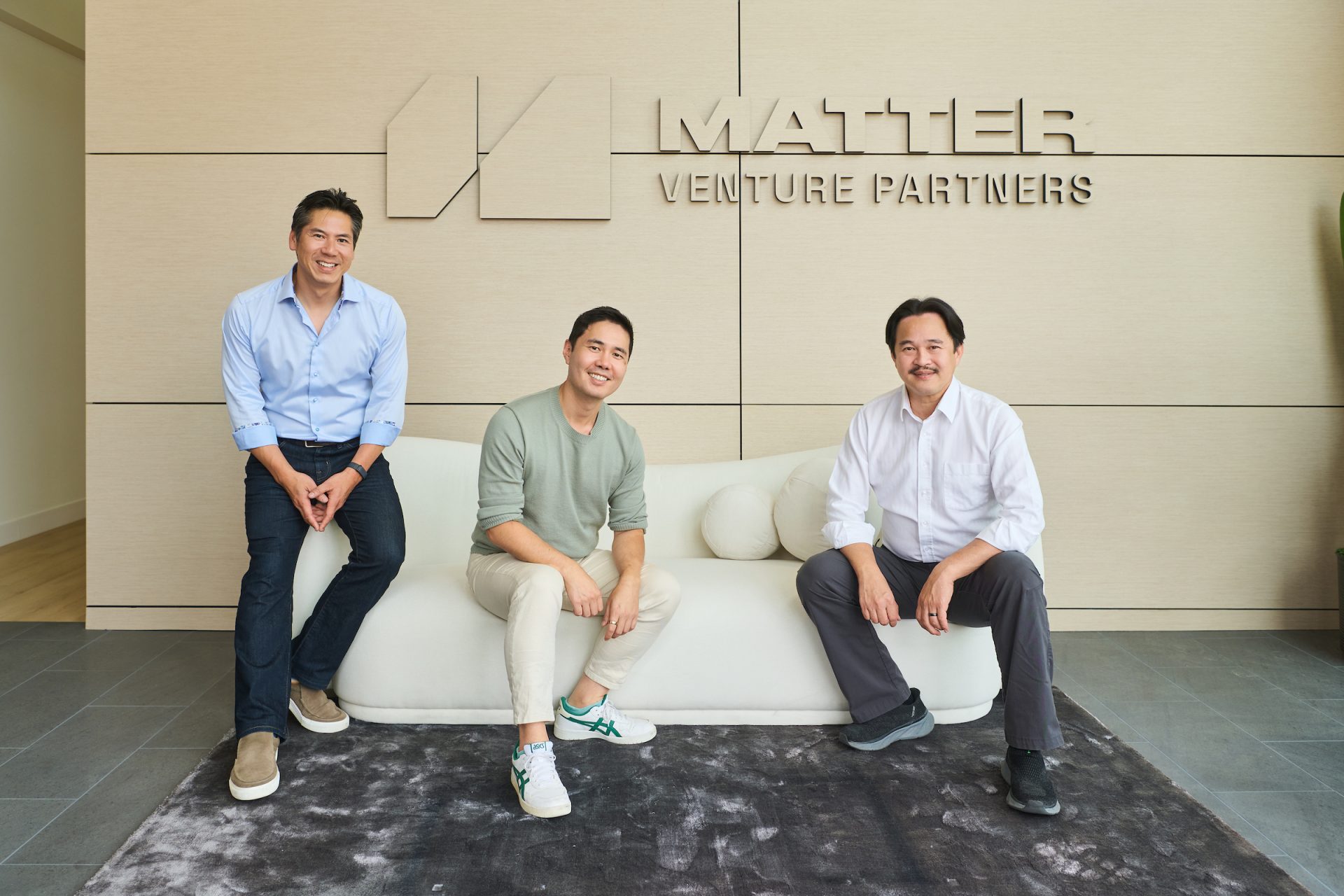
Matter Venture Partners Closes $450 Million Fund II for HardTech Startups
52 minutes ago
 AI News
A $52 million project will track farm supplies across Malaysia
52 minutes ago
 AI News
Research centre, AI company vandalized ahead of Montreal artificial intelligence summit
1 hour ago
 AI News
What Do Dario Amodei And The JCHR’s AI Warnings Mean For Startups and SMEs?
1 hour ago
 AI News
Matter Venture Partners Closes $450 Million Fund II For HardTech, Robotics, And Physical AI Startups
1 hour ago
 AI News
Technologies, Math Research Get Lift from CAREER Awards
2 hours ago