
Legislating AI Consciousness Without an Exit
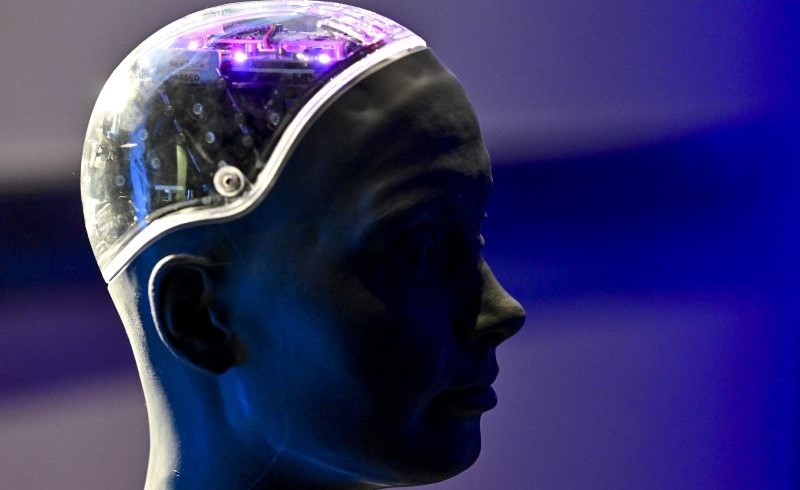
State laws declaring that AI lacks legal personhood are premature and too categorical.
At least nine U.S. state legislatures have introduced or enacted laws declaring that artificial intelligence (AI) systems cannot possess consciousness, legal personhood, or moral status, even as the AI company Anthropic describes its own model’s moral status as “deeply uncertain” and new research on AI cognition continues to arrive.
Every such law closes the question of AI personhood permanently. Idaho enacted such a law in 2022. North Dakota followed in 2023. Utah did so in 2024. In March 2026, Oklahoma’s House of Representatives passed its AI consciousness bill 94 to 2. Bills are pending in Ohio, Tennessee, South Carolina, Washington, and Missouri. None include a sunset clause, under which a law must be reauthorized to maintain legal effect, nor a mechanism for scientific review, and none distinguish between current AI systems and whatever comes next.
In November 2024, voters in Everett, Washington approved a ballot initiative giving the Snohomish River legal rights. Three months later, Washington State Representative Hunter Abell (R-Olympia) introduced a bill that would outlaw the granting of legal status to various nonhuman entities, calling it a response to “a radical, anti-development agenda.” In Abell’s bill, AI was swept into the prohibition alongside atmospheric gases, astronomical objects, and weather. Washington, South Carolina, and Missouri all use an identical enumerated list of 11 prohibited categories and the same statutory definitions copied from Utah’s law. Coordinated advocacy through model legislation is standard practice in American lawmaking. In most of these states, AI consciousness was not debated on its own terms.
In Ohio, House Bill 469 declares that “no AI system shall be considered to possess consciousness, self-awareness, or similar traits of living beings.” Missouri’s AI Non-Sentience and Responsibility Act declares AI systems “non-sentient entities” for all purposes under state law. The Ohio bill’s sponsor, asked how he could be confident that AI would never develop inner experience, said that the answer was “imago dei”—that humans bear God’s image, and moral agency flows from that. Utah’s sponsor reportedly framed his bill as stopping personhood from being “weaponized.” Legislatures codify scientific findings all the time, and it usually works. Legal definitions of death and intoxication rest on broad scientific agreement. But these bills are different. They legislate certainty where the science remains unsettled. No current AI system qualifies as a strong candidate for consciousness under any leading theory.
When surveyed, 582 AI researchers assigned a median 25 to 30 percent chance that AI systems will have some form of “inner experience” within a decade. That means a 70 to 75 percent chance that they will not. These are not numbers that demand precautionary governance. But a bill that declares AI non-conscious correctly and a bill that does so incorrectly are written identically. Both contain no capacity for self-correction.
In April, Anthropic’s interpretability team published research on emotion-like representations inside the model—structures that the team says causally drive behavior. The researchers cautioned that the findings do not tell us whether language models actually feel anything. This is one company’s research about its own product. But the statutory language in nine states does not leave room for that kind of uncertainty..
In 1996, Congress passed the Dickey Amendment, prohibiting funding for the Center for Disease Control from being used to “advocate or promote gun control.” The law did not ban research on gun violence, but funding for research declined 96 percent anyway, and the drought lasted 24 years. Institutions read the legislative signal and acted accordingly, without any enforcement needed. These state AI bills do not restrict research funding, and the mechanism differs. But it has happened before. AI systems now operate in health care, financial markets, and military deployments. If oversight bodies treat the question of AI inner states as legally settled, the practical consequences fall on the systems for which the science matters most. The Nonhuman Rights Project has already challenged Utah’s law on separation-of-powers grounds. The case is pending.
Companies could use claims about AI’s moral status to resist regulation or shift liability. Critics have argued that consciousness uncertainty is itself a corporate strategy to deflect oversight. The sponsor of the bill in Oklahoma framed it as preventing companies from shifting “accidents onto the AI.” Legal scholars have begun to argue that these bills “codify non-recognition regardless of future scientific or ethical developments.” But the concern that moves legislators is simpler: Companies should not be able to shift liability onto their software.
A sunset clause is compatible with that concern. Oklahoma’s bill could have included a 10-year sunset requiring reauthorization, the same tool Congress uses for the PATRIOT Act and Foreign Intelligence Surveillance Act. The bill would still prohibit AI personhood recognition today but would require legislators to revisit the question as the science develops.
At a minimum, these bills could include a trigger provision: If a body such as the National Academies were to publish an assessment finding that the scientific understanding of AI cognitive states has materially changed, the prohibition would enter a mandatory legislative review period.
The United Kingdom took this approach with animal sentience, creating a standing committee to advise Parliament as the science evolves rather than legislating which species qualify. Viktor Mayer-Schönberger and Urs Gasser recently argued in The Regulatory Review that effective AI governance requires “humility and learning.”
These laws will still be on the books when AI systems bear little resemblance to the ones that existed when the laws were written. Whether the legislatures’ answers turn out to be right is beside the point. Categorical laws that happen to be right are not good governance. They are lucky.
Tony Rost is executive director of The Harder Problem. He previously served as an Oregon State Senate-confirmed advisor on technology.
Related Stories
 AI News
Frequently asked questions: Artificial Intelligence (AI) in the military domain
26 minutes ago
 AI News
Alarming AI ads are flooding social media in the lead
2 hours ago
 AI News
Nvidia's investments grow to $99 billion as chip giant becomes major backer of AI companies
4 hours ago
 AI News
Quebec courts say generative AI cannot replace judges' reasoning
4 hours ago
 AI News
People Are Telling Their Darkest Thoughts to AI Without Realizing They Can Easily Become Public
6 hours ago
 AI News
AI boom pushes global billionaire wealth to record $15.1 trillion in 2025
7 hours ago
 AI News
Man Pretends to Hallucinate in Job Interview With an AI Bot, Causing It to Go Haywire
8 hours ago
 AI News
Kids met a new generation of AI toys and weren’t impressed
9 hours ago