
Letting B.C. charge tolls on new Alberta pipeline is trade barriers 'on steroids,' say critics
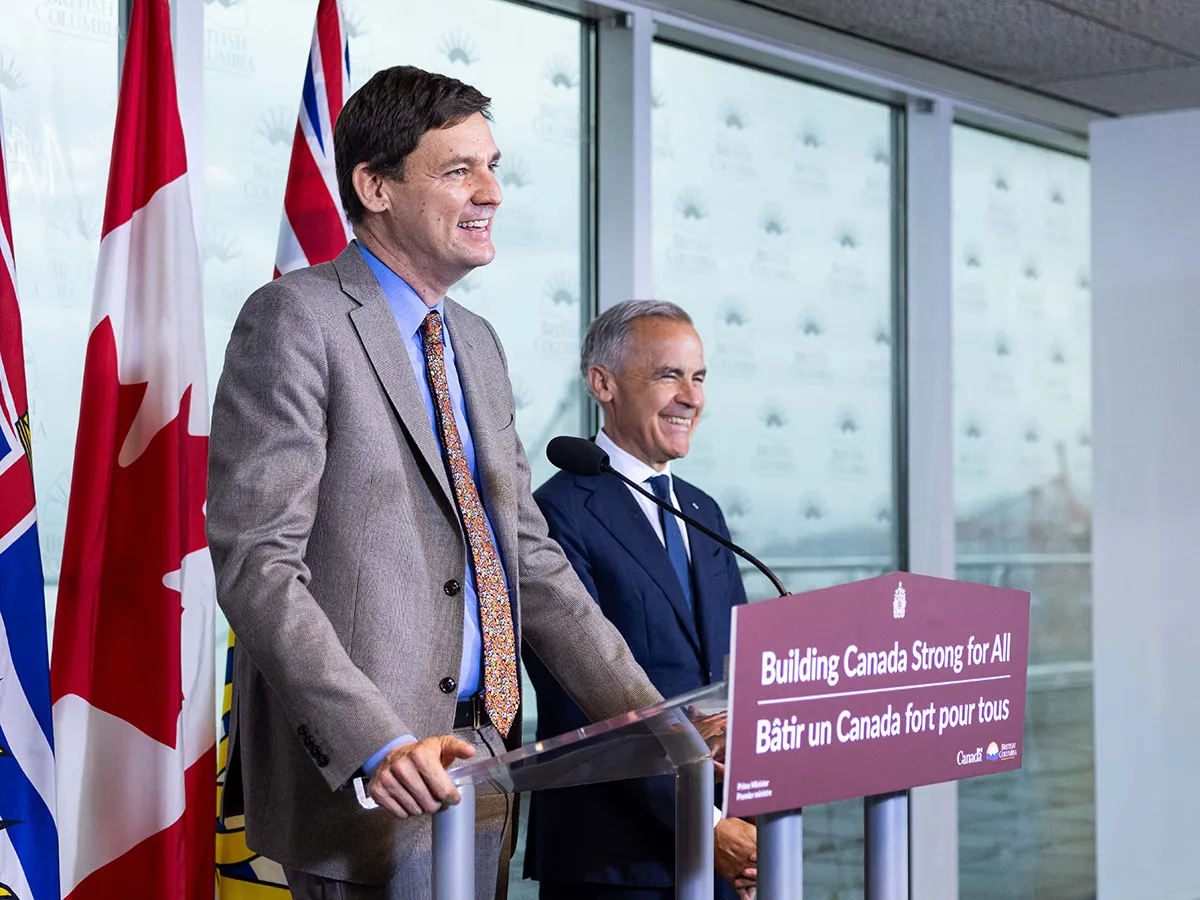
The federal government’s decision to allow British Columbia to collect royalties from a proposed new pipeline to the West Coast sets a dangerous precedent for internal Canadian trade by allowing one province to charge a toll for the transportation of goods from another province, analysts warn.
Allowing B.C. to charge a pipeline operator for passing through its province, they say, could establish a new framework where provinces could also start charging each other for other types of commercial traffic, perhaps including even transport trucks or rail cars that travel through another province on their way to other markets.
“It’s such a bad precedent,” said Jack Mintz, an economist and the President’s Fellow of the School of Public Policy at the University of Calgary. “It has no logic to it, outside of being extortion.”
Ottawa last week announced the Canada-British Columbia Cooperative Prosperity Agreement that states that the province will “share meaningfully” in the economic benefits if a newly proposed pipeline from Alberta to the B.C. coast is built. In addition to the province receiving federal support for a number of infrastructure projects and compensation for assessed environmental risks associated with the pipeline, it also stands to get an undetermined annual royalty payment from the pipeline.
In exchange, British Columbia Premier David Eby said his NDP government would not oppose the pipeline. Under his predecessor, John Horgan, the NDP government had tried to fight the Trans Mountain Expansion pipeline almost a decade ago. But interprovincial pipelines are a federal responsibility, and Horgan was ultimately unable to override the federal government’s constitutional authority, even though B.C. did win financial compensation from the Trans Mountain Expansion in 2017 before it was purchased by the federal government.
The difference between that deal nine years ago and the agreement announced earlier this month is that the previous deal called for B.C. to receive “an environmental and social licence fee” from what was then a private company for a period of 20 years; it did not offer royalty payments for Alberta energy simply travelling through B.C., said Ian Lee, a professor at Carleton University in Ottawa who specializes in trade.
Lee and other trade watchers said this new deal could become a greater barrier for interprovincial commerce than the existing provincial barriers that are usually designed to shelter local or provincial business from competition. In this case, Lee added, the goods are effectively being taxed for just travelling through B.C., and not even being sold there.
“This is interprovincial trade barriers on steroids.”
Critics say the fact that the new deal will compensate B.C. is a big problem because it may tempt other provinces to try to profit from the transportation of goods across their jurisdictions. That temptation will grow in the coming years, Lee said, as provincial finances worsen.
Related Stories
 Canada
Canada’s 2026 job gains have been erased. The hardest
7 minutes ago
 Canada
Seven Canadian provinces trail behind most U.S. states on economic performance: study
7 minutes ago
 Canada
Everyone loves Anne Carson
1 hour ago
 Canada
Canada’s 2026 job gains have been erased. The hardest
1 hour ago
 Canada
Shell to buy 30% stake in proposed Bay du Nord oil project off Newfoundland
1 hour ago
 Canada
OPP investigating plane crash near Fergus Friday morning
1 hour ago
 Canada
Why Canada needs a new growth model
2 hours ago
 Canada
Kia is recalling more than 48K SUVs in Canada. Here’s why.
2 hours ago