
'Light in the darkness': The journey of Noa Argamani
The world first saw Noa Argamani in what looked like a scene from a movie: a beautiful young woman in remarkable anguish on the back of a speeding motorcycle driven by a terrorist.
Now-famous Hamas GoPro footage showed Argamani screaming "don't kill me" as the terrorists took her from the Nova music festival on October 7, while she reached helplessly toward her boyfriend, Avinatan Or, being forced away at gunpoint.
Her outstretched arms and tear‑streaked face became one of the most searing visual emblems of the day.
She says she was, before that day, a "shy girl that never raised her hand in class."
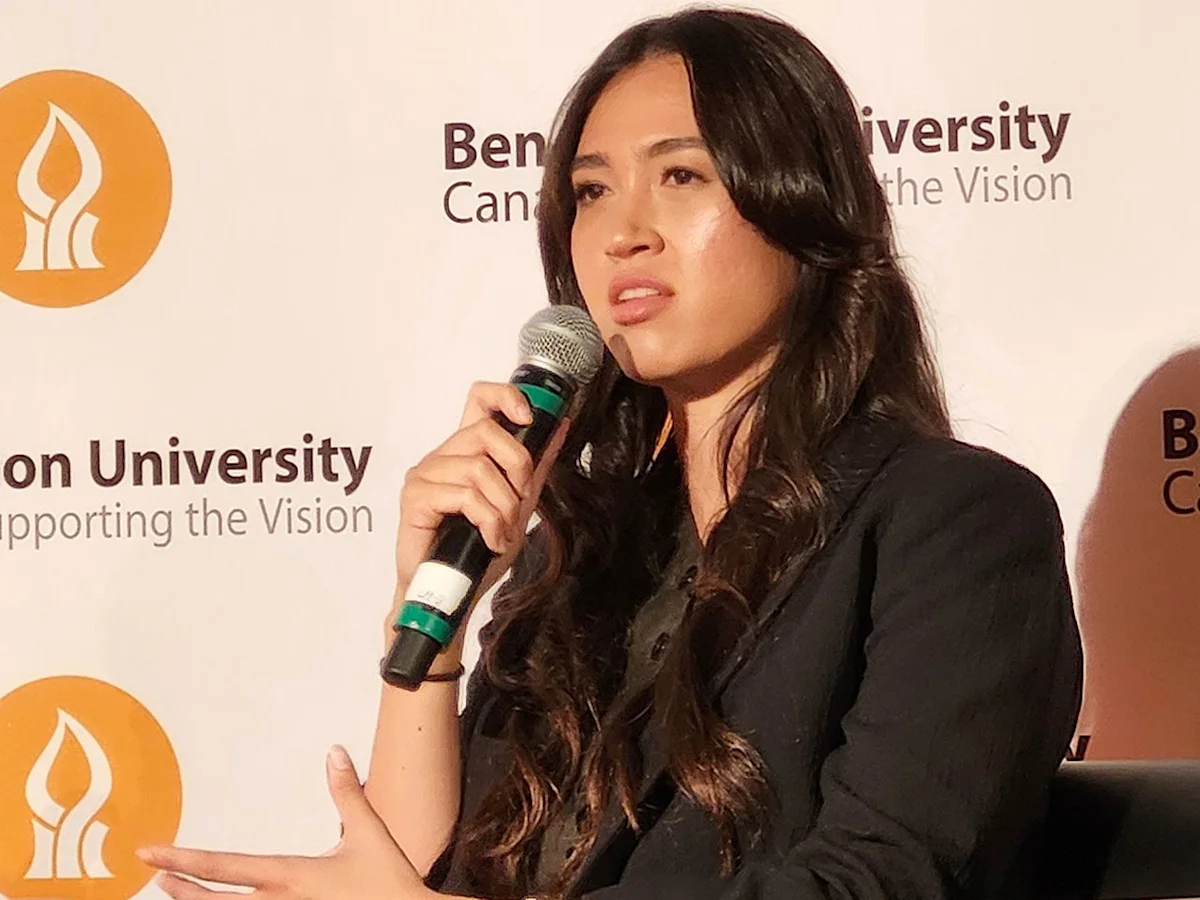
Two years after her June 8, 2024, rescue from Gaza by Israeli forces, she presented on a Toronto stage as that same shy girl, but one with a spine of steel.
"It's not easy. I don't really love the attention," she said at a Ben-Gurion University Canada-Toronto event, sharing the stage with former senator Linda Frum.
"But … I have to continue. I have to use these stages just to fight for others, to represent them, to talk about them, to tell each one of their names and their stories and to make sure that the world will never forget."
Named to Time magazine's 2025 Time100 list, for her resilience following her abduction, she urged the world "to not look away" at the Time100 gala. She now speaks to audiences across the world, and across Canada.
Last in Toronto a year ago, she said "a lot has changed since" for Israel – and she was "happy" to know the chapter has closed on hostage posters and yellow ribbons, to now "talk about everything as history."
Argamani was raised in Be'er Sheva, a city of some 230,000, located about 80 km northeast of Jerusalem. At age 16, she began computer coding, crediting her Jewish-Chinese mother who encouraged her to learn English, math and "be an excellent student." Upon enrolling at Ben-Gurion University, she "felt that I made her proud," pursuing a degree in AI.
She described her life prior to Oct. 7, 2023, as a 25-year-old "normal student," attending the Nova festival "just with my friends, celebrating life."
But at about 6:30 a.m., thousands of rockets were fired from Gaza. "Unfortunately, when I grew up in the south of Israel, we got used to rockets our whole life. So, we thought that there is just another round," she told the Toronto audience.
The situation quickly became dire. "I saw my friends getting murdered in front of my eyes, and I knew that it may happen to me as well." At that point, the life she had known vanished completely, replaced by a reality defined by deprivation and fear.
"I had nothing in the dark places," she said of her captivity.
"Barely food, or water. I was by myself, badly injured, lost my friends. But I was grateful for everything that I had. If it's half litre of water. If it's a blanket, or one date that I had for dinner. I was grateful for everything, because I survived," she said.
"You hear the sounds of the bullets crossing your head, and at that moment you know that (things are) fragile, and the end could be a different end, and that's why I kept telling myself that no matter what, I have to survive. I had no doubt, I'd come back home to see my parents."
Her mother was battling breast cancer, which weighed on her.
"Every day I would think about it … And because I'm an only child, I didn't want my father to stay behind while he sees his wife passing away and his daughter is still in captivity. So I was thinking about them every single day and they were my power to come back and survive, to fight back."
While held in various apartments, she was shown Al Jazeera clips that were "all fake" – predominantly about other hostages, and the war in Gaza. Throughout, she held on to positivity.
"I tried to just be grateful for everything that I actually have. If it's a glass of water, if it's a blanket. I didn't have the basic things that human beings get. Even access for the restroom is something that I didn't have at that time," she said.
In January 2024, she and other hostages were in a house that had been bombed by the Israeli air force. "We all got stuck under the rubble," she said. But a rescue team swooped in shortly thereafter.
"When I saw the (IDF) soldier, I wasn't really sure. But after a few minutes, they were talking to me and one of the soldiers that was with me, hugged me all the way home, to protect me with his body. And then, I knew that I was safe," she said.
"Because, this was the first time that somebody hugged me for after so long, that I knew that it's true. And, they all looked at me with tears in their eyes and said, 'you know, we're really happy to have you here with us.'"
She was unaware the world had come to know her story, and that of her dying mother. It was only after her rescue that her friends told her that her face "became a symbol."
Her mother died just three weeks later. "To see her passing away … was surreal to know that she was surviving for so long, against all odds."
Shortly after being rescued she met with Israeli Prime Minister Benjamin Netanyahu, and in July 2024, she accompanied him in Washington, D.C., to address a joint meeting of Congress – where she received a standing ovation. In January 2025, she was at a Trump post-inauguration rally, appearing on stage with the president-elect.
A month later, in February, while attending the National Prayer Breakfast in Washington, Trump recognized her from the podium, praising her courage and faith.
That month she addressed the UN Security Council session, on the Israeli-Palestinian file, speaking directly to ambassadors and foreign ministers present about the conditions of captivity. In March 2025, she joined other hostages in meeting Trump in the Oval Office. That same day, she attended Trump's joint address to Congress, invited as an official guest, as she was highlighted as a symbol of the hostage crisis.
The personal cost of all that visibility follows her into everyday life, she said.
"It's really scary when people recognize me on the streets, because everybody that recognizes me … all the time facing my trauma again," she said.
Argamani returned to school two months after being freed, while working on her English skills and taking up Arabic. Today she is among just 30 enrolled in Ben-Gurion University's exclusive "Yazamut (entrepreneurship) 360" cohort, a program aiming to transform students into business leaders. She's also part of a team of 12 at an Israeli venture capitalist company, with several international offices.
She aims "to be the bridge between America and Israel," she told the Toronto audience, while encouraging others to step forward "to be an ambassador."
"To share the stories, to share the names, the faces, to make sure that October 7 will never happen again. To be the light in the darkness, to show them that Jewish people are not bad, to be an example for everybody … to bring light."
The woman who made Hamas's hostages famous, so the world would know them
Former Israeli hostage looks to the future: 'It does not define who I am'
Our website is the place for the latest breaking news, exclusive scoops, longreads and provocative commentary. Please bookmark nationalpost.com and sign up for our newsletters here.
Related Stories
 World
World
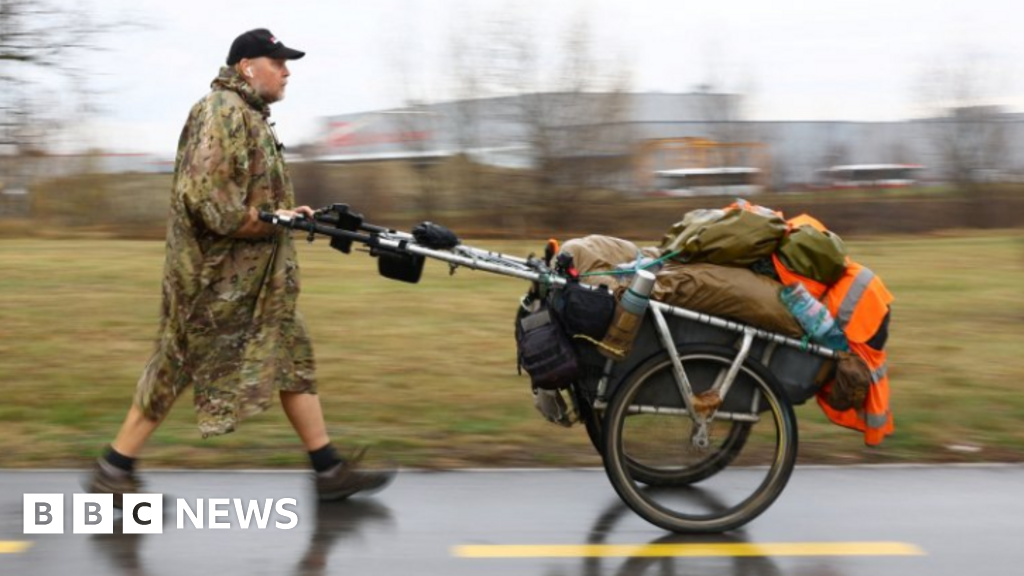
Who is Karl Bushby and why is he walking around the world?
1 hour ago
 World
World
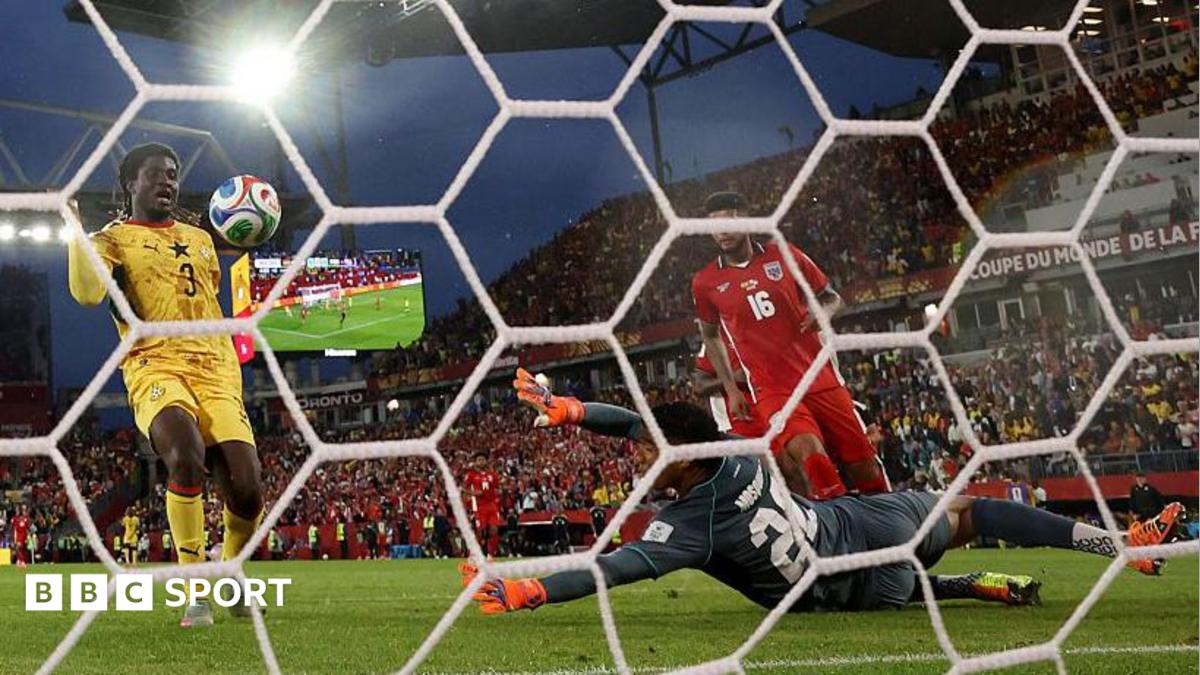
World Cup 2026: Why late goals are becoming more common than ever
1 hour ago
 World
World
The 10 Best Watches at the World Cup (So Far)
1 hour ago
 World
World
Labubu is bound for the big screen, as Pop Mart aims to capitalize on toy's global success
1 hour ago
 World
World
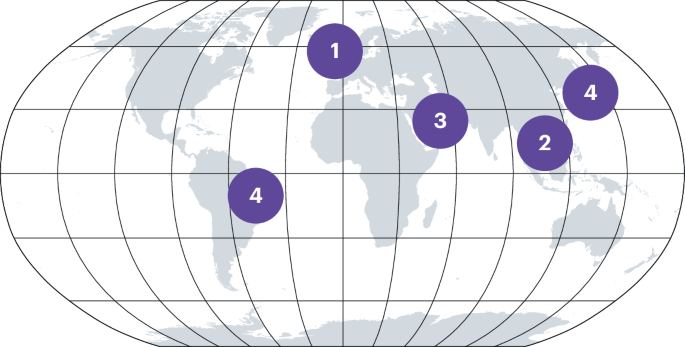
Biotech news from around the world
3 days ago
 World
World
Europe Today: Inside the G7 Summit in Évian
3 days ago
 World
World
Lionel Messi's hat trick leads Argentina to a 3
3 days ago
 World
World
Trust in news hits a new low, research suggests
3 days ago