
Lithium
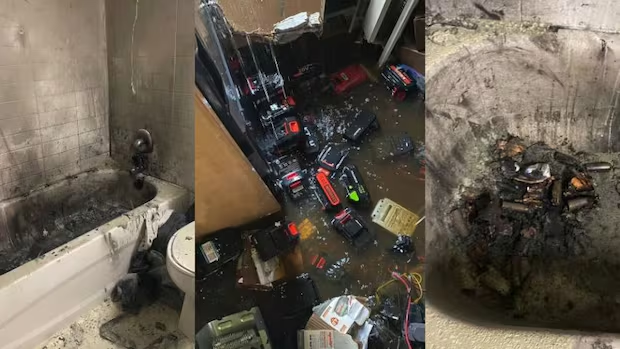
Lithium-ion batteries keep catching fire in Toronto. Here's why they are so dangerous
Lithium-ion fires burn hot, happen fast and emit toxic gasses
Why lithium-ion batteries are so dangerous
It usually takes up to five minutes for a room that’s on fire to reach flashover, according to Toronto Fire Chief Jim Jessop.
“Flashover is when all the contents in a room reach their maximum temperature and the entire room is on fire and nobody will survive,” Jessop says.
But a lithium-ion battery fire, the kind he says the city has seen a 200 per cent increase in since 2022, can reach flashover in 90 seconds. As of Aug. 19, there have been 86 lithium-ion battery fires in Toronto, according to Toronto Fire. There were 91 such incidents in all of 2025.
"So what does that mean? It means if you're a tenant in [that room] and that fire blocks your only exit out, your chances of surviving are greatly diminished."
Toronto Fire warns about the dangers of e-bike fires
Lithium-ion batteries are found in everything from phones and tablets to vacuums and power tools. But fires often involve damaged or overcharged batteries found in micromobility devices like e-bikes and e-scooters.
In a fire that happened on George Street on Aug. 12, Jessop said firefighters found at least six micromobility devices in the unit.
Jessop and other firefighters say the batteries are changing how firefighters operate because of their unpredictable nature, high heat and toxic chemicals. Fires can be more aggressive based on how charged the battery is, which firefighters often have no way of knowing. The batteries can explode and become projectiles while crews are responding. And Toronto Fire has had to expand its decontamination process to get carcinogens off its gear, because the standard protocol isn’t good enough.
“We don't have any jurisdiction on regulating the number of e-bikes or mobility devices in units and we certainly don't have any jurisdiction on demanding any types of standards of the types of batteries that are sold in the country,” he said.
Toronto fire chief calls for action after 4 fires in 24 hours involve lithium-ion batteries
Toronto's fire chief warns of surge in fires involving lithium-ion batteries
As his crews fight more battery fires in high-rise apartments and subterranean parking garages, Jessop wants to see the federal and provincial governments move faster on those sorts of regulations.
Health Canada is looking into proposing regulations for lithium-ion batteries, said agency spokesperson Mark Johnson in a statement to CBC Toronto last week. The Ontario fire marshal is also considering changes to the province’s fire code, office spokesperson Jim Demetriou said in a statement last week.
“Making sure the batteries that are sold in this country meet a standard, that would be the first step,” Jessop said.
How do lithium-ion battery fires happen?
Randy Narine, president of the lithium-ion battery testing company Clean Core Research, said while a lithium-ion battery fire may seem like a sudden event, it's the result of a buildup of heat leading to the release of gasses, ultimately culminating in a sustained burst of flames. The fire that results is uncontrollable and self-heating, a state known as thermal runaway.
“All it takes is one cell in there to go off,” he said.
The fires can be caused by mistreatment of the batteries, either physically or electronically.
In some e-scooters, for example, Narine says the battery pack is directly under the rider’s feet. That means someone simply riding the scooter is putting pressure on it and the battery could be taking more abuse if the rider bumps it on a curb.
Lithium-ion batteries can also undergo abuse from improper charging. With a phone, Narine said, the device and charger can work together so that once it’s almost full, it’ll start to slow down the charge.
Toronto's fire chief calls e-bike batteries the 'greatest public fire safety risk'
But Narine says people use chargers that aren’t properly made or actually meant for their e-bike batteries, so they continue to be pumped with electricity when they’re full.
“Electricity is the movement of heat. So what you've got is something trying to force feed electricity in a manner that this is not set up for,” he said.
An early warning sign of thermal runaway, Narine said, is white smoke coming from the battery. While the smoke may not look as bad as the fire that will follow it, it’s also extremely dangerous because it contains dangerous chemicals like hydrogen fluoride, which can be fatal if inhaled at high levels.
Calgary fire crews battle 4 lithium-ion battery fires in 24 hours
Pediatricians in Canada warn of 'exponential rise’ in childhood e-scooter injuries
While waiting for regulations from higher levels of government, Toronto’s fire chief says the focus municipally is on educating people so they can avoid these situations entirely, through things like proper charging and disposal.
“We want to see this move faster,” he said.
Lane Harrison is a reporter with CBC Toronto who primarily covers municipal and provincial politics. Born and raised in Toronto, he joined CBC in 2022 as a Joan Donaldson Scholar after an internship with the Globe and Mail. You can reach him at lane.harrison@cbc.ca
Related Stories
 Canada
Motorcyclist killed in crash with SUV
39 minutes ago
 Canada
Cleveland
39 minutes ago
 Canada
‘We feel very abandoned’: Mother and daughter from Montreal among Canadians stranded after Panama earthquakes
39 minutes ago
 Canada
Carney says U.S.
39 minutes ago
 Canada
Canada advises no travel to Riyadh airport after Houthi attacks, embassy remains open
1 hour ago
 Canada
Turkey gravy brand sold in Canada recalled due to undeclared mustard
1 hour ago
 Canada
Person dies after canopy collapses at Fairmont hotel construction site
2 hours ago
 Canada
Passenger terminal at Riyadh airport is struck again, a day after 12 were killed
2 hours ago