
Live updates: US
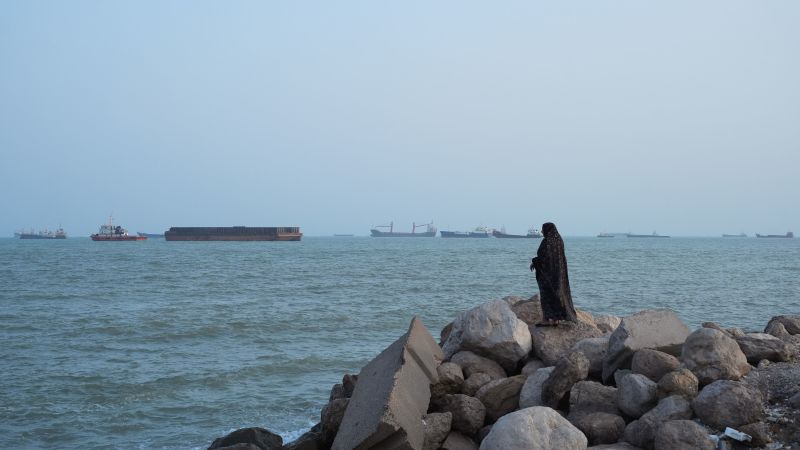
• Strait of Hormuz: Iran said the key waterway “cannot be seized with a tweet” after President Donald Trump claimed he would declare the strait US territory after the war. The United Arab Emirates has blamed Iran for a fresh attack on a commercial vessel in the shipping channel.
• Iranian pilots: An Iranian commander said Qatar is still holding three of the country’s pilots who were shot down early in the conflict. It appears to mark the first time Tehran has accused the US ally of holding the pilots.
• In Lebanon: At least 11 people were killed in Israeli strikes on the south of the country Saturday, Lebanese officials said, marking the deadliest day since a ceasefire agreement in June.
• US carrier stints: The Navy is increasingly asking its aircraft carrier groups to exceed the recommended deployment duration, according to a CNN analysis, as concerns grow for mental health and morale on the USS Abraham Lincoln.
Three Iranian military pilots whose planes were shot down while attempting to target Qatar have been held for months by the Gulf Arab country, Iranian military commander Seyed Mohammad Bagherzadeh claimed in a letter to the Red Cross, according to Iranian media.
Bagherzadeh said two Iranian Su-24 bombers were shot down after targeting the US military base in Qatar. Three Iranian pilots ejected and one was killed in action, according to Bagherzadeh, who did not provide evidence supporting the claim.
This appears to the first time Iran has accused Qatar of holding the pilots. Just two weeks ago the Iranian military said they were still trying to determine their fate. CNN reached out to the Qatari government for comment.
According to Bagherzadeh, Javad Salehi, Abdolmajid Dashtian, and Omran Beh Rowshia were captured by Qatari forces and have not been permitted visits or meetings despite “diplomatic efforts.”
CNN reported in March citing two sources briefed on the operation that a Qatari military plane shot down two Iranian Su-24s.
At the time, the Qataris issued a warning over radio but received no response from the jets. Due to “time constraints” and “based on the available evidence,” the aircraft were “classified as hostile,” one of the sources told CNN.
Qatar then dispatched its warplanes, and a Qatari F-15 fighter engaged the Iranian jets in “aerial combat” before downing them, the sources added.
The death toll from Israeli strikes on southern Lebanon this morning has risen to 11, the Lebanese Health Ministry has said, with another 19 people wounded.
Children and women are among those killed, the ministry said in a statement.
The Israel Defense Forces (IDF) said earlier today that it struck Hezbollah infrastructure after the Iran-backed militant group carried out what it described as “an action” against Israeli soldiers along the Ali al-Taher ridge in southern Lebanon. It did not provide any details on what the Hezbollah action was.
Hezbollah has condemned what it called “escalating aggression” and “a brutal massacre” carried out by the IDF against “innocent civilians.”
The escalation “reflects the desire and will of” Israeli Prime Minister Benjamin Netanyahu “to escalate the war to bolster his domestic political standing, serve his electoral goals, and appease the extreme right wing,” it added, also accusing the US of sharing responsibility for the attacks by providing Israel with “support and cover.”
Today marks the deadliest day of Israeli strikes on Lebanon since a tenuous truce between Israel and Hezbollah renewed in late June, with at least nine people reported killed in the attacks.
Lebanese Prime Minister Nawaf Salam called the strikes an “escalation” and a “matter of utmost gravity” in a post on X earlier today.
Israel and Hezbollah agreed on the ceasefire nearly two months ago, after the Israeli military killed at least 47 people in Lebanon, following a Hezbollah attack that left four Israeli soldiers dead.
The agreement was backed by US President Donald Trump, whose efforts to neutralize tensions with Iran have long been imperiled by Israel and Hezbollah’s ongoing fighting.
Hours after the truce was agreed to, however, Israel killed at least 16 people in strikes on several towns in southern Lebanon.
The following week, after four days of talks in Washington with Lebanese officials, Israel agreed to withdraw from two areas in southern Lebanon. The next day, it carried out a drone attack there.
One day later, Israel also approved continued military operations in southern Lebanon, striking buildings in Nabatieh and Mayfadoun. The IDF called these “Hezbollah command centers,” while the militant group said they were residential.
In the weeks since, strikes have continued to be exchanged.
Earlier this month, Israel issued its first evacuation order in southern Lebanon since June, launching fresh strikes on the area as Lebanese and Israeli officials are met for talks in Rome to cement the terms of the ceasefire.
The US-mediated talks ended earlier than expected after the attacks, but resumed the next day.
On Wednesday, Israel destroyed a school building in southern Lebanon Lebanon’s army said, marking the latest in a campaign of demolitions targeting civilian infrastructure that continues despite the ceasefire.
CNN’s Elise Hammond, Alejandra Jaramillo, Eyad Kourdi, Sana Noor Haq, Eugenia Yosef, Oren Liebermann, Hanna Ziady, Kara Fox, Dani Karni, Ibrahim Dahman and Jennifer Hansler contributed reporting.
A vessel affiliated with the United Arab Emirates state-oil company ADNOC was attacked Friday night local time while transiting through the Strait of Hormuz, the UAE’s Foreign Ministry said.
In a statement, Abu Dhabi blamed Iran for the hit, describing the attack as a “flagrant violation” of international law. The crew aboard the vessel were not harmed in the attack, they added.
The UAE’s Foreign Ministry accused Iran’s Islamic Revolutionary Guard Corps (IRGC) of committing acts of “piracy” by using the strait as a “tool of economic coercion and blackmail” and said targeting commercial shipping is a “direct threat” to the region.
It was the third attack on a vessel belonging to ADNOC in 48 hours. The state-oil giant said earlier that two of its vessels were attacked while transiting Hormuz on Thursday.
The United Kingdom Maritime Trade Operations (UKMTO), a Royal Navy-affiliated body that monitors maritime security and shipping in the region, said an “unknown projectile” hit the hull of a bulk carrier in the waterway. Iran has claimed official responsibility for the attack, but has warned ships of attempting to cross the maritime chokepoint.
The Emirati diplomatic adviser to the president, Anwar Gargash, said “repeated” targeting of the state oil company’s tankers “will not deter” the UAE.
US President Donald Trump said yesterday that he would “never apologize” for taking military action against Iran, arguing that higher gas prices have been worth it in his pursuit of preventing Iran from having a nuclear weapon.
This comes as Iran’s Foreign Minister Abbas Araghchi said earlier today that Tehran has not decided whether to resume negotiations with the US.
Here’s the latest on the conflict in the Middle East:
CNN’s Kit Maher, Aida Karimi, Mitchell McCluskey, Sophie Tanno, Eyad Kourdi, Laura Sharman and Charbel Mallo contributed to this reporting.
Iran’s Foreign Minister Abbas Araghchi said today that Iran has not decided whether to resume negotiations with the US, days after President Donald Trump said Washington was “low-keying” talks.
Araghchi has a wealth of negotiating experience, with nearly 30 years in a variety of diplomatic roles.
The 63-year-old was born in the central city of Esfahan and volunteered to fight in the Iraq-Iran war as a teenager, along with tens of thousands of young Iranians. After receiving a doctorate at the University of Kent in England, Araghchi joined the Iranian Foreign Ministry, and over the past 20 years has been a member of Iranian delegations on nuclear issues.
Other negotiators described him as highly competent with a command of the details. He was instrumental in negotiating the 2015 agreement with the West, Russia and China that set limits on Iran’s nuclear program before US President Donald Trump quit the accord in his first term.
Araghchi was appointed Foreign Minister in 2024 by President Masoud Pezeshkian, with a mandate to secure sanctions relief. He was soon negotiating with US envoy Steve Witkoff on Iran’s nuclear and ballistic missiles programs — talks that ultimately failed.
Dozens of senior Iranian officials were assassinated in airstrikes when the conflict began at the end of February, but Araghchi does not appear to have been a target, perhaps because he is seen as a possible interlocutor in any settlement.
The Iran-backed Houthi militia group launched six ballistic missiles at the Yemeni city of Mocha last night, killing one person, according to Yemen’s Armed Forces.
This was the latest attack on Mocha since the conflict in Yemen escalated last week, with the Houthis claiming to be targeting Saudi forces inside the country.
Here’s what to know about the group:
The Houthi movement, also known as Ansar Allah (Supporters of God), is one side of the Yemeni civil war. It emerged in the 1990s, when its leader, Hussein al-Houthi, launched “Believing Youth,” a religious revival movement for a centuries-old subsect of Shia Islam called Zaidism.
The Zaidis ruled Yemen for centuries but were marginalized under the Sunni regime that came to power after the 1962 civil war. Al-Houthi’s movement was founded to represent Zaidis and resist radical Sunnism, particularly Wahhabi ideas from Saudi Arabia. His closest followers became known as Houthis.
Yemen’s civil war began in 2014, when Houthi forces stormed the capital Sanaa and toppled the internationally recognized and Saudi-backed government. The conflict spiraled into a wider war in 2015 when a Saudi-led coalition intervened in an attempt to beat back the Houthis.
Nowadays, Sanaa is still under Houthi control, alongside much of the west of the country.
The Houthis are backed by Iran, which began increasing its aid to the group in 2014 as the civil war escalated and as its rivalry with Saudi Arabia intensified. Iran has provided the group with weapons and technology for, among other things, sea mines, ballistic and cruise missiles, and unmanned aerial vehicles, according to a 2021 report from the Center for Strategic and International Studies.
The Houthis form part of Iran’s so-called “Axis of Resistance” - an anti-Israel and anti-Western alliance of regional militias backed by the Islamic Republic.
American officials have been tracking iterative improvements in the range, accuracy and lethality of the Houthis’ domestically produced missiles. Initially, home-grown Houthi weapons were largely assembled with Iranian components smuggled into Yemen in pieces, an official familiar with US intelligence told CNN previously.
They have previously used drones and anti-ship missiles to target commercial ships – some of which aren’t believed to be linked to Israel – prompting the USS Carney, a warship in the Red Sea, to respond to distress calls.
One person was killed and eight injured after the Iran-backed Houthi militia group launched six ballistic missiles at Yemen’s port of Mocha on the Red Sea last night, according to Yemen’s Armed Forces.
According to preliminary information, the attack killed one member of the port’s security forces.
Two sailors are reported to be missing, while eight civilians sustained injuries, Staff Colonel Majed al-Zuraiqi, official spokesperson for the Yemeni Armed Forces, said.
Earlier, Yemen’s Foreign Minister Afrah Al-Zouba condemned the attack as “an attempt to strike one of the Yemeni people’s vital lifelines” in an X post Saturday morning local time, adding that the waters “will not become a tool for pressure in the hands of an armed terrorist group.”
Some context: Saudi Arabia has not yet commented on the strikes in Yemen. The kingdom has faced increasing attacks from the Houthis, who also declared a blockade on the al-Mandeb Strait in the Red Sea on July 20.
Israel launched a series of airstrikes in southern Lebanon on Saturday, according to Lebanon’s state-owned National News Agency (NNA), in the deadliest day since the June ceasefire.
An airstrike destroyed a house in Ansar town, killing seven people and wounding three others on Saturday morning, NNA said. Rescuers are clearing rubble and transporting the dead and wounded to hospitals, it added.
A nearby valley was also hit, marking the first time this area was attacked since the Israel-Lebanon ceasefire was agreed two months ago, NNA reported.
Israeli warplanes also targeted a teacher’s training college and a religious building in Nabatieh al-Fawqa, around 10 miles east of Ansar, with further strikes reported in the surrounding area.
The Israel Defense Forces (IDF) said it struck Hezbollah infrastructure after the Iran-backed militant group carried out “an action” against Israeli soldiers along the Ali al-Taher ridge in southern Lebanon. The IDF did not provide any details on what the Hezbollah action was.
“We will continue to operate to remove threats,” the IDF said in a statement.
An “unknown projectile” crashed into the hull of a bulk carrier in the Strait of Hormuz on Friday, the United Kingdom Maritime Trade Operations (UKMTO) centre said.
“The crew are reported safe, no damage assessment has been reported and environmental impact is unknown at present,” it added in an update on Saturday.
Commercial ships attempting to navigate in and around the Persian Gulf face the dual threats of violence in the Strait of Hormuz and Houthi attacks in the Bab al-Mandeb, meaning that there is “currently no genuinely ‘safe’ side of the Arabian Peninsula,” said maritime intelligence group Marisks in their latest intelligence update.
In a report on Friday, the UKMTO said there have been 56 reports of damage to vessels in the Strait of Hormuz and nearby waters since the US-Iran war began on February 28. Shipping traffic in the Strait of Hormuz has remained at a fraction of pre-war levels, it added.
View our interactive on how the war has reshaped traffic on the Strait of Hormuz.
The USS Abraham Lincoln is in the midst of a record-setting deployment, kept out of port for more than six months as the carrier’s crew faces morale and mental health concerns. The ship may break a record for the longest trip away from its home port for a US carrier since the Vietnam War.
That record was set just months ago by the USS Gerald R. Ford after that ship completed a 326-day deployment that included operations against Iran and Venezuela.
It’s part of a pattern, with the US Navy increasingly asking its aircraft carrier groups to exceed the service’s recommended deployment duration of seven months, according to a CNN analysis of deployment announcements and the USNI News fleet tracker.
Experts and former officials have warned that the trend could place more stress on the ships and lead to burnout among sailors or even push some to leave the Navy altogether.
A crew member serving on the Lincoln described morale on the ship as very low and there were regular strains on essential amenities — toilets and water fountains around the ship frequently closed and hot water often unavailable.
Other sailors aboard the Lincoln who spoke with CNN described conditions unlike their prior deployments, largely due to the combat that has kept the carrier from making stops at friendly ports. Ships can take on new supplies and allow its sailors to rest and relax during those port calls.
The ship has experienced intermittent food shortages, low supplies of hygiene items, and problems with the water system, sailors and family members told CNN.
President Donald Trump said he would “never apologize” for the war with Iran and downplayed the financial toll it has taken on Americans. “I did the right thing,” he added.
He argued higher gas prices have been worth it in his pursuit of preventing Iran from having a nuclear weapon.
“For you to pay a tiny little bit more for your gasoline, just remember… we don’t want to have them have a nuclear weapon,” Trump said Friday.
Catch up on the latest headlines:
CNN’s Laura Sharman, Aida Karimi, Mitchell McCluskey, Kit Maher, Julia Benbrook, Pamela Brown, Shoshana Dubnow, Haley Britzky, Issy Ronald, Eleni Giokos, Mustafa Qadri and Mohammed Tawfeeq contributed reporting.
Shipping traffic in the Strait of Hormuz was 17% of the pre-conflict average in the past seven days, according to the United Kingdom Maritime Trade Operations (UKMTO) centre.
Control of the critical waterway has become the focus of the war recently, with US President Donald Trump saying Thursday that he plans to declare it a US territory after “we finish defeating Iran.” That was met with a swift retort from Tehran, with the deputy foreign minister saying the Strait of Hormuz “cannot be seized with a tweet” or an aircraft carrier.
Only 151 ships made it in or out of the narrow waterway in the past seven days, according to the UKMTO’s latest report Friday.
There have been 56 reports of damage to vessels in the Strait of Hormuz and nearby waters since the US-Iran war began on February 28, the report said. But the tally does not appear to include the latest two attacks reported on Thursday. In a separate update, the UKMTO had reported that a vessel sustained “minor damage” after a drone attack on Thursday. And the Abu Dhabi National Oil Company (ADNOC) said two of its vessels were attacked while transiting the Strait of Hormuz.
The Southern Omani route, an alternative temporary corridor in the strait, remains the highest-risk, accounting for 16 of 18 projectile strike incidents reported by the UKMTO since July 6.
The US naval blockade is still in effect, barring ships from going to or from any Iranian port either inside or outside the strait. However, one Iranian-flagged ship was reported inbound and another outbound through the Strait of Hormuz in the past seven days.
The most common flagged ships to travel through the contested waterway were Panama and Liberia, each with 12 ships making it in or out. No US-flagged vessels were reported.
The most common type of vessel to travel through the strait was the product tanker, which typically transports refined petroleum products.
The latest figures mark a slight improvement from the previous week, when traffic was just 4% of pre-war levels, according to the UKMTO.
More on this: View our interactive on how the war has reshaped the Strait of Hormuz traffic.
Iran has not decided whether to resume negotiations with the US, Foreign Minister Abbas Araghchi said in the early hours of Saturday.
Earlier this week President Donald Trump said the US was “low-keying” talks with Iran. “We are only semi-negotiating with them,” he said in an interview with Axios.
Araghchi said that mediators Qatar and Pakistan have exchanged messages, but that those interactions do not constitute negotiations.
Iranian Deputy Foreign Minister Kazem Gharibabadi also responded to a claim by Trump that he would declare the Strait of Hormuz a US territory.
“The strait will be closed or opened solely under Iran’s authority, and as long as you refuse to accept the reality of defeat and abandon your delusions, Iran will continue enforcing the blockade,” he added.
President Donald Trump said Friday that he plans to declare the Strait of Hormuz a US territory after “we finish defeating Iran.”
Nearly half a year into the US-Iran war, global oil stockpiles are rapidly diminishing as traffic through the Strait of Hormuz remains effectively stalled and talks between two powers at the center of the hostilities are not appearing to make progress.
But, US President Donald Trump said said he would “never apologize” for taking military action against Iran.
Here’s what he has said recently about the conflict and issues impacting Americans:
Related Stories
 Careers
Egypt’s ICT and Labour ministries sign MoU to expand digital skills and employment opportunities
1 hour ago
 Careers
Tom Cruise film Digger could lose $245m at box office
4 hours ago
 Careers
South Korea’s military says North Korea fired a projectile toward the sea
15 hours ago
 Careers
Layoffs begin at Stelco’s Hamilton plant
15 hours ago
 Careers
Namespace’s $42M Series B and Eightfold Revenue Growth
17 hours ago
 Careers
11 Biggest Differences Between The Movie Adaptation Of Verity And The Original Book
1 day ago
 Careers
Princess Diana’s brother trashes Kristen Stewart’s ‘terrible’ “Spencer” movie
1 day ago
 Careers
10 companies that will let you work from anywhere and are hiring right now
1 day ago