
Mark Carney vowed free trade within Canada by this month. It's still not happening
When Lauren Skinner Buksevics first got a taste last year of the political momentum towards Canada finally removing interprovincial trade barriers, she thought the time was ripe for her family’s winery to go national.
The tariffs and sovereignty threats from U.S. President Donald Trump had created national anxiety over the future of the Canadian economy, specifically the continued ability to export to the country’s most important market. That quickly led to a wave of support for Canadian producers and sellers.
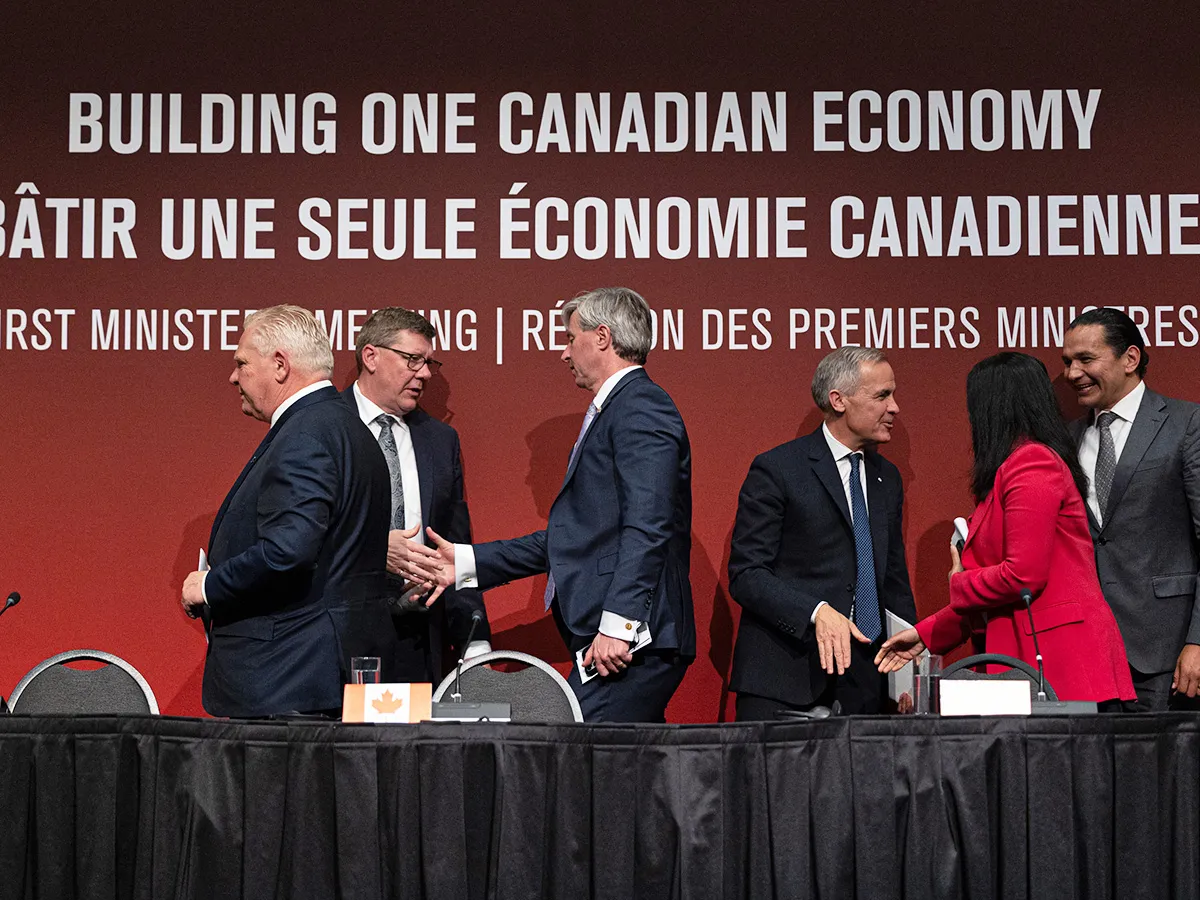
One of the signature pieces of Prime Minister Mark Carney’s response was to finally get rid of the costly interprovincial trade barriers that have been hampering the Canadian economy since Confederation and remain a major obstacle to growth.
The then recently re-elected Liberal government passed the One Canadian Economy Act last June, which included a promise for Ottawa to remove the federal portion of those internal barriers by July 1, 2026.
A year later, while the federal barriers — which were never really the big problem — have largely been removed, the broader goal of free trade within Canada has again largely stalled. And despite the national anxiety these days over international free trade agreements, interprovincial free trade agreements in 1995 and 2017, and a Constitution that states that products from one province shall “be admitted free into each of the other provinces,” Canadian governments continue to reject the benefits of economic union.
For business people such as Skinner Buksevics, the managing director of Painted Rock Estate Winery in Penticton, B.C., it’s a mystery what happened to all that momentum from a year ago. Despite all the talk and the countless interprovincial Zoom calls, she said it remains easier and cheaper for her winery to sell its signature Bordeaux-style red blend in foreign countries such as Germany than in other Canadian provinces.
Like many Canadians, Skinner Buksevics doesn’t understand how that’s possible, or how it makes sense for the country.
If the winery were allowed to sell barrier-free throughout Canada, she said the family-owned 27-acre vineyard could expand sales and help spread the Canadian wine brand. But the wine industry isn’t alone. It’s a similar story in big chunks of the economy, including building materials, agriculture, and a long list of professions.
“Canadians want to be able to buy Canadian products,” said Skinner Buksevics.
And perhaps worst of all, the vintner worries that the country may have missed its window to finally become an economic union. “I really do not want this moment to be missed,,” she said.
Don Drummond, formerly chief economist at TD Bank and before that the Department of Finance, said there’s been limited progress in recent months towards the promise of eliminating provincial trade barriers — and limited “heat” on the provincial politicians who seem willing to let the moment pass.
Canadians are understandably concerned about free trade barriers with the U.S. and other countries, he said, but are complacent about the absence of an actual economic union within Canada.
Related Stories
 Canada
Vehicle incident shuts Trans
27 minutes ago
 Canada
America 'not at war' with Canada, insists U.S. Treasury Secretary Scott Bessent
27 minutes ago
 Canada
Canadian government sites display ‘Lake America’ thanks to Google
1 hour ago
 Canada
Parts of Toronto could get over 50 mm of rain Monday: Environment Canada
1 hour ago
 Canada
Thinking of leaving your desk job and entering the trades? Here's your guide
1 hour ago
 Canada
Polls open in North Vancouver
2 hours ago
 Canada
‘We’re not at war with Canada,’ U.S. treasury secretary says
2 hours ago
 Canada
The Canadian suspected of spying on NATO was denied bail. Here’s what comes next
2 hours ago