
Monsoon Session: Did the Opposition win the optics battle

Parliament’s Monsoon Session ended on Thursday after weeks of disruption, repeated adjournments and political confrontation. The Opposition kept student protests and other contentious issues in the spotlight, while the government pointed to the passage of 12 bills as evidence that legislative work continued.But the more important question is not simply how many hours Parliament functioned or how many bills it passed. It is what happened to the quality of parliamentary scrutiny when much of the scheduled time was lost to disruption?The answer is more complicated than either side’s political narrative.The Opposition may have gained on the optics of the session by keeping contentious issues alive in the public debate. But repeated disruptions also reduced opportunities to examine legislation in detail. At the same time, the government cannot simply shift responsibility to the Opposition. Ensuring that Parliament functions is ultimately a responsibility of the government.That tension emerged clearly in a discussion with Ninad Sheth, Senior Journalist and Political Analyst, and Aditi Phadnis, Consulting Editor at Business Standard, in an interview with CNBC-TV18.Why was the Monsoon Session so disruptive?The session, which began on July 20, was dominated by protests over the NEET paper leak, student demonstrations and allegations of excessive police action against protesters at Delhi’s Jantar Mantar.The Opposition also raised allegations relating to donations made to the Ram temple in Ayodhya and repeatedly demanded that Home Minister Amit Shah address Parliament on the police action against students.The government, meanwhile, highlighted steps taken in response to the student protests. Education Minister Dharmendra Pradhan’s resignation, tighter provisions under the anti-leak legislation and the passage of 12 bills were cited as evidence that the government had responded to the concerns being raised.Parliamentary Affairs Minister Kiren Rijiju, however, acknowledged that the session had not been productive enough in terms of discussion.The Lok Sabha recorded productivity of just 19%, while the Rajya Sabha functioned for 37 hours and 49 minutes, with productivity at 39.17%.In the Rajya Sabha, members had opportunities to raise 285 questions, 380 Zero Hour submissions and 380 Special Mentions. But only 16 questions, 52 Zero Hour submissions and 93 Special Mentions could be taken up.That puts the session among Parliament’s more disrupted recent sessions, although it was not the least productive. The 2010 winter session under the UPA government recorded productivity of around 5%, while the 2016 winter session under the NDA saw productivity of around 17% amid protests over demonetisation.But productivity figures alone do not tell the whole story.A Parliament that spends fewer hours in session does not necessarily scrutinise every piece of legislation poorly. The more important issue is whether the available time is being used for meaningful examination of bills, amendments, questions and government policy.That is where the Monsoon Session raises a larger concern.Did the Opposition win the optics battle?On the narrow question of political optics, Sheth believes the Opposition did.The protests ensured that the issues raised by opposition parties remained visible both inside and outside Parliament. They also forced the government to respond politically.But there is a paradox.Parliamentary disruption does not necessarily prevent the government from legislating. In some circumstances, it can make legislation easier to pass because fewer MPs get the opportunity to scrutinise and debate bills.“Lack of debate, in fact, ironically helps the ruling party to pass bills,” Sheth said.This is the central contradiction of parliamentary disruption.An Opposition can use protests and adjournments to keep an issue in the public spotlight. It can create political pressure and force the government to respond. But if disruption prevents substantive debate, it can also deprive the Opposition of one of its most important institutional tools: scrutiny of government legislation.So the Opposition can potentially win the political optics while losing some of the institutional space available to challenge the government.Why does parliamentary scrutiny matter?The distinction between passing a bill and properly legislating becomes important here.Parliament's role is not simply to provide the numerical route through which a government can turn a proposal into law. Debate gives MPs an opportunity to question provisions, identify unintended consequences, suggest amendments and put competing political and regional interests on record.The Mines and Minerals (Development and Regulation) Amendment Bill provides one example.The legislation deals with the allocation and taxation of India’s mineral resources, an issue involving the respective powers of the Centre and state governments. The Supreme Court’s 2024 judgment on mineral taxation had followed decades of litigation.Yet, according to Phadnis, legislation dealing with such fundamental questions received only around 10 minutes of discussion in the Lok Sabha and roughly half an hour in the Rajya Sabha.Her objection is therefore not simply that the bill was controversial. It is that legislation with potentially long-term consequences deserves parliamentary examination irrespective of which side supports or opposes it.“It’s pretty shameful that such important legislation is passed with very little debate,” Phadnis said.The larger concern is therefore not merely the number of bills passed or the number of hours lost. It is whether MPs had enough opportunity to examine the substance of legislation before it became law.Passing legislation is not the same as properly legislating.Who is responsible for making Parliament function?This is where the two analysts differ.Sheth puts greater responsibility on the Opposition. His argument is that protests and legislative business do not necessarily have to be mutually exclusive. The Opposition can register its protest while allowing Parliament to continue considering government business.He believes the current approach has become an institutional problem in which disruption is increasingly treated as the primary form of political opposition.Phadnis takes a different view of accountability.In her assessment, the government, regardless of which party is in power, has the responsibility to make Parliament function. That could involve negotiations with the Opposition, political compromises or behind-the-scenes discussions to prevent a complete logjam.“It is the government’s job to ensure that Parliament functions,” she said.The distinction is important.The question is not only who disrupted Parliament, but also who is responsible for ensuring that Parliament does not remain disrupted.Both arguments can coexist.The Opposition has a legitimate right to protest. But disruption that prevents legislative scrutiny can weaken the very institution through which the Opposition is expected to hold the government accountable.At the same time, the government has the numbers and the institutional responsibility to negotiate a way out of a deadlock rather than simply allowing the House to remain paralysed.The UPI debate shows why scrutiny mattersThe amendment to the Payments and Settlement Systems Act, 2007, offers another example of why parliamentary debate matters beyond political theatre.The legislation gives the Centre the ability to alter the zero-MDR framework for UPI transactions through notification. That has potentially significant implications for India’s digital payments ecosystem.The question is straightforward but important: who ultimately pays for maintaining an increasingly large digital payments infrastructure?For years, UPI transactions have operated under a zero-MDR framework. While this has helped drive adoption of digital payments, banks, payment service providers and other participants still incur costs in processing transactions.A parliamentary panel has recommended the introduction of a calibrated MDR for high-value transactions, reopening a debate that goes beyond UPI itself and into the economics of India’s digital payments infrastructure.Sheth’s point is that the Opposition should have used parliamentary debate to challenge the government’s approach rather than preventing the bill from being discussed.That illustrates the institutional cost of disruption.Parliament gives opposition parties a formal platform to question the government’s assumptions, challenge provisions and seek changes to legislation. When that opportunity is lost, fewer substantive objections may be placed on the parliamentary record before a bill moves forward.The FCRA Bill shows another possible outcomeThe Foreign Contribution (Regulation) Amendment Bill, 2026 provides a contrasting example.The legislation attracted criticism from several groups, including concerns over its potential impact on organisations receiving foreign funding. Following the protests, the government moved to refer the bill to a Joint Parliamentary Committee.Sheth sees this primarily as the government responding to pressure and buying time rather than making a major political concession.Phadnis believes the referral is useful because the FCRA has implications extending beyond religious organisations to academic institutions and think tanks.The JPC route allows different stakeholders to present their views before the legislation returns to Parliament.That is an example of parliamentary scrutiny working differently from floor debate. A bill does not necessarily have to be settled during a single sitting; committee examination can create another layer of legislative scrutiny.It also shows why the quality of parliamentary functioning cannot be judged simply by counting bills passed.What about the Public Examinations Bill?The Public Examinations Bill provides an important counterpoint to the broader criticism.The legislation was among the government’s key responses to concerns over examination paper leaks and was passed after discussions in both Houses, according to Rijiju.This shows that the session was not uniformly devoid of debate.The problem, therefore, is not that every bill passed without scrutiny. Nor does low overall productivity automatically mean that every legislative measure received inadequate consideration.The concern is the unevenness of parliamentary deliberation — particularly when political confrontation consumes time that could otherwise be used to examine legislation.That distinction matters.The question is not whether Parliament debated anything. It is whether Parliament had sufficient time and political space to debate everything that required scrutiny.Can protest and parliamentary work coexist?India’s parliamentary system has always involved confrontation between the government and Opposition. Protest itself is not a failure of democracy. Disagreement, dissent and political pressure are central to parliamentary democracy.The difficulty begins when protest prevents the institution from performing its other functions.Sheth suggested that Parliament may need to think about institutional mechanisms that allow Opposition parties to protest without bringing legislative business to a halt. He even floated the idea of a dedicated “protest hour”.Phadnis, however, pointed out that Parliament already has mechanisms such as Zero Hour through which members can raise issues outside the scheduled legislative agenda.The deeper solution may therefore lie less in creating another parliamentary slot and more in strengthening the political processes around debate, negotiation and opposition scrutiny.A functioning Parliament does not require the government and Opposition to agree. It requires them to disagree within a system that still allows the institution to work.So, what did the Monsoon Session ultimately achieve?The government’s claim that it passed 12 bills is factually significant, but it does not by itself establish that the session was successful.Similarly, the Opposition’s ability to keep student protests and other contentious issues in the political spotlight does not necessarily mean it achieved a substantive parliamentary victory.The Monsoon Session instead exposed a more fundamental institutional tension.The government needs Parliament to function to pass legislation. The Opposition needs Parliament to function to scrutinise that legislation.When the House is repeatedly disrupted, both sides may gain short-term political advantages. The Opposition can keep issues in the spotlight, while the government can continue its legislative agenda with limited floor debate.But the cost is harder to measure.It is the loss of opportunities for MPs to examine laws in detail, challenge provisions, suggest changes and put their objections on record.That is why the most important verdict on the Monsoon Session may not be about who won the optics battle.It is whether India’s parliamentary system can accommodate fierce political disagreement without making legislative scrutiny the casualty.Continue Reading(Edited by : Prashant)First Published: Aug 13, 2026 6:33 PM IST
Related Stories
Call for 89th Edition
2 hours ago
 India
India
Badminton Star Saina Nehwal Open to Future in Electoral Politics
4 hours ago
89th Know India Programme for Scholars and Innovators (Brunei Darussalam)
4 hours ago
 India
India
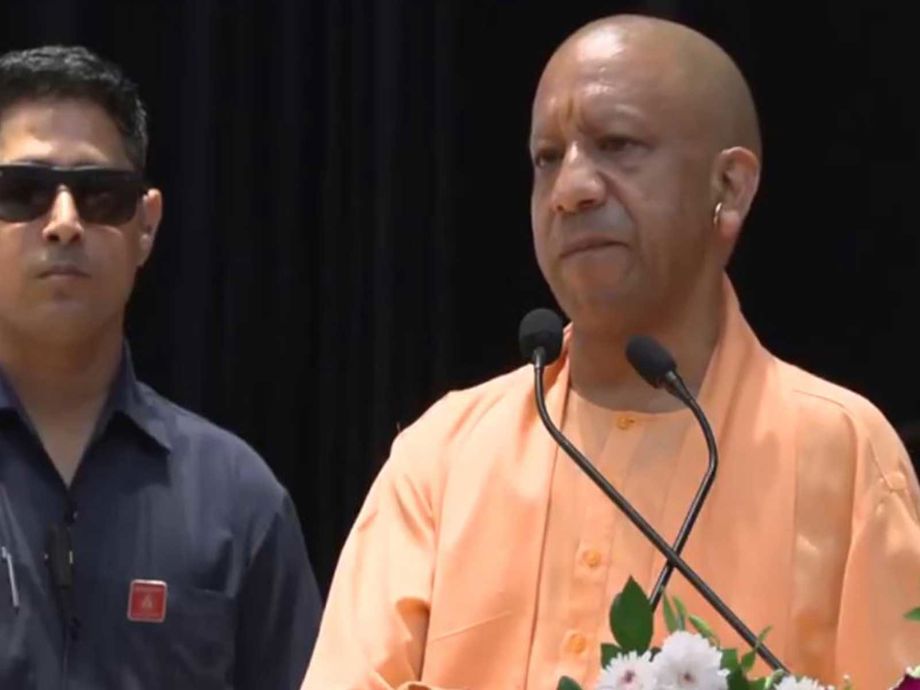
"Why destroy India's heritage?": UP CM Yogi Adityanath attacks Rahul Gandhi over Manusmriti remarks
6 hours ago
89th Know India Programme
6 hours ago
Modi government strangulating, emasculating ISRO, says Congress General Secretary Jairam Ramesh
8 hours ago
 India
India
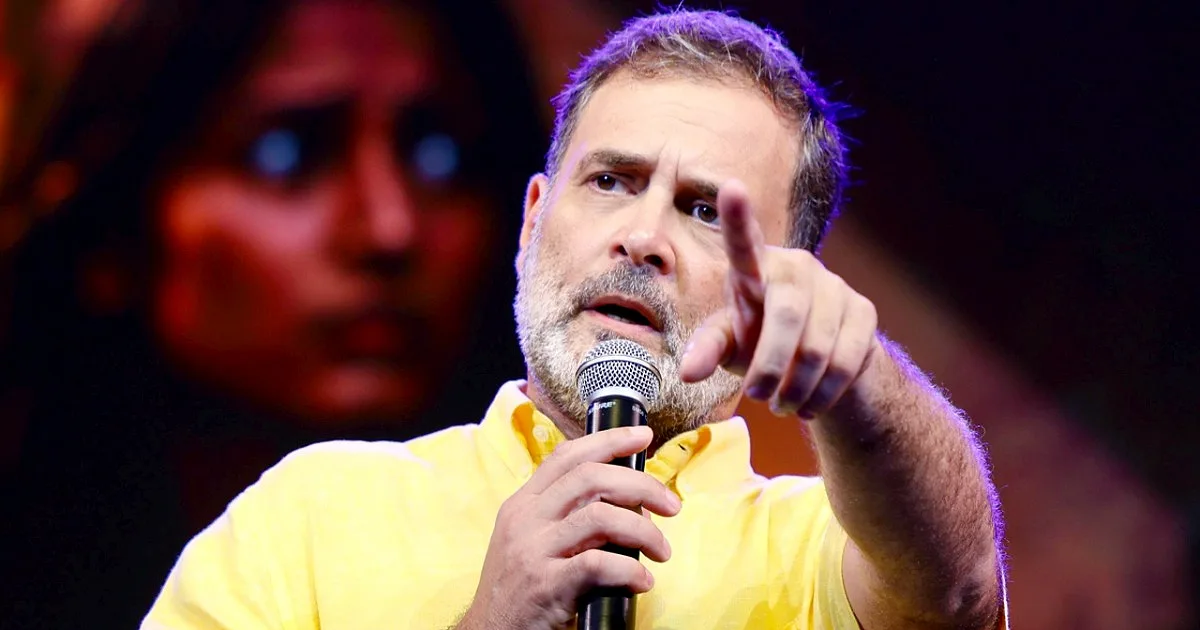
Rahul Gandhi's Politics Of The Street Wins New Fans
9 hours ago
 India
India
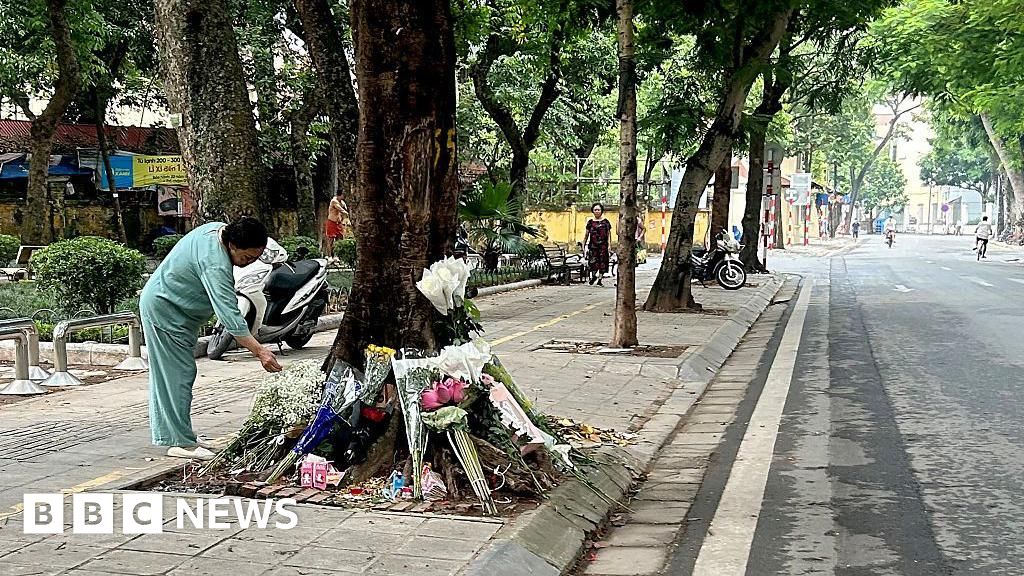
Vietnam: Gen Z seek justice for teen killed in ex
13 hours ago