
Nearly 9 million litres of sewage dumped into Winnipeg's waterways after storm
Nearly 9 million litres of sewage dumped into Winnipeg's waterways after storm-related power outages
Spills preventable as aging sewage infrastructure 'not up to snuff,' expert says
The spilling of nearly nine million litres of untreated sewage into Winnipeg's waterways earlier this week is a preventable problem, one expert says.
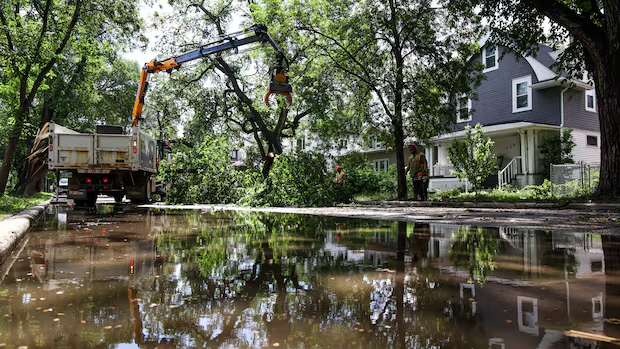
Tuesday night's storm caused power failures that led to several spills of diluted wastewater at five sites across the city, the city's untreated sewage report webpage says.
The city said the storm also caused combined sewer overflows alongside the power outages, leading to more spills. A total of 8,700,000 litres of diluted sewage was spilled from Tuesday to Wednesday, the city said.
Nora Casson, a Canada Research Chair in environmental influences on water quality at the University of Winnipeg, says some of that sewage will ultimately flow north into Lake Winnipeg.
"The sewage has all kinds of things in it that we don't want in our rivers, including nutrients like nitrogen and, importantly, phosphorus," she said Friday.
"When you have too much phosphorus entering a stream or a lake, you can end up with the types of harmful algal blooms that we've seen routinely and increasingly on Lake Winnipeg."
It's not the biggest sewage spill in Winnipeg in recent years. A mechanical failure at the North End sewage treatment plant in 2024 sent nearly 230 million litres of sewage into the river before the leak was stopped.
Casson says the spills are preventable, as the city's sewage infrastructure is "not up to snuff."
City of Winnipeg says 2024 sewage spill had no significant impact on Lake Winnipeg's health
Manitoba government charges City of Winnipeg over Red River sewage spill
"Our sewage infrastructure is old … and it's failing in a lot of cases," she said.
"Even though it seems like a big expensive problem, it's actually much easier to stop nutrient pollution from sources like this, where we know exactly where it's coming from, than to stop it from places like run-off on a farmer's field," Casson said.
Most of the phosphorus run-off across the Prairies takes place in the spring snow melt, but Casson says extreme weather events due to climate change are causing unexpected run-offs more often.
The larger impact of the floods on Winnipeg's waterways might have come from farmers' fields, she said.
Governments should work to support farmers and agricultural producers to ensure nutrients stay on the land and away from rivers and lakes, Casson said. People living in cities should think about how they can reduce the nutrients they send into their wastewater, she said.
"The lake doesn't care if the phosphorus came from a sewage leak or from livestock manure, it's doing the same thing once it gets to the lake."
Related Stories
 Canada
Albertans head to polls in historic referendum on whether they want to stay in Canada
1 day ago
 Canada
In the news today: four soldiers killed, Alberta referendum, AI privacy fears
1 day ago
 Canada
How a grass fire at a Canadian military base killed four soldiers
1 day ago
 Canada
How will household electricity rebate reduction, temporary winter pricing change impact Ontarians?
2 days ago
 Canada
Residents told to boil tap water due to bacteria
2 days ago
 Canada
Oil
2 days ago
 Canada
Albertans vote on path to independence as Carney fights to keep Canada united
2 days ago
 Canada
Two of 4 soldiers killed in fast
2 days ago