
New EPS integrated stabilization centre already saving lives
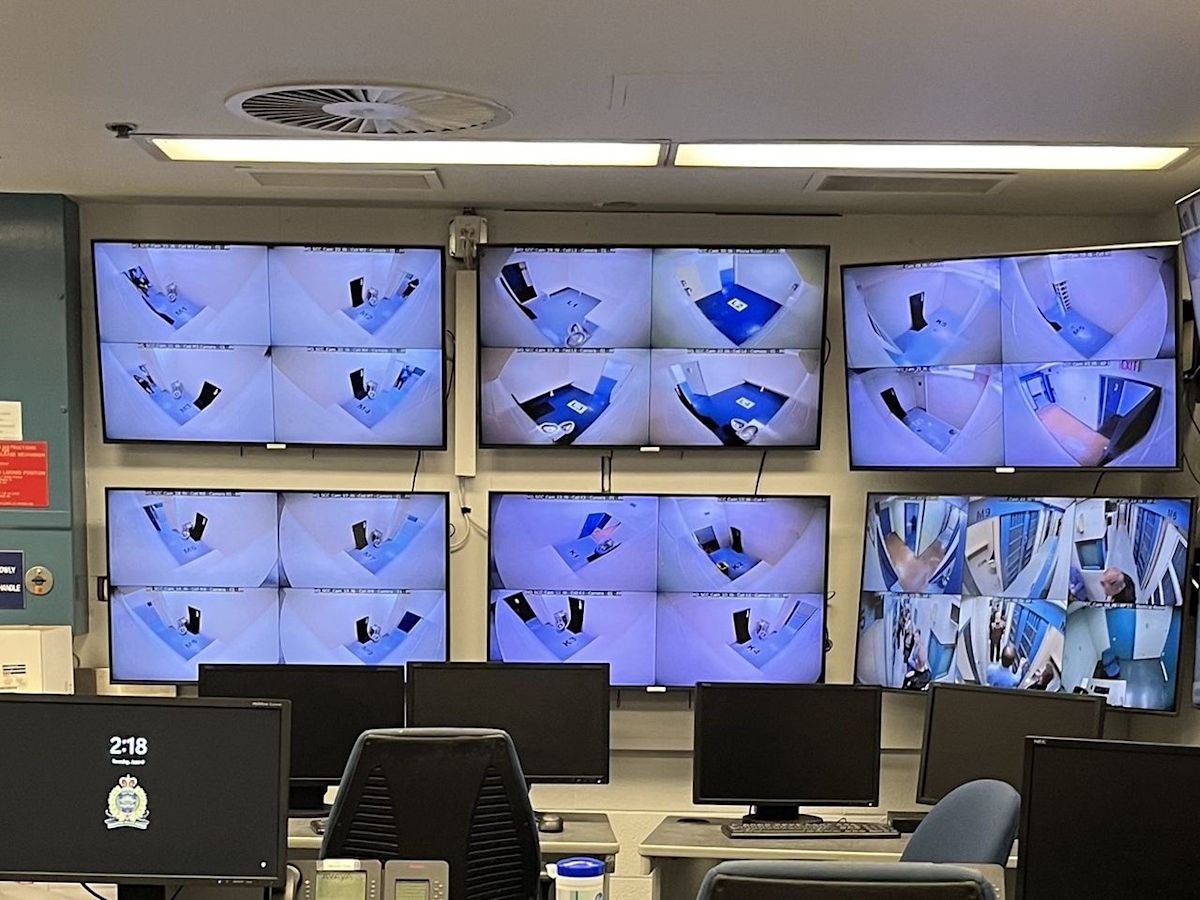
Behind the blunt concrete front of the old Edmonton Police Service headquarters, a remarkable transformation is taking place, one arrest at a time.
Opened in September, the focus of the new integrated stabilization centre carved out of old holding cells is not just to dry out and bail out, but to give people time to stabilize and connect with Recovery Alberta.
The centre's six beds recorded 98 admissions over three and a half weeks. From that group, with enhanced health supports and Recovery Alberta help,12 people transferred directly to the Addiction Recovery Centre at Alberta Hospital Edmonton, generally within 24 hours.
"Those are 12 people that would still be on the street today," said EPS Chief Warren Driechel.
Driechel said he often hears the dismissive "people don't want help," but he doesn't buy it.
"I actually truly believe people want help. They just don't know they need help at the time. And so the goal of this, what we're working on, is like to slow things down a bit, provide all our frontline workers a place to take people, and then get them stabilized to a point where we're going to have a higher rate of success in providing services to them," he said.
Under former police chief Dale McFee, Edmonton police took some public criticism for actively dismantling occupied encampments around the city in the bitter depth of winter in 2024.
That marked a turning point for Driechel, who cites the opening of the navigation centre through the provincial government's Mental Health and Addiction, and Housing the Homeless.
Just scooting people from a spot on a street to shelters wasn't enough, he said, recalling frustration and "a lack of clarity of what to do with people" since they weren't getting plugged into the services the police were trying to entice people towards.
One individual on Edmonton streets has been revived from overdose more than 400 times, Driechel said.
"We continued to track an increase in opioid deaths, not the reduction that we wanted to see in the Edmonton region.
"We were seeing people in crisis on the street. We were seeing the open-air drug use, and then our members asking, what do they do with these individuals? There was this just kind of shuffling of people around without the supports and a plan in place," Driechel said.
"We're all kind of just like walking around it, walking by it, and I don't think we can allow that anymore."
Working with Mental Health and Addictions, police responding to social disorder and the chaos caused by addiction have more options now.
Now there's the integrated stabilization centre. There's the navigation centre. Hope Shelter now has medically-assisted beds. Recovery centres are getting stood up around the province, including a handful of therapeutic living units to help those in the throes of addiction find new ways to live and thrive. Bringing health and justice systems together is leading to creative solutions, Driechel said.
"The goal is really to to kind of stem the flow of these deaths and the addiction that we're seeing on the street. This really gives a focal point for frontline workers to take people," Driechel said.
"The sooner we can start to get people through these systems, the more time that they have to go back and dedicate to the community. So that's really a motivator for us."
Numbers suggest a connection between corrections and recovery.
Between 2020 and 2023, of the overdose deaths in Alberta, half of the individuals had had some contact with the criminal justice and correction system.
Early numbers suggest correctional treatment intervention is working. By 2023, the interventions were associated with a reported 67 per cent decrease in overdoses one year after release among contacts.
The moral of that story was that the moment of interaction with corrections was a critical opportunity to offer enhanced mental health and addiction supports. Specifically, the profound —and frequently fatal — addiction to opioids, and so Recovery Alberta's agonist therapy program is available in cells as well as out in the community.
"(We said) 'Wow, we absolutely need to lean in and support these individuals in many cases," said Evan Romanow, deputy minister for Mental Health and Addiction under Minister Rick Wilson.
It's a grim-sounding name, but agonist therapy has gotten a recent boost on a voluntary basis through police interventions. Specifically, the administration of a monthly shot makes taking opioids, well, agony.
Some 2,000 people a year are receiving voluntary access to opioid agonist therapy through the virtual opioid dependency program, with health supports in arrest processing units across the province.
"Edmonton Police has been leading the charge there," Romanow said.
He was part of a panel at the Alberta Municipalities conference on Wednesday where news of Edmonton's corrections-recovery connection attracted interest from Ponoka Coun. Carla Lloyd.
"We need more services rurally. Ponoka, in particular, we sit with a major psychiatric facility and our four nations to the north," Lloyd told him.
Romanow said hiring, not dollars, has been a challenge.
Similar, smaller-scale approaches are available or being developed in Calgary, Grande Prairie, Lethbridge, Red Deer, RCMP detachments, and potentially tribal police services.
"The goal is to have more police and crisis teams, more of those resources," he said.
"It's just staggering the positive enhancements to people's lives as evidenced by mortality, (and) by the outcomes with pathways that didn't exist before because the health supports didn't exist before."
The ministry is talking to the RCMP about making the most of their central capacity with a mental health therapist embedded with dispatch to support local enforcement teams and connect them with Recovery Alberta, he said.
It's not inexpensive. The budget for Mental Health and Addiction grew from approximately $80 million in direct funding in 2019 to $2.3 billion, including roughly $300 million in newly-transferred shelter and housing supports, and more than $350 million in capital for recovery communities, Romanow said.
That figure includes a June 2026 infusion not seen in the budget books yet of $300 million, the transfer from Assisted Living and Social Services for shelter and housing supports funding on top of the $2 billion that Mental Health and Addiction has within its direct scope, making the Ministry of Mental Health and Addiction the seventh-largest ministry in government, Romanow said.
Tracy Palmquist, a registered psychologist and senior operating officer of addiction services at Recovery Alberta, started as a frontline addiction counselor with AADAC 24 years ago.
The flow from the street to recovery for the most vulnerable populations suffering with severe substance use disorder is taking place at an unprecedented pace, she said.
"It's been quite remarkable, and the partnership with police and with Mental Health and Addiction has been transformational, I think. I have not seen this in all my years in the field," Palmquist said.
Top Alberta doctor touts once-a-month shot to counter OD brain damage
Alberta judge renews calls for involuntary treatment for youth after a 15-year-old boy died of an opioid overdose
Bookmark our website and support our journalism: Don't miss the news you need to know — add EdmontonJournal.com and EdmontonSun.com to your bookmarks and sign up for our newsletters.
You can also support our journalism by becoming a digital subscriber. Subscribers gain unlimited access to The Edmonton Journal, Edmonton Sun, National Post and 13 other Canadian news sites. The Edmonton Journal | The Edmonton Sun
Related Stories
 Canada
New York prosecutors reopen investigation after student files lawsuit over alleged gang rape at Cornell University
23 minutes ago
 Canada
Finding Mason Jenkins top priority of Correctional Service Canada; killer’s escape being investigated
24 minutes ago
 Canada
PWHL OPENING WEEKEND SCHEDULED FOR DECEMBER 5-6 | PWHL
24 minutes ago
 Canada
5 men arrested near a U.S.
1 hour ago
 Canada
Alberta, Ontario premiers set to share stage in Calgary to talk energy policy
1 hour ago
 Canada
Another officer charged in Project South corruption probe pleads guilty
1 hour ago
 Canada
Canada needs to invest in the news it needs
1 hour ago
 Canada
Alcohol is Canada’s biggest drug problem. So why aren’t people getting help?
2 hours ago