
Northeastern math lecturer heads to the Racketlon World Championships

LONDON — Northeastern University lecturer Matthew Haynes recalled getting “absolutely dominated” in tennis and squash in his first Racketlon World Championships in 2014.
Twelve years later, he’s one of the fiercest competitors in the sport, which features competition in a quartet of racket sports: table tennis, badminton, squash and tennis.“That was my motivation then to start playing all four sports,” said Haynes, assistant professor of mathematics at Northeastern University in London. “So I now play far too much sport all the time.”
Racketlon is a rollercoaster ride, Haynes said, because players are stronger in some disciplines and weaker in others.
Like badminton or table tennis, racketlon is a head-to-head sport, where players compete to score 21 points. Except in this unusual, multi-racket sport, competitors face off first at table tennis, before heading to the badminton court, and on to games of squash and tennis. Working their way through the sports – from smallest racket to largest, say the official rules – the person with the most points over the four sets comes out as the winner.
“The main thing about racketlon is everyone has to be very humble because one minute, you’ll win 21-2 and the next minute you’ll lose 21-3,” said Haynes, an assistant professor of mathematics at Northeastern University London. “Everyone has to have that mentality of ‘I’m going to lose'” in some sets.
As Haynes prepares to travel to Rotterdam for the 2026 World Championships of Racketlon on Aug. 5, he is once again preparing to take on the rollercoaster ride. Balancing his work as a lecturer with international sporting competition, Haynes now finds himself as an experienced player on the racketlon circuit who is helping younger players develop on court, just as he does in the classroom.
Yu-Chun Pan, faculty director for the computing, mathematics, engineering and natural sciences at Northeastern University London, said many faculty have remarkable talents and achievements outside academia. But stories like Matt’s are “especially interesting,” he added.
Pan was surprised to learn Haynes was part of the British national team “particularly the level at which he competes while maintaining such a strong commitment to teaching and students,” he said. “It really was a wow moment for me when I learned about this.”
Racketlon began in Finland in the mid-1980s and was originally called mailapelit, Finnish for “racket games”. As the sport spread across the Nordic countries and beyond, its international governing body, the Federation of International Racketlon (FIR), was founded in 2002, and now comprises 36 member countries spanning Europe, Asia, North America, Africa and Oceania. The FIR World Tour, launched in 2003, brings together more than 1000 competitors in a series of competitions, culminating in the annual World Championships.
Haynes first tried his hand at the sport about a decade later while studying for his Ph.D. and now balances competing with his work at Northeastern, where he teaches calculus and statistics, while promoting experiential learning in his department.
Newcomers to the sport tend to arrive having excelled in one sport but quickly get used to being beaten badly in other disciplines, Haynes explained, a learning experience he won’t forget from his first World Championship.
Haynes, for instance, had played in British national competitions in both table tennis and badminton, and won two qualifying tournaments for racketlon amateurs in 2014, which would be his ticket to the Racketlon World Championships.
The scoring system for racketlon adds up the total points scored across all four sets, meaning every point counts. A big part of game strategy is learning to limit losses in sets where you’re down, explained Haynes. Indeed, a racketlon player can lose in three sports and still win the overall game – if they thrash their opponent in their dominant round. As players become more skilled, they hone their killer instinct and tend to win bigger in their dominant sports, he added.
It is “a mental challenge” to see the big picture through the crushing defeats, said Haynes, as well as thinking “I’ve got to stay on top when I’m strong.”
Racketlon = racket sport x four
Once Haynes started playing regularly, he quickly settled into the welcoming sport, where he met many likeminded people with similar backstories that included achieving some success in one racketsport before learning about racketlon. In 2022, he climbed to number 32 in the world rankings for mixed doubles, in which he competes with a female partner in all four sports. He was the runner-up in the elite doubles event at the 2022 French Open, and was also part of the national team that came second in the major Nations Cup team competition at two consecutive World Championships in 2022 and 2023.
This year, he has high hopes for Team GB.
“On the European scene at least, Team GB is traditionally very, very strong at squash. And the team I’ve been picked in has three very strong table tennis players,” he said. “But when we get out of those two sports, we will have some noticeable weaknesses, especially against teams like France and Sweden, who will be badminton and tennis specialists.”
Balancing teaching and training in four sports can be difficult, said Haynes, who lives near Salisbury in Southern England and has a more than two-hour commute to the London campus near Tower Bridge.
He was previously training six days a week, often practicing more than one sport a day. But “during term time it is harder, ” he said, forcing him to limit himself to training three or four times a week. Less training time and a busy nonsporting schedule – including getting married later this year – have meant he’s down from his rankings peak but he is targeting a return to the top level in the near future. In the meantime, he will play a supporting role in this year’s championships, he said, playing in doubles competition alongside younger team members who are working to gain experience.
This mixture of determination and support is evident in the lecture hall as well as the court, Pan said.
“Matt brings the same dedication, discipline and resilience to the classroom that has helped him succeed at the highest level of racketlon,” he said. “His commitment to continuous improvement and ability to perform under pressure make him an inspiring colleague and role model for our students.”
In math lectures, his students are mostly unaware of his sports speciality, Haynes said. But he’s keen to encourage potential new players to try their hand at tournaments, which take place in London and Boston, which hosts the Massachusetts Racket Masters, the premier event on the U.S. calendar.
For anyone considering racketlon, he has some simple advice: “Just come along, give it a go,” he said.
Northeastern Global News, in your inbox.
Sign up for NGN’s daily newsletter for news, discovery and analysis from around the world.
Related Stories
 World
World
Ducati joins the FIM 6DAYS® for joint centenary celebrations
52 minutes ago
 World
World
Isaias strengthens to become first Atlantic hurricane of 2026 season
53 minutes ago
 World
World
Austria Names 2026 Women's World Championship Roster
1 hour ago
 World
World
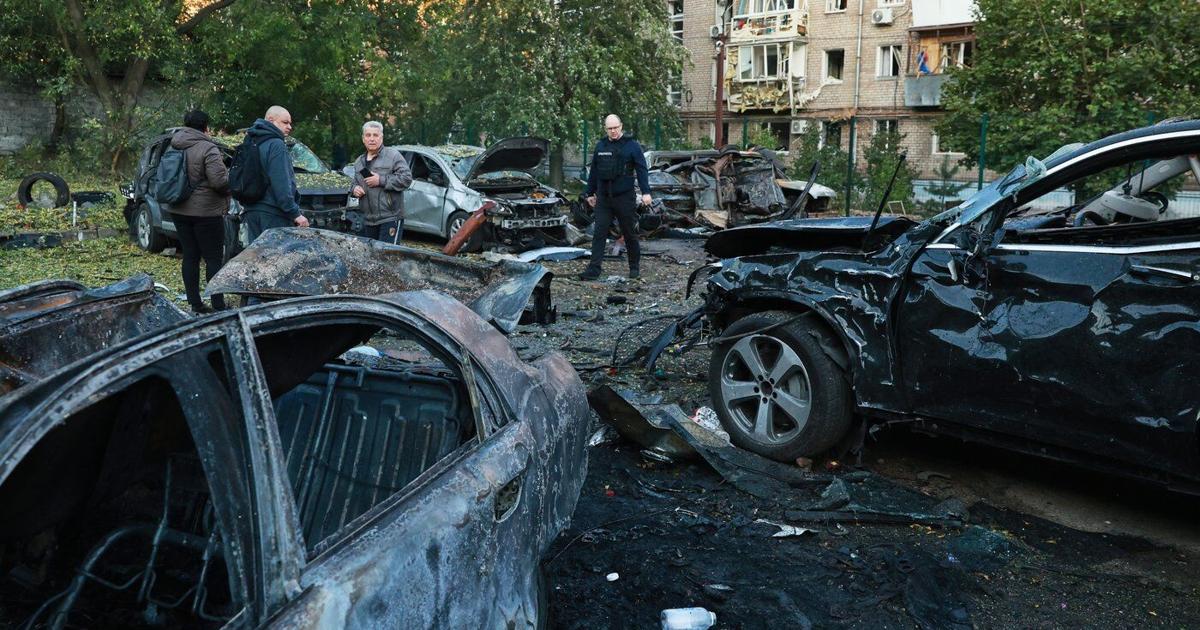
Russian strikes across Ukraine kill 3 people as Kyiv struggles to counter escalating attacks
2 hours ago
 World
World
How Texas landowners are fighting back against Trump's border wall
2 hours ago
 World
World
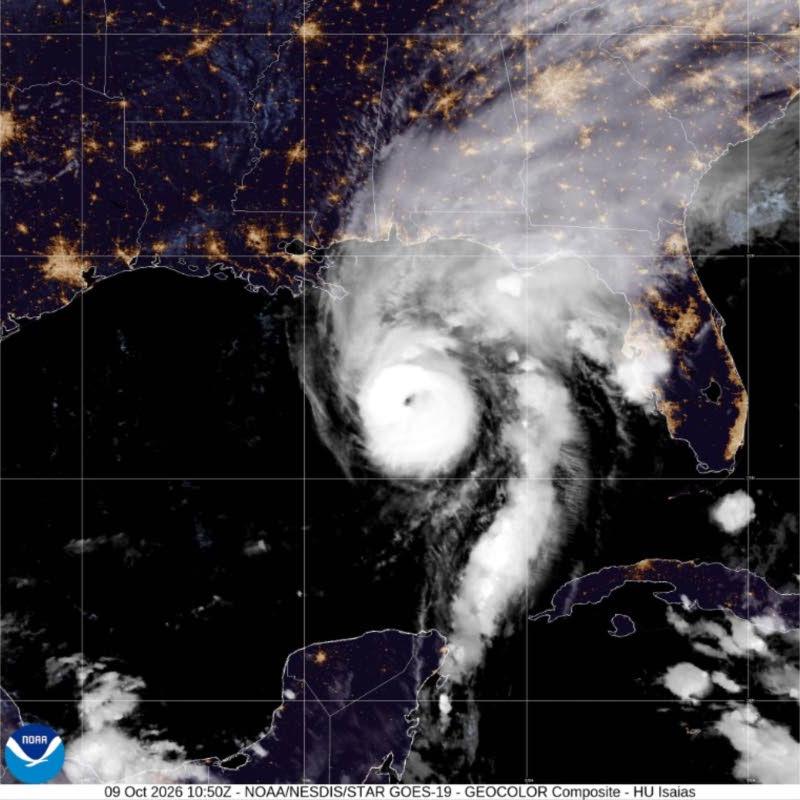
Hurricane Isaias strengthens to Category 3 ahead of expected landfall
3 hours ago
 World
World
Portugal ready for the hundredth 6DAYS® FIM Enduro of Nations
3 hours ago
 World
World
Nobel Peace Prize live: Navi Pillay wins for 'efforts to promote peace and international law'
3 hours ago