
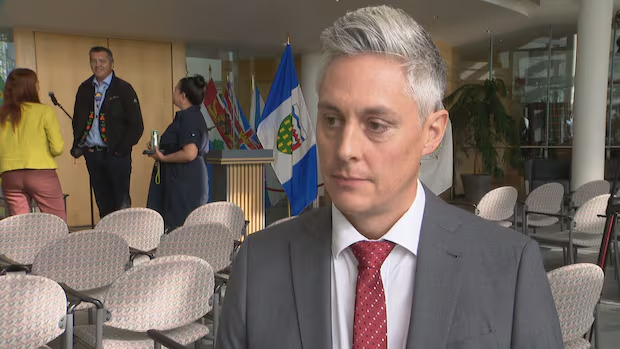
N.W.T. premier ready to put American booze on shelves for a ‘good deal’
N.W.T. premier ready to put American booze on shelves for a ‘good deal’
Carney government trying to avoid new 50% U.S. tariffs
As Canadian and U.S. officials try to hammer out a last-minute deal to avoid crippling tariffs and to lower existing ones, one northern leader says he's ready to do his part – including by putting American booze back on shelves.
But N.W.T. Premier R.J. Simpson says he has one condition: any new trade deal has to be good for Canada.
“We don't want to give concessions just to be at the table,” Simpson told CBC News.
The new 50-per-cent tariffs on some $28-billion worth of Canadian products will affect electronics, dairy, alcohol and wood. These are additional tariffs on top of existing U.S. trade sanctions, and are set to take effect just after midnight Wednesday.
The federal government has told provinces and territories to be ready as soon as possible to reverse their boycott of U.S. alcohol in case a tariff deal is reached, sources have told CBC News.
Simpson says that concession is conditional on whether the deal has reliefs for tariffs on industrial products like steel, lumber, aluminium and auto parts — which currently range from 10 to 50 per cent.
“Without that, I don't expect that the provinces would be on board,” said Simpson.
The premiers of Nunavut and the Yukon did not confirm whether they would also reverse their U.S. alcohol boycotts. They told CBC News they’re awaiting results of the negotiations to figure out next steps.
In a news conference Monday, Prime Minister Mark Carney said talks with U.S. officials had been “intense” and “delicate.” He also said Canada is prepared for all outcomes.
Simpson said in his recent conversations with the prime minister, he has felt confident in Ottawa’s approach to negotiations. He says he reiterated the commitments to Indigenous governments in procurement policies multiple times in his conversations.
“I always come out of those updates feeling really good about our situation in Canada,” Simpson said.
Trump pauses 50 per cent tariffs on Canadian goods for 3 days
Most exports from the three territories won’t be affected by the new tariffs. According to federal figures from the Library of Parliament, the majority of N.W.T. and Nunavut exports go to countries in Europe.
Simpson says even though the territory is not directly impacted by some of the tariffs, costs have gone up with existing tariffs. He says if a deal isn’t reached, it will further damage the N.W.T. economy.
“[The tariffs] are bad for the Americans who actually pay those costs, and they're bad for the Canadians who also see increased costs when things go back and forth across the border,” Simpson said.
“We're already feeling the impact of the initial tariffs in terms of the cost of bringing equipment to the territory for things like mining operations, obviously the impact on diamonds,” he said.
About 90 per cent of all exports from the Yukon go to the U.S., although most goods being sent south are minerals and are exempt from the latest round of tariffs.
Threat of new U.S. tariffs has municipalities bracing for impact
In Nunavut, Udlu Hanson, president of the Baffin Regional Chamber of Commerce, says she's worried the new proposed tariffs would make the trade war worse, especially when Canada retaliates with counter-tariffs.
She says escalations could shake consumer and investor confidence.
“It does mean that it's more difficult to bid on projects. It's more difficult to have certainty around your budgets,” she said.
“It really does have an effect in the very short term, but also in the longer term.”
Still, even as the clock ticked closer to Wednesday's midnight deadline, Hanson said she was confident Canada is prepared to respond.
"We've been able to weather the storm before and I think we're going to be able to do it again," she said.
Saloni Bhugra joined CBC News as a Donaldson Scholar in May 2022. She has since worked with News Network, World Report, World This Hour, CBC Calgary and Metro Morning. Bhugra established a permanent CBC bureau in Lethbridge and is now CBC's Brampton bureau reporter. She currently works as a reporter in Yellowknife. Contact her by email at Saloni.bhugra@cbc.ca.
Related Stories
 Canada
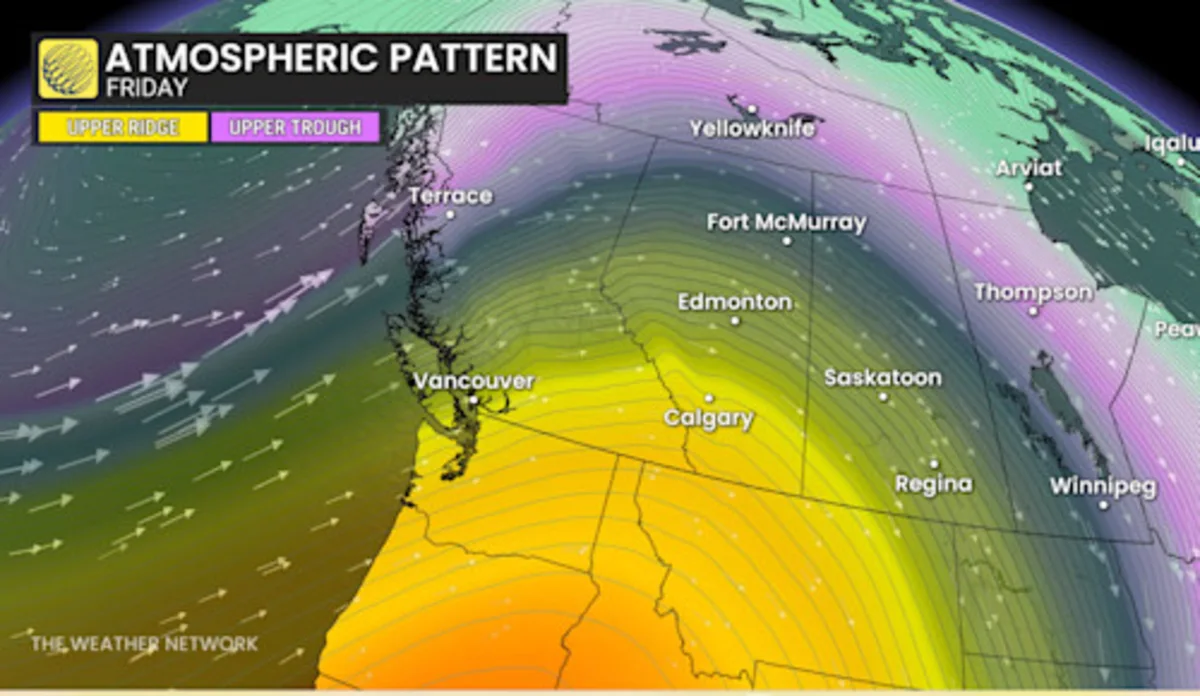
Record fall warmth sends the mercury climbing in B.C.
22 minutes ago
 Canada
Pro
22 minutes ago
 Canada
Alberta referendum expected to bring finality, but also more questions on separation
22 minutes ago
 Canada
Family of Quebec boy killed while cycling calls off ghost bike memorial, cites hate messages
1 hour ago
 Canada
El Niño rains flood South America, sending residents fleeing
2 hours ago
 Canada
Canada’s Mark Carney makes final appeal against Alberta separation ahead of referendum
2 hours ago
 Canada
Rallies planned in final weekend before Alberta separation referendum
3 hours ago
 Canada
Support for Alberta remaining in Canada steadily rises ahead of Oct. 19 referendum: Leger poll
3 hours ago