
On AI hearing aids, Auracast and harmonising the hearing landscape
Long-term readers and subscribers of this website will know that I have become something of an Auracast fanatic ever since I first experienced the Bluetooth technology in late 2024, and have enjoyed trying out the wide range of implementations from London’s National Theatre to the Sydney Opera House on the other side of the world.
As such, I am hyper-alert to its phenomenal potential, as well as its limitations. We’re seeing it installed in larger communal spaces such as theatres, airports and train stations – take, for example, the news last week of its pilot at Bristol Temple Meads, combining with XRAI’s AI translation technology – as opposed to something as refined and specific as personal, one-on-one conversations. The latter is, typically, where hear-in-noise and similar sound prioritisation features found in one’s hearing aids, such as those utilising artificial intelligence (AI), kick in.
This brings me back to the new Bristol trial, where XRAI is using Auracast as the basis for its translation tool to provide rail announcements in other languages.
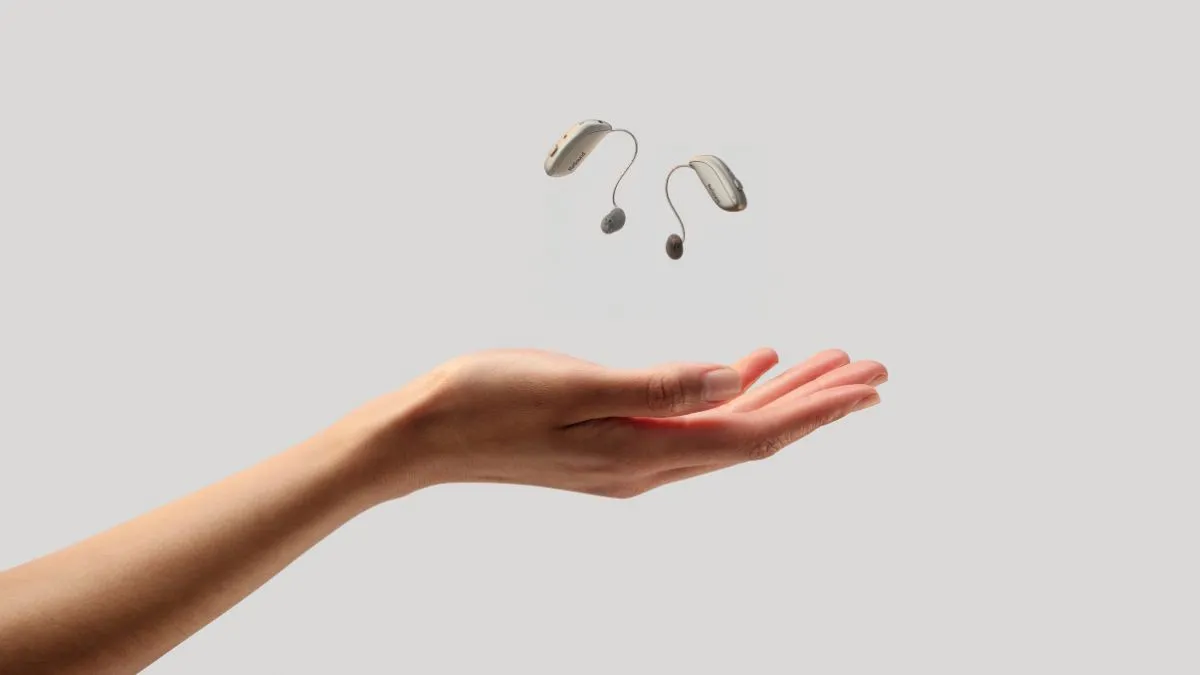
Just days later, I am finally able to talk about a conversation I had in South Korea in May, when I was invited out there by ReSound GN to report on the World Congress on Audiology, experience the first ever implementation of Bluetooth’s Auracast in Seoul, and attend a press briefing on the launch of the hearing aid manufacturer’s upcoming model, the ReSound Sensia.
“Hearing aids that use DNN noise reduction can suppress background noise, but most do so without reference to what the listener actually wants to hear,” says Peter Justesen, president of GN’s hearing division. “In practice, this means the loudest voice in the environment is amplified, even though it is often not the one the user is trying to follow. ReSound Sensia highlights the speech people want to focus on – automatically, accurately, proven. This is made possible with a new AI platform in combination with a trio of leading technologies.”
The trio in question comprises environmental classification through tech known as AcoustIQ, a four-microphone “directional beamformer” (which effectively ‘spotlights’ the desired audio), and a form of artificial intelligence (AI) known as a deep neural network or DNN.
The hear-in-noise technology seeks to do what Auracast does with ease: get right to the source, and cut out the background noise and distractions. In a use case not too dissimilar to XRAI’s, could the Auracast-compatible ReSound Sensia use the Bluetooth technology to train its inbuilt AI or DDN to know what to look for?
“You’re talking about continual learning, right? No,” Katie Ogden, head of product and partner marketing at GN, tells me during the May briefing with comic bluntness. “So, the reason for that is there isn’t actually AI – or, in particular, deep neural networks – out there that continually learn.
“Even ChatGPT doesn’t do that, that’s why you keep seeing a new version getting installed like every hour, then what you have to do is you have to train deep neural network in the lab, put it into the devices, and then you go back and you keep your training from what you’ve learned from that,” she continues. “At the moment, continuous learning doesn’t exist within hearing aids […] I think we could all stand here and say, ‘I’m sure at some point they will be capable of doing it’, but it’s not there.”
I’m reminded of a conversation I had with YouTube back in September 2020 on the topic of its captioning technology, where the term ‘context biasing’ came up to refer to its machines being told to focus on a specific context when automatically captioning a video to move away from potentially offensive language. Could we see the same with AI hearing aids?
“What we do is use […] AI algorithms that work on the theory of probability,” replies Ogden, “and what it will do is constantly check, ‘is this speech, is this noise, is this speech, is this noise, is this quiet, is this loud?’ […] I don’t think anyone’s quite there yet with that, in terms of what you’re talking about.
“Remember, AI is trained in a very unique way. AI is trained on full speech sentences across multiple different languages, including different dialects. So it’s a similar concept to what you’re talking about,” she continues. “What AI has done in this space now is open everything, right? There’s no limits, but it’s about our philosophy, as well. We do not try to tell the brain what to hear; we want to deliver the information so that the brain can do the processing itself, because guess what? It’s the best processor of sound in the world.”
Funnily enough, AI in hearing aids was discussed at the World Congress on Audiology, with Dr Brent Edwards of Australia’s National Acoustic Laboratories emphasising the need to talk about patient benefit.
He said: “I can just imagine the salesperson today rushing back to R&D [research and development] saying ‘our competitor trained your hearing aids on six million audio samples, how many did we train? Only four million? We’re doomed’.
“Who cares? Who cares how many samples were trained? It’s about the needs of the patient. It’s about what is the technology doing, and how can audiologists use it as a tool to meet the needs and apply their mission, which is to help people with hearing needs, so that they can hear better and improve their lives.
“The main thing for us to focus on is what is the benefit for our patients. How are we going to use these tools to improve the lives of our patients focus on the needs? Don’t focus on the technology.”
And to be clear, it’s evident what the patient benefit is around hearing aid models which use AI to distinguish speech from noise, such as the ReSound Sensias, but what is needed now is greater clarity around the hearing landscape – a narrative which is led by use cases and lived experience (e.g. hearing in noise, translations, attending concerts), rather than the technology, as Dr Edwards says, not least because that is likely the most accessible and appealing way of relaying the information to deaf people.
The simplest approach is one which sees DDN and AI solutions available for individual conversations, and Auracast as the go-to for wider, communal events, but we are also seeing instances where the two combine to offer greater accessibility. I don’t think the Bristol pilot will be the first and only example of this, as AI continues to develop and dominate headlines.
Related Stories
 AI News
SpaceXAI Adopts NVIDIA Vera CPU to Accelerate Agentic AI at Massive Scale
47 seconds ago
 AI News
Australia's music industry bans AI
50 seconds ago
 AI News
EBANX CEO Says Payments’ Next Rival May Not Be a Payments Company
1 minute ago
 AI News
Kazakhstan Introduces AI Analytics in Transport Sector
1 minute ago
 AI News
i2c Wants Payments Executives to Worry Smarter
1 minute ago
 AI News
Amsterdam’s Neno raises €6.6 million to build the AI-native back office suite for entrepreneurs
1 hour ago
 AI News
Get Claude, Gemini, ChatGPT, and more for life for $60
1 hour ago
 AI News
Vallejo Pastor Justin Lester from Friendship Missionary Baptist Church brings artificial intelligence to religious realm
2 hours ago