
One of Canada’s worst invasive species may have arrived naturally
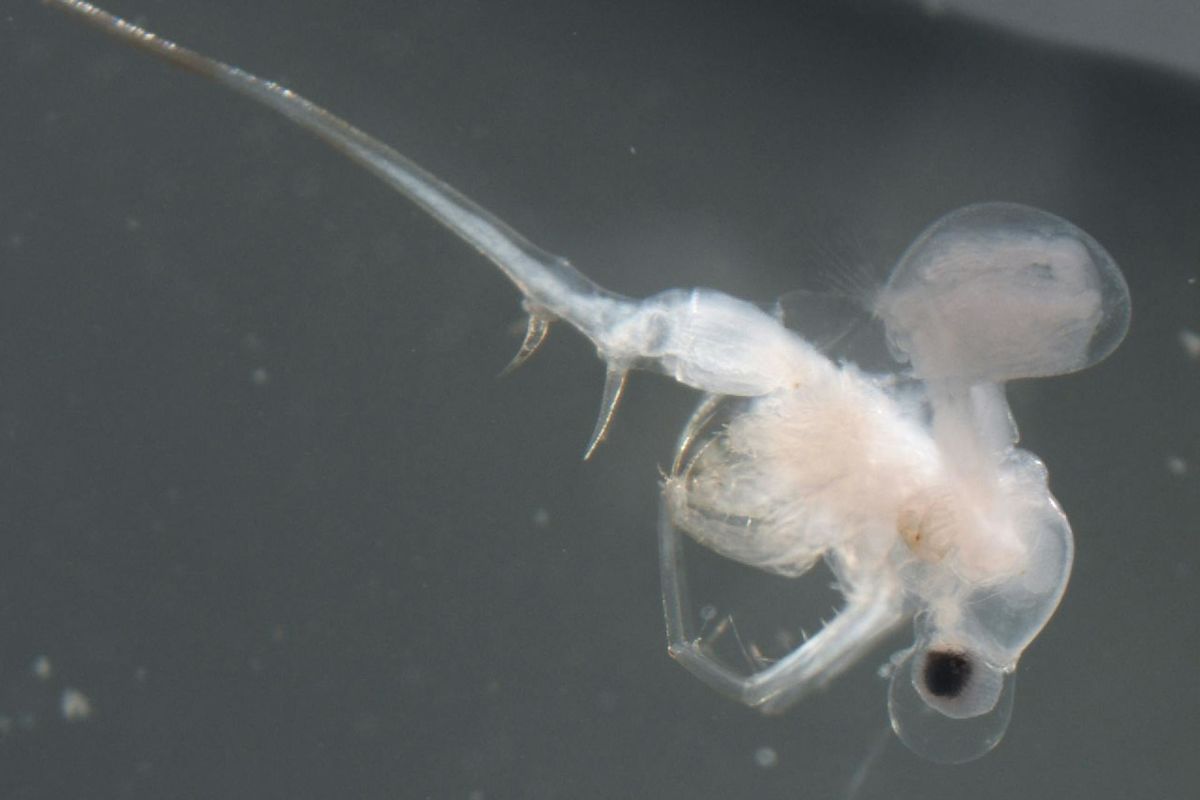
Most invasive species are introduced into the areas where they become damaging. That's part of why they tend to be so successful in taking over new environments and causing billions of dollars in damage.
But what if species that we thought were introduced by humans arrived naturally?
In our recent research paper, we made a startling discovery about one of North America's most ecologically and economically damaging invaders.
The spiny water flea, also known by its scientific names Bythotrephes longimanus and Bythotrephes cederströmii, may have been in North America for centuries longer than believed.
Our finding has implications for how governments and conservation organizations approach invasive species management. Millions of dollars are spent to control the spread of invasive species, but for native species that benefit from environmental change, this strategy may misplace limited funds.
Read more: How the invasive spiny water flea spread across Canada, and what we can do about it
The widely accepted history of the spiny water flea is that it was introduced unintentionally from Europe into Lake Ontario by trans-Atlantic cargo ships in the early 1980s.
In our study, we found reports of the spiny water flea in more than 300 lakes and rivers across Canada and the United States over the past four decades. This number is likely a massive under-estimate because most lakes are not monitored.
The spiny water flea has been reported in more than 300 lakes in Canada and the U.S. since being first recorded in Lake Ontario in 1982. Red circles mark individual records of the species. Dark colours mark older records starting in the 1980s and lighter colours mark recent records from the 2020s. (Danai Kontou), CC BY-SA
Identification of the spiny water flea relies on physically detecting it in water with nets or inside fish stomachs. Several million water fleas may need to be present in a lake before a single individual is caught in a net. This means only the most dense populations may be detected.
In 2019, our co-authors made an unexpected finding. Sifting through mud at the bottom of Three Mile Lake in Muskoka, Ont., they found jaws of the spiny water flea.
Over time, particles and dead organisms settle to the bottom of lakes. New material accumulates on top of older layers, creating a natural archive of the lake's history. The particles can be aged by measuring naturally occurring radioactivity, which decreases over time.
In Three Mile Lake, the jaws were found next to mud that was more than 350 years old. At that time, Sainte-Marie, the first European settlement in what would become Ontario, had just been established.
Lake sediments are natural archives that accumulate material from the environment. (Danai Kontou), CC BY-SA
Sediments are living environments. Fossils can mix through layers because of waves and the activity of organisms. The best way to estimate the age a fossil is to measure it directly.
Until recently, dating fossils of tiny animals like the spiny water flea had been impossible. Because of their small size, hundreds of individuals are needed to estimate an age accurately.
The chemical makeup of some animals like the spiny water flea can also interfere with the dating process. Using new approaches, we solved this problem.
Using radiocarbon dating, we found that spiny water flea fossils in Muskoka, Ontario pre-dated the 1950s. To bolster these results, we used another new tool based on DNA sequencing.
All organisms shed DNA into the environment. In lakes, DNA accumulates in the lake bed, where it can survive for centuries in cold, dark sediments.
By measuring the amount of environmental DNA, we can estimate the population size of species that are difficult to count with traditional approaches.
We found that the abundance of spiny water flea DNA and fossils in the lake bottom correlated near perfectly. Spiny water flea DNA was in layers of mud that were as old as 1867, the year Canada was founded.
How the spiny water flea arrived in the small lakes of central Ontario in the early-20th century remains a mystery. There were no canal or road networks to transport them inland.
Before the St. Lawrence Seaway was completed in 1959, trans-Atlantic ships could not navigate beyond Montréal. Live transport of the spiny water flea is unlikely as they die when handled, and their eggs cannot survive more than four hours outside water.
One possibility is that a spiny water flea hitchhiked to North America on a migrating bird. Millions of aquatic birds move between North America and Eurasia annually. Despite very low odds for such dispersal, just a single individual can establish a viable population. Repeated over the past 10,000 years, such a rare event cannot be excluded.
What is clear is that the spiny water flea was present for decades at low densities in the Great Lakes region before being detected. Understanding why it exploded in numbers recently is arguably a more important question to answer than the exact time of introduction.
Our study suggests that climate warming may have helped spiny water flea populations grow. Our work in Europe, where the spiny water flea is native, suggests variable summer temperatures and longer growing seasons are beneficial.
Relative importance of species-specific (hatched line) and ecosystem-based (solid line) strategies to control non-native species throughout the stages of invasion. Once an invasive species becomes entrenched, management efforts should be diverted towards mitigating its impact. (Andrew J Tanentzap), CC BY
We want to be clear: invasive species like the spiny water flea need to be managed. The spiny water flea can still be invasive in some North American lakes even if it arrived naturally to the continent. If they are moved to a new area, native species can become overabundant, damaging their environment and other species.
Rather than treating the symptom — that is, the invader itself — we should treat the cause of invasion. These causes are often ecosystem-based rather than species specific; for example, climatic changes rather than a trait specific to a species. This approach may work well once an invasive species becomes established.
Determining when a species was introduced always depends on proving a negative. We have to prove that it didn't exist there previously, and the "absence of evidence is not evidence of absence." Our study suggests that sometimes in invasion biology, we need to dig a little deeper.
This article is republished from The Conversation, a nonprofit, independent news organisation bringing you facts and trustworthy analysis to help you make sense of our complex world. It was written by: Andrew J Tanentzap, Trent University; University of Cambridge and Danai Kontou, University of Leeds
Climate change is making it easier for invasive species to succeed
Data centres and democratic decline could lead to more water conflict in the future
Trump's 'renaming' of Lake Ontario is emblematic of centuries of colonial erasure
Andrew J Tanentzap receives funding from the Canada Research Chairs Program and Natural Sciences and Engineering Research Council of Canada.
Danai Kontou received funding from the UK Natural Environment Research Council and National Environmental Isotope Facility.
Related Stories
 Canada
4 killed after helicopter crashes in field near Montreal
49 minutes ago
 Canada
Brandon McNulty wins men’s UCI Road World Championships cycling event in Montreal
49 minutes ago
 Canada
Hamilton joins call for Ontario to implement deposit
50 minutes ago
 Canada
Students explore Ontario university options amid OSAP changes
50 minutes ago
 Canada
Pilot identified in fatal helicopter crash outside of Montreal
50 minutes ago
 Canada
‘Our supply chains are under threat,’ German minister says his country wants more Canadian LNG
1 hour ago
 Canada
CHARLEBOIS: Canada’s booze boycott is about to backfire
2 hours ago
 Canada
BC Conservatives makes 1st policy announcement of election campaign
2 hours ago