
Opinion: Alberta’s referendum turns immigrants into scapegoats for government inaction
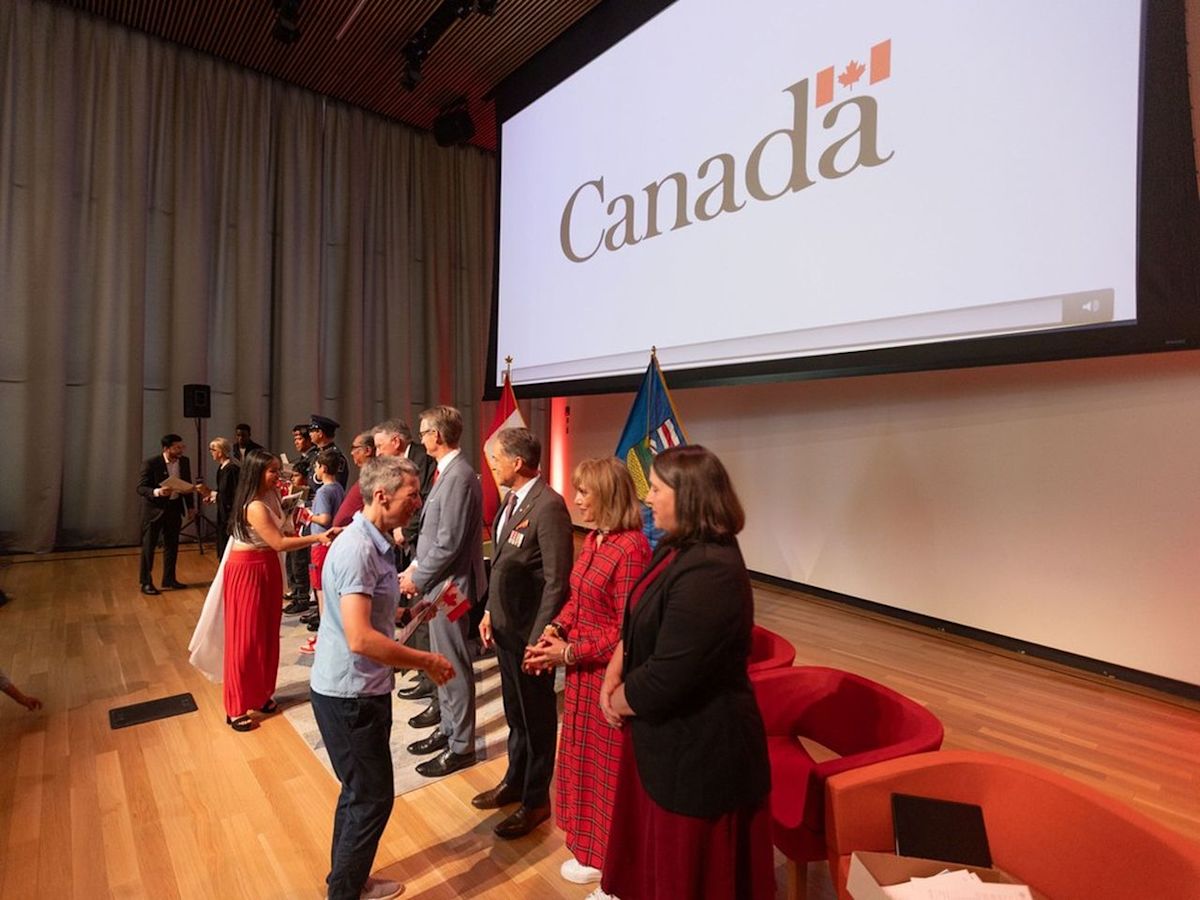
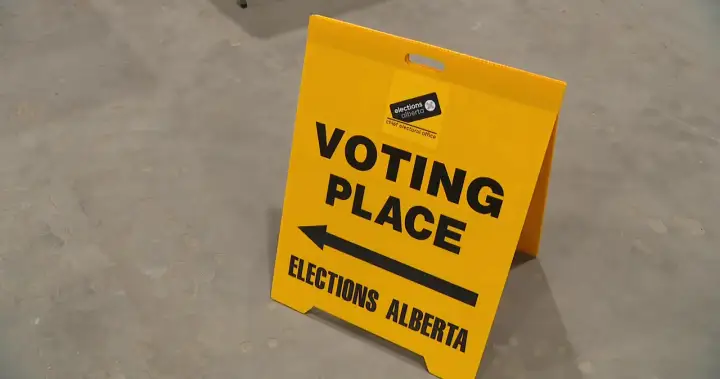
Holding my mail-in ballot for Alberta's 2026 referendum, I was struck by a sensation I had never felt in three decades in Canada: I felt singled out.
Much of the public conversation has been consumed by Question 10, a nonsensical questioning of whether Alberta should begin steps toward leaving Confederation. It is pure political theatre. But the preceding nine questions reveal a governing agenda that is arguably far more corrosive. Five explicitly target newcomers, proposing restrictions on health care, education, social programs and voting access. They reduce human beings to drains on public resources. For the first time, our provincial ballot actively fosters division against those who arrive seeking to build a future.
I landed in Canada 30 years ago. Like hundreds of thousands of immigrants, my family poured everything into this province. We worked long hours, paid our taxes, contributed to our community and embraced our civic duty. We did not arrive to extract value from Canada; we came to contribute to it.
To watch the government present immigrants as the primary source of societal strain is both insulting and soul-crushing. More importantly, it is an empirical fraud designed to deflect from years of provincial underinvestment and poor planning. Instead of sowing dissent, they need to go back to building our province.
The UCP's narrative collapses under the weight of basic demographic and economic realities. Canada is no longer growing organically; natural population increase turned negative in late 2025, with deaths now exceeding births. Even the Alberta government's own projections concede that between 2025 and 2051, migration must account for 81 per cent of the province's population growth. Federal modelling shows that without immigration, Calgary's workforce would collapse by 35 per cent and Edmonton's by 33 per cent by 2031.
Immigrants are not marginal to Alberta's economy; they represent nearly the entire engine of labour force growth. Immigrants make up 36 per cent of Calgary's employed workforce and 30 per cent of Edmonton's. Nationally, 12 per cent of immigrants own a business, surpassing third-generation Canadians. By 2020, immigrant-owned businesses employed more than 810,000 workers, generated $218 billion in revenue, and made up 16.4 per cent of Canada's goods exporters. Alberta hosts roughly 12 per cent of these enterprises.
The scapegoating becomes particularly egregious regarding public health care. The referendum invites voters to blame newcomers for hospital wait times and overburdened clinics. Yet, empirical data show that newcomers staff the system far more than they strain it. Alberta is home to over 42,000 internationally educated health-care professionals. Meanwhile, peer-reviewed public health studies consistently confirm the "healthy immigrant effect": recent immigrant men report serious chronic conditions at less than half the rate of the Canadian-born, and immigrant health-care utilization rates are equal to or lower than the general population.
The real failure of our health-care system is provincial neglect. Only 58 per cent of internationally educated health professionals in Canada are permitted to work in health occupations, and barely two-thirds of internationally trained physicians practice medicine. Instead of fixing credential recognition to deploy thousands of qualified professionals already in Alberta, the government asks Albertans to vote on restricting services to them.
Alberta's infrastructure deficits, overcrowded classrooms, and delayed emergency rooms are the result of political mismanagement, short-term budget cycles, and structural underfunding. Blaming new arrivals is a convenient political dodge. It turns neighbours against neighbours while excusing the government from doing the hard work of building schools, hiring staff and managing growth.
Good public policy demands evidence, accountability, and dignity. By writing exclusion into a referendum ballot, the government has chosen cynicism over statesmanship. Alberta's prosperity was built by people who crossed oceans to build a life alongside their fellow citizens. We are not the problem. We are, and have always been, part of the solution.
Paul Varella is a professor of management in the Bissett School of Business, Mount Royal University.
Related Stories
 Canada
Veteran OPP sergeant charged following child sexual exploitation investigation
46 minutes ago
 Canada
Police officer charged with child sex offences
47 minutes ago
 Canada
Anand to address UN on Arctic, Ukraine, Middle East
47 minutes ago
 Canada
NP View: Heroes in Belleville, cravens in Ottawa
1 hour ago
 Canada
Anand to give Canada’s UN speech this afternoon
1 hour ago
 Canada
The best Canadian investment bets amid trade turmoil: FP Video explains
2 hours ago
 Canada
Nine Islamic schools on high alert after email threatening ‘slaughter’ of Muslims
3 hours ago
 Canada
Canadians more united despite separatist sentiment in Alberta, Quebec: Ipsos
3 hours ago