
Pesticide
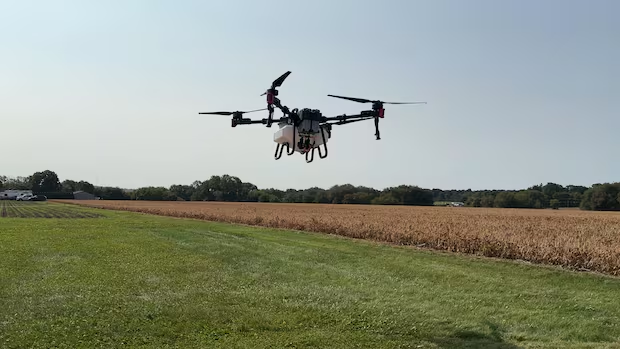
Pesticide-spraying drones cleared for takeoff in P.E.I.
'Canada’s a little bit behind the 8-ball on it,' says P.E.I. pesticide specialist
It is now legal to spray pesticides by drone in Prince Edward Island.
The province updated regulations in May, allowing drones to apply pesticides to crops.
“Canada’s a little bit behind the 8-ball on it,” said Fraser Cameron, P.E.I.’s pesticide management program specialist. “There’s been a lot of countries that have already been doing this for a little bit now.”
Canada lagging behind U.S. in adopting drones for spraying in agriculture, ag groups say
Drones allow farmers to limit pesticide use, spot problems with crops
China and the U.S. both approved drones for crop-spraying in 2015.
“The goal is to reduce pesticide usage,” Cameron said. “Instead of having to spray the whole crop with a boom sprayer, we can just go and pinpoint and hit on the exact spot.”
From sky to soil: How drones are giving P.E.I. farmers a high-flying advantage
A boom sprayer is a common pesticide applicator with long, horizontal arms that spread liquids over crops, often attached to the back of a tractor.
Cameron said spray drones will prevent crop damage from soil compaction by these tractors, and will reduce waste by avoiding overlapping spray patterns common with boom sprayers.
“From a human health standpoint, the risk is a lot lower,” Cameron said. “When we’re flying, there’s nobody near that pesticide because the pilot is farther away.”
New provincial regulations place an upper weight limit of 150 kilograms on pesticide-spraying drones — which are considered medium-sized drones by Transport Canada. No pesticides can be sprayed if wind speeds exceed 20 km/h.
Despite the amendments to the province’s Pesticides Control Act, Cameron said no one is currently licensed to spray pesticides by drone in P.E.I.
On Wednesday, Health Canada published a letter allowing drones to be used to spray pesticides across the country, but only in “urgent situations.” The letter introduces temporary measures allowing drones to spray products previously only permitted for conventional aerial application by planes and helicopters.
In the letter, Health Canada says the measures will stand until a final policy is published “in the near future.”
Cameron said the province amended its act in anticipation of the incoming federal changes. He expects a finalized policy to be released by the end of June.
According to Cameron, future operators in P.E.I. will need to obtain an advanced licence, undergo provincial training and pass an exam to legally use a drone to spray pesticides on the Island.
“It’s a new technology,” he said. “We want to make sure that everyone's aware of the risks.”
Joseph Watt is a reporter and associate producer with CBC P.E.I. He holds a master's degree in International Journalism from City University of London. He can be reached at joseph.watt@cbc.ca
Related Stories
 Canada
Albertans head to polls in historic referendum on whether they want to stay in Canada
3 days ago
 Canada
In the news today: four soldiers killed, Alberta referendum, AI privacy fears
3 days ago
 Canada
How a grass fire at a Canadian military base killed four soldiers
3 days ago
 Canada
How will household electricity rebate reduction, temporary winter pricing change impact Ontarians?
3 days ago
 Canada
Residents told to boil tap water due to bacteria
3 days ago
 Canada
Oil
3 days ago
 Canada
Albertans vote on path to independence as Carney fights to keep Canada united
3 days ago
 Canada
Two of 4 soldiers killed in fast
3 days ago