
Pianist Jayson Gillham loses discrimination case against Melbourne symphony orchestra over Gaza comments
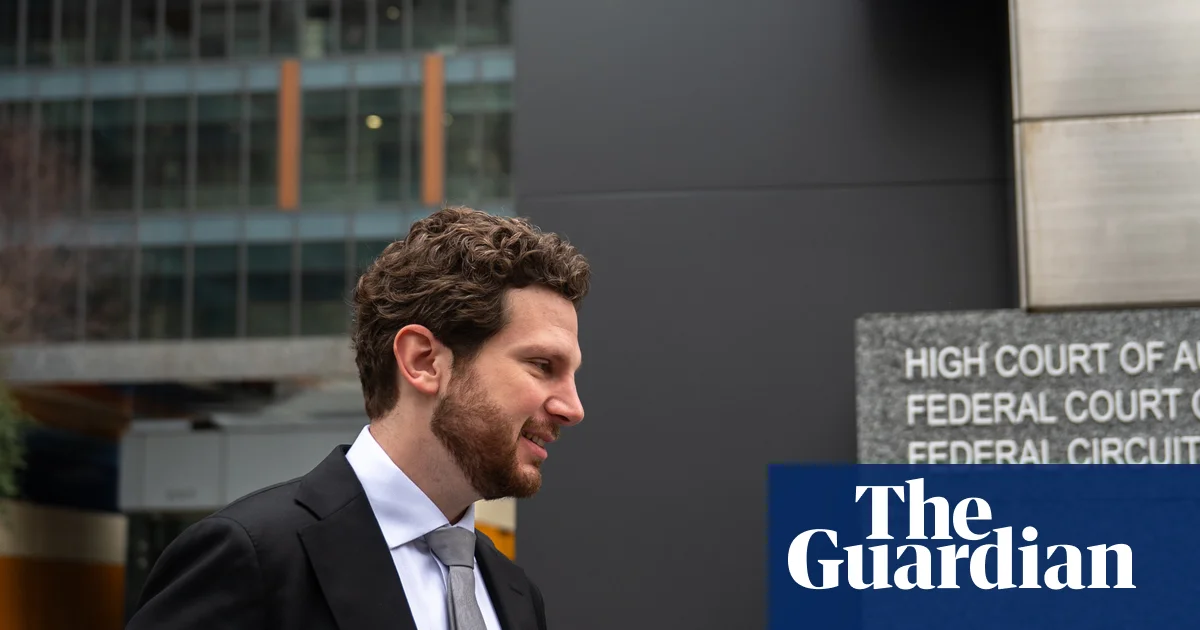
A classical pianist who sued the Melbourne Symphony Orchestra has lost his case after he alleged he was unlawfully discriminated against because of his views on Israeli forces killing Palestinian journalists.
Federal court Justice Graeme Hill handed down his findings on Friday, saying Jayson Gillham was an independent contractor and the orchestra had acted legitimately to protect its business.
Gillham had sued the MSO over a Melbourne concert he was contracted to perform on 15 August 2024, but which the MSO cancelled in what he claimed was an attempt to silence him over his political views.
During a performance four days earlier, the pianist had played a short piece called Witness, composed by multimedia artist Connor D’Netto, which he dedicated to Palestinian journalists who were killed by Israeli forces.
Introducing the work, Gillham had told the audience more than 100 Palestinian journalists had been killed and that the targeting of journalists in a conflict was a war crime under international law.
Hill said the “political content” of Gillham’s remarks was not a “a substantial and operative reason” for the actions MSO took afterwards. Instead, he found that the orchestra had acted within the law, to protect its own business and reputation.
He also said there was a “custom or practice” that performers should not make statements on sensitive political or social issues from the stage without permission.
“Although these events are bound up with the Israel-Gaza conflict, it is not any part of my role to enter enter upon those matters of considerable public controversy,” Hill said.
“I find that the MSO would have taken the same actions if Mr Gillham had expressed a political belief in support of Israel, or if Mr Gillham had made statements on any other topic that had the same impact or anticipated impact on the MSO’s business and reputation.”
Hill also ruled against Gillham’s team’s argument that Victoria’s Equal Opportunity Act was a workplace law. He said Gillham was an independent contractor for the MSO, and the orchestra had not breached section 342 of the Fair Work Act in three of four alleged breaches because those actions were taken after his independent contract was terminated.
Announcing the decision to cancel the second concert in 2024, an MSO email sent to patrons had alleged Gillham had made personal remarks “without seeking the MSO’s approval or sanction”.
“The MSO does not condone the use of our stage as a platform for expressing personal views”, the email said, adding that Gillham’s remarks had caused “distress”.
Gillham’s barrister, Sheryn Omeri KC, had argued that there was nothing in the MSO contract that prevented Gillham from making the statement.
Justin Bourke KC, who acted for the MSO, argued that Gillham was playing on the MSO’s stage, and was therefore not permitted to share his personal views on the “most hotly contested controversial issue around the world”.
Gillham had alleged that the MSO undertook four adverse actions, contrary to Section 340 of the Fair Work Act. This included cancelling his show, the MSO emailing the attendees of his 11 August recital announcing his next show was cancelled and apologising for his statements.
It also included the MSO attempting to impose conditions on Gillham that he could perform the 15 August recital, so long as he agreed to that there would be no physical or verbal statement from the stage, and then the MSO failing to apologise to him for cancelling the show in its public statements about the saga.
The MSO admitted during the trial that cancelling his show was an adverse action, but Hill found the other three actions did not breach the Fair Work Act.
“None of these actions altered Mr Gillham’s position as an independent contractor to his prejudice,” Hill said in his judgement. “That position refers to the existing advantages of his previous engagement as an independent contractor, whereas these actions were all taken after that engagement had been terminated.”
Hill said that the MSO had a policy of not expressing support for “either side of the Israel-Gaza conflict”.
“The description of that conflict in the MSO’s policy might not be neutral, but the MSO was committed to not supporting either side,” he said.
“I find that there is a custom or practice that classical musicians do not make statements on sensitive political or social issues from the stage without approval of the host. This custom is not universally observed, but that does not mean there is no custom or practice to begin with.”
Hill also found that the Victorian Equal Opportunity act is not a workplace law because it would be contrary to the Fair Work act, which is supplemented by specific anti-discrimination rights, to treat the Equal Opportunity act as a workplace law.
Gillham’s lawyers said they would take time to digest the findings before possibly applying for a cross order under 570 of the Fair Work Act.
MSO’s lawyers said they were considering making a costs application.
Related Stories
 Business
Anthropic lists ‘existential risks to humanity’ as one of its risk factors in IPO prospectus
18 minutes ago
 Business
I’ve invested in 82 startups. Here are 6 ways to grow your business
48 minutes ago
 Business
Moneycontrol Startup Conclave: India can build many billion
1 hour ago
 Business
Large shark stuck in South Korean city canal draws 600,000 visitors
4 hours ago
 Business
Corgi has become insurance's wildest startup. Internal messages reveal the drama behind the scenes.
4 hours ago
 Business
Peak XV ups Surge seed investment ceiling to $5M, unveils 18
5 hours ago
 Business
Founder Of The Week: Xile He
6 hours ago
 Business
Ex
8 hours ago