
QLD budget 2026: What small businesses and startups need to know

The 2026-27 Queensland budget offers a suite of targeted small business support policies, but little in the way of specialist startup support, as Treasurer David Janetzki traces a years-long path back to surplus.
Treasurer Janetzki handed down the Crisafulli LNP government’s second state budget on Tuesday afternoon, positioning it as a “foundation for a fresh start” through “challenging” circumstances.
Here’s what small businesses and startups need to know.
Small business support measures in Queensland’s budget
The state budget unveils a suite of small business support measures and continued funding for programs announced in previous years.
Among the headline measures is a $64 million extension to the 50% payroll tax rebate for employers hiring apprentices and trainees.
The measure, encouraging more businesses to take on junior trainees, will last until June 30, 2027.
Training is a recurrent theme, with the budget announcing micro-credential courses tailored for small businesses.
The budget sets aside $11.5 million for those courses over three years.
It also recognises the potential posed by artificial intelligence, promising $10 million to support small and family businesses to integrate AI systems into their operations.
Other small business-specific measures include:
“Small and family businesses are the engine room of Queensland’s economy, and this Budget is about giving them the tools, support and confidence to keep moving forward,” said Minister for Customer Services and Open Data and Minister for Small and Family Business Steve Minnikin, in a statement accompanying the budget papers.
“By reducing red tape, improving access to government services and helping more businesses connect with procurement opportunities, we are backing small and family businesses to grow and create jobs in communities right across Queensland,” he continued.
Tax measures and fiscal outlook
Ahead of the budget, the Crisafulli government promised not to introduce or increase any taxes. Tuesday’s financial roadmap confirms that pledge.
Nevertheless, the state’s tax take is growing. Budget papers show a $1 billion increase for 2025-26 compared to mid-year estimates, and forecasts have been upgraded by nearly $4 billion over the years to 2028-29.
Much of this comes down to coal royalties, which have increased due to rising resource prices. Queensland is expected to bank $6.9 billion in coal royalties in 2026-27, up from $4.8 billion in the current financial year.
Elsewhere, the state is slated to record $8.36 billion in revenue from transfer duties, including stamp duty, over 2026-27. That is a decline from the $8.67 billion slated for 2025-26.
Budget papers state recent interest rate increases, along with tax measures put forward in the 2026-27 federal budget, are partially responsible.
In short, more uncertainty in the housing market leads to less stamp duty. “The impact of these changes is uncertain and will take time to resolve,” according to one of Tuesday’s papers.
Transfer duty revenue is expected to recover in the coming years, reaching $10.2 billion in 2029-30.
Not fully explored in the budget: how planned federal reforms to trusts could affect Queensland’s stamp duty take.
The proposed plans could push businesses out of discretionary trust structures, with Queensland collecting stamp duty on real estate, goodwill, and equipment transferred to related entities.
Budget documents show the state will record a deficit of $8.84 billion in 2025-26, improving to a deficit of $6.1 billion in 2026-27.
The budget bottom line is projected to gradually improve to 2029-30, when the state is set for a $619 million surplus.
Budget papers state the Crisfafulli government will attempt to keep expense growth below revenue growth over the forward estimates.
The state’s debt is set to balloon to $216 billion in 2029-30, up from $142.3 billion in the current financial year.
Queensland’s budget on 2032 Brisbane Olympics
Looming over the budget is Queensland’s massive infrastructure spend ahead of the 2032 Brisbane Olympics.
Last year’s budget committed $4.7 billion to delivering the Games, including funding for stadium development and the construction of athlete villages.
That funding was pledged as part of a $7.1 billion package, with the Commonwealth chipping in more than $3.3 billion.
The 2026-27 state budget keeps that commitment in place and deploys $163.3 million over four years to Stadiums Queensland in the lead-up to the Games.
Cost of living, energy, and resources
Energy prices will drop across regional Queensland, with the state’s competition authority this month confirming prices for small businesses will decrease by 8.1%.
In a pre-budget statement, Janetzki said he has directed the Ergon energy retailer to pass on those cost savings to customers in full.
The Treasurer also promised “name and shame” energy retailers not passing on those cuts.
The state government has also confirmed it will freeze the wholesale cost of water until 2028, which it claims could save small businesses as much as $300 over two years.
Never miss a story: sign up to SmartCompany’s free daily newsletter and find our best stories on LinkedIn.
Related Stories
 Technology
When Tech Companies Die, What Happens To The Products They Leave Behind?
1 day ago
 Technology
Two Finns supplying Russia with missile tech worth tens of millions
1 day ago
 Technology
Drones with pepper spray, four
1 day ago
 Technology
Micron Technology stock pre-market at EUR 800.50: memory storage - ad
1 day ago
 Technology
TAIEX Ends at 4
1 day ago
 Technology
ZAWYA: Technology, start-ups can double India
1 day ago
 Technology
Czech government to consider CZK 1 billion fund for startups
1 day ago
 Technology
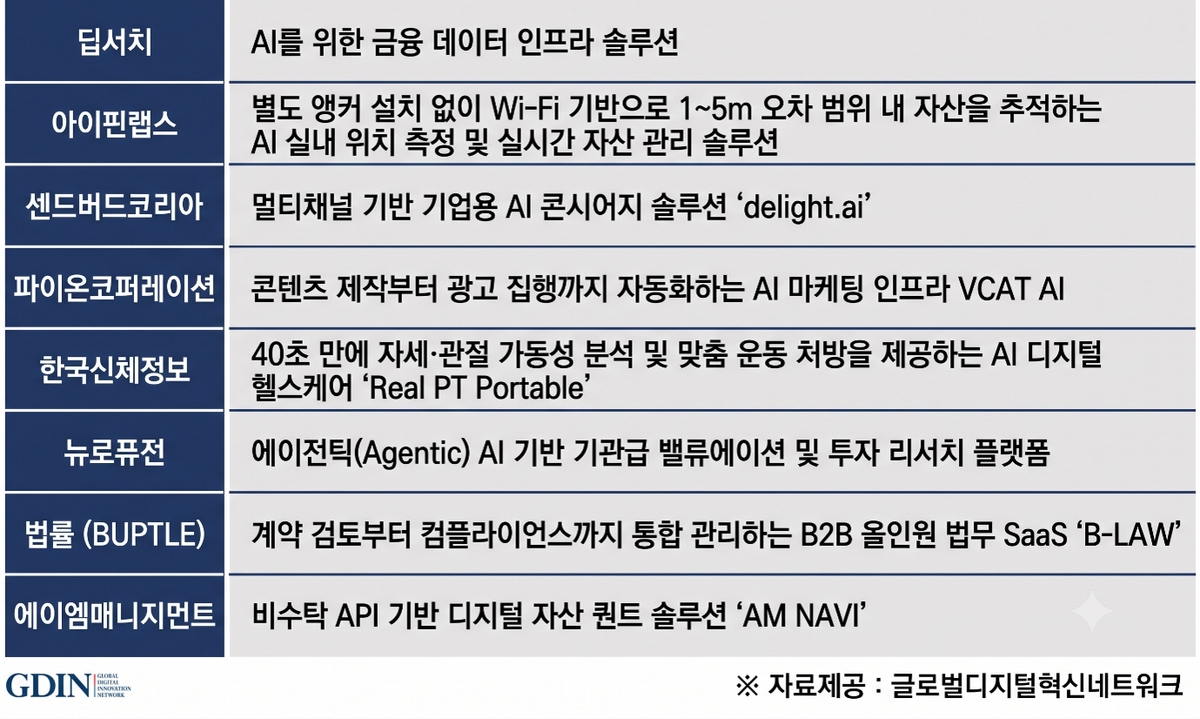
GDIN Supports Eight Startups at CEATEC 2026 in Japan, Opens Door to Local Investor Collaboration
1 day ago