
'Rare' weather phenomenon hit Niagara with multiple storms at once, leading to flooding: meteorologist

'Rare' weather phenomenon hit Niagara with multiple storms at once, leading to flooding: meteorologist
Convergence of factors conspired to cause sewage backups in thousands of home
A rare weather pattern sent at least three storms back-to-back over the same parts of Ontario's Niagara Region in July and August, dumping torrential rain that resulted in thousands of homes in St. Catharines, Lincoln and Niagara-on-the-Lake being flooded, experts say.
Thousands of residents in the three communities, and to a lesser degree in other areas of Niagara such as Niagara Falls and Thorold, are still reeling from the fallout of those storms that overwhelmed municipal wastewater systems and led to widespread backup of sewage-tainted water in homes.
Geoff Coulson, a meteorologist with Environment and Climate Change Canada, said there were more than three storms, not just three major rainfall events that pounded the area on July 21, July 27 and 28, and again on Aug. 2.
In fact, there were multiple storms hitting north Niagara on each one of those weather events, he said.
"It's one storm after another forming to the west of the affected area and then moving through the area," he told CBC News. "[They] rolled over the same area repeatedly."
Cue a new term for Niagara residents to memorize: training echoes.
That's a term Coulson said is used by meteorologists to describe a distinct weather pattern where repeated areas of thunderstorms or severe rain continually move over the exact same geographic area in a short period of time. The term comes from echoes seen on weather radar.
"You may get a little break in some cases between one storm cell and another, but they are rather relentless: over a number of hours, a series of these storms hitting the same area," said Coulson.
The result? A sewage system that is simply overwhelmed by water volumes.
"The water's got to go somewhere," said Coulson. That means up through drains into people's basements.
Michael Pisaric, a professor of geography and tourism studies at Brock University, said unlike typical thunderstorms that move through quickly, those convective storms that pounded Niagara formed up like a train, dropping "torrential" rain as one after another they dumped months' worth of rain in a few hours.
The long-term average rainfall for all of July is 74.2 mm, said Coulson. But automated observation sites in north Niagara recorded how rare the three storms' power was.
On July 21, 85.9 mm fell on Vineland and 108.6 mm fell on Grimsby Mountain (data from another recording station in Port Weller in St. Catharines wasn't available from that day), said Coulson.
On July 27/28, Port Weller got 126.9 mm of rain, while Vineland got 87.8 mm.
On Aug. 2, Port Weller got 131.3 mm and Vineland got 94.8 mm. "There was just seemingly one series of showers and thunderstorms after another that rolled over the northern part of Niagara Region," said Coulson.
Why those storms were so powerful came down to several factors working in unison.
"We had a lot of humidity in the low levels of the atmosphere for all three events, and that humidity in the lower levels of the atmosphere is the fuel that drives the storm formation," said Coulson.
Then we had an unstable atmosphere, with updrafts of air rising up to cause droplets to collide together into ever-larger droplets, until they got so heavy that they fell to the ground, said Coulson.
Finally, there was a front moving through the area with winds pushing everything over north Niagara.
"The ingredients all came together," said Coulson. "It's very rare to see the same area hit three times in the span of a few weeks."
St. Catharines Mayor Mat Siscoe told CBC News the city hasn't identified blockages or single infrastructure failures that caused basement flooding. But he noted the vast majority of his city's sewer infrastructure still has combined stormwater and sanitary sewers — meaning extremely heavy rains can contribute to sewage backing up into homes.
Could these devastating storms be the new norm at a time when experts are sounding the alarm bell over climate change?
No storm infrastructure issues in St. Catharines before rainstorms led to floods, mayor and experts say
Shock, grief and a city on the edge as St. Catharines, Ont., deals with massive flooding
Both Coulson and Pisaric said it's a bit early to say.
"The flooding of the magnitude seen in St. Catharines over the past few weeks should only occur once in 100 years," Pisaric said via email from Norway where he's conducting field work on lakes to study climate and environmental change.
"[But] there does appear to be some truth to the idea that these events are becoming more frequent. Insurance claims are good evidence of this.
Meteorologists are also forecasting a particularly strong El Niño effect in the equatorial Pacific this year, which Pisaric said can make weather wetter in eastern Canada. "This could be contributing to the intensity of some of these storms this summer," he said.
Coulson said there hasn't been time yet for what's known as 'attribution' studies on the Niagara storms. That's a branch of climate science that evaluates whether human-caused climate change is causing or altering the likelihood, frequency, and intensity of weather events.
"But certainly we know in the coming decades, there is a concern overall that these types of rainstorms could become more frequent because of the increased warmth," he said.
Any community in Ontario could get hit by one of the sort of storms that hit Niagara on a given summer, said Coulson.
"What's highly unusual this summer was that three of our biggest rainfall events basically went over the same area. It's very rare to see the same area hit three times in the span of a few weeks."
Paul Forsyth is a St. Catharines-based CBC reporter covering communities in the Niagara Region. He has decades of reporting experience in Niagara, having worked for Niagara This Week, the St. Catharines Standard and the Welland Tribune before joining CBC. You can reach him at paul.forsyth@cbc.ca.
Related Stories
 Canada
Albertans head to polls in historic referendum on whether they want to stay in Canada
3 days ago
 Canada
In the news today: four soldiers killed, Alberta referendum, AI privacy fears
3 days ago
 Canada
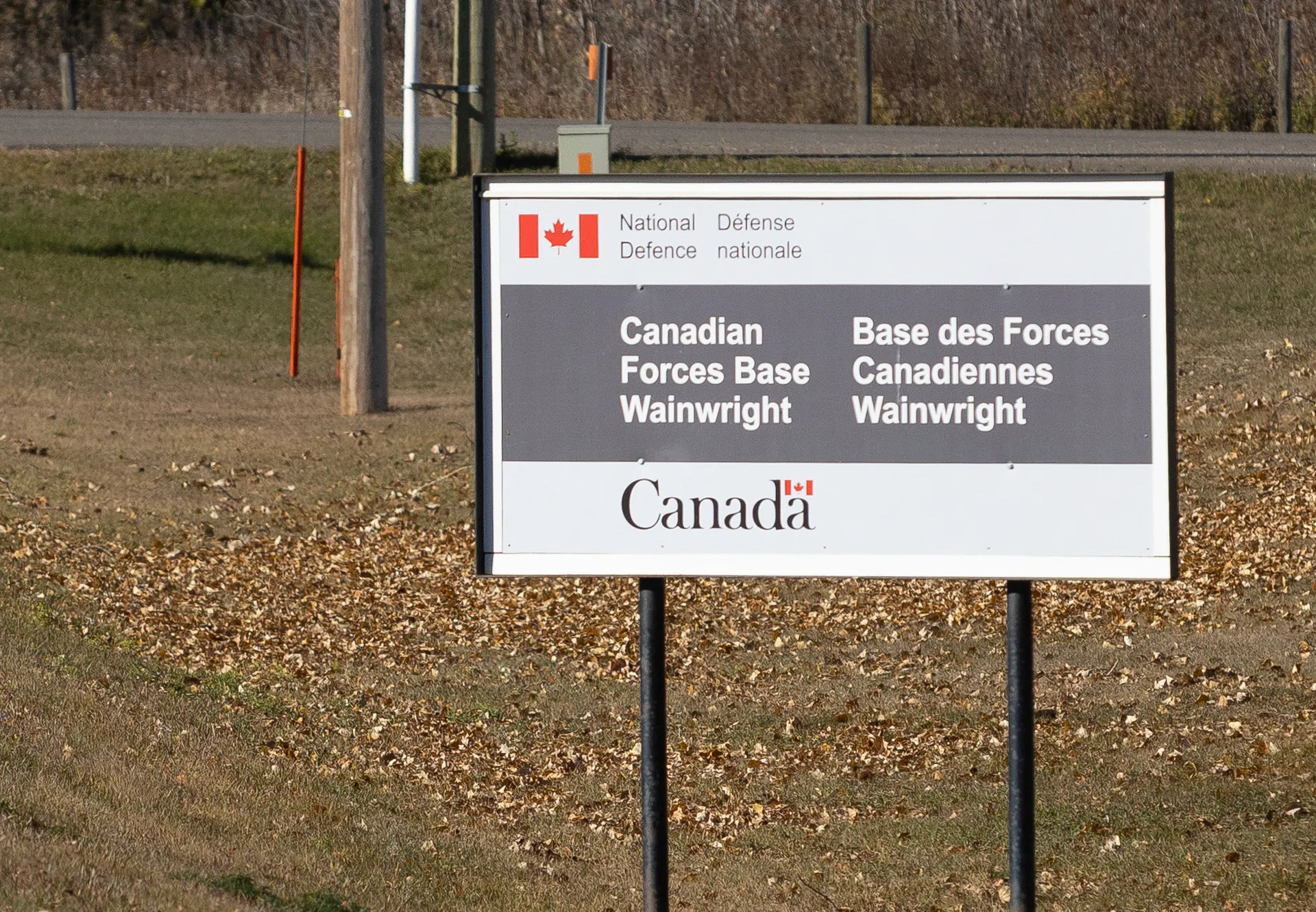
How a grass fire at a Canadian military base killed four soldiers
3 days ago
 Canada
How will household electricity rebate reduction, temporary winter pricing change impact Ontarians?
3 days ago
 Canada
Residents told to boil tap water due to bacteria
3 days ago
 Canada
Oil
3 days ago
 Canada
Albertans vote on path to independence as Carney fights to keep Canada united
3 days ago
 Canada
Two of 4 soldiers killed in fast
3 days ago