
Report says traffickers exploit inspection gap at Canada's Pacific ports
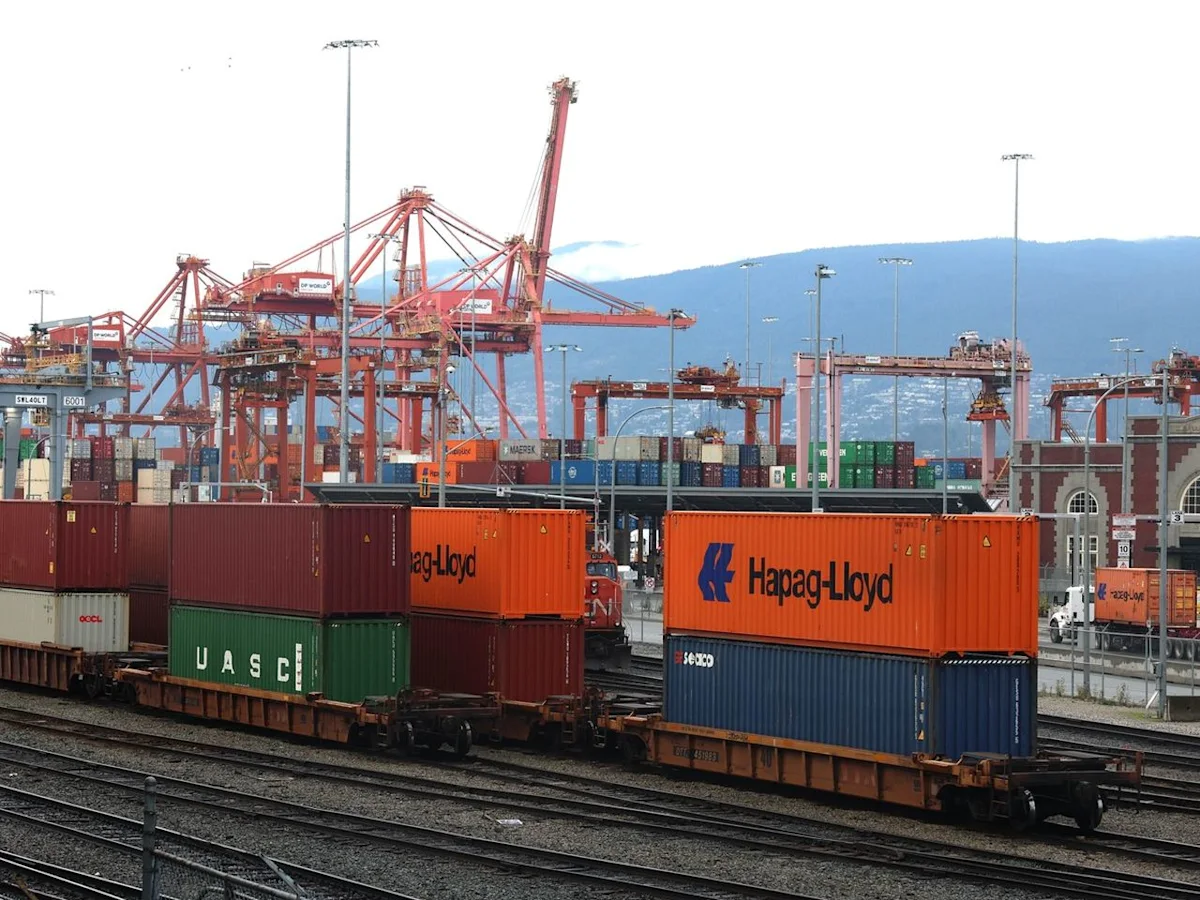
Canada barely checks cargo leaving its Pacific ports, a gap a new report says traffickers exploit to ship methamphetamine to Australia by the tonne.
The paper, released by the Frontier Centre for Public Policy, argues that Vancouver and Prince Rupert move enormous volumes of cargo with little of it meaningfully checked and that no single agency is responsible for closing the gap.
"Traffickers treat inspection risk as negligible and build their business model around the odds," Scott McGregor, a senior adviser with the Council for Countering Hybrid Warfare, wrote in his recent paper.
Less than two per cent of shipping containers are imaged and less than one per cent physically searched in Metro Vancouver, according to a City of Delta report the paper cites. That report, written by former RCMP deputy commissioner Peter German, was commissioned by the municipality in 2023.
The bigger gap is on the way out. An internal Canada Border Services Agency audit of marine-mode targeting, covering 2020 to 2022, found the agency did not target exports, outbound vessels or crew. That leaves cargo leaving the country with even less scrutiny than what arrives.
The seizures that do happen show the scale. In June 2023, the Canada Border Services Agency (CBSA) announced it had found more than 6,330 kilograms of methamphetamine in four Metro Vancouver busts, all hidden in jugs labelled as canola oil and bound for Australia. One seizure of nearly 3,000 kilograms was the largest methamphetamine seizure in the agency's history.
McGregor, who is also a senior fellow at the Frontier Centre for Public Policy and co-author of a book on Chinese hybrid warfare, said Canada is used as a launch point because the drugs are worth far more overseas. The country is not a major destination, he said, but has become one of the world's leading source countries for fentanyl, trans-shipped through the ports for the higher margins abroad.
Ottawa's own assessment is more cautious. A Public Safety Canada briefing note says there is little to no evidence from Canadian or U.S. law enforcement that Canadian-produced fentanyl is a growing threat to the United States.
Domestic production is vast. In October 2024, the RCMP dismantled what it called the largest, most sophisticated drug superlab in Canadian history at Falkland, B.C. The force said the fentanyl and precursor chemicals it seized could have produced more than 95 million potentially lethal doses, enough to kill every Canadian at least twice over. One person was arrested.
Part of the problem, the paper argues, is that no one is clearly in charge. Responsibility for port security is split among the port authorities, the CBSA, the RCMP and Transport Canada, with no single body accountable for the system. The federal government disbanded the Ports Canada Police, the country's dedicated ports force, in 1997, according to German's report. The Vancouver Fraser Port Authority ended its funding for an RCMP-led waterfront enforcement unit in 2015.
"Canada needs a standing Pacific port security task force, not another temporary working group," McGregor said. He said the country needs intelligence-led port security rather than what he called paperwork-led security, where large busts are announced to reassure the public but do little to change how traffickers operate.
German's report found organized crime has established a presence in the port workforce, which the paper calls a decisive vulnerability because insiders can move contraband before authorities can act.
In 2025, the B.C. Coroners Service reported 1,826 people died of unregulated drug toxicity in the province, with fentanyl and its analogues the most common substances detected. The total was down about 21 per cent from 2024 and fell below 2,000 for the first time since 2020, though it remains far above pre-pandemic levels.
McGregor extends the case beyond drugs. He argues the same gaps that let traffickers operate could be exploited by hostile states for sanctions evasion and foreign interference, a claim rooted in his work on hybrid warfare. The paper frames that risk as a warning about vulnerability rather than a set of documented cases.
The paper makes a series of recommendations, including mandatory export targeting, stronger vetting of port workers, an underwater hull-inspection program and a public dashboard reporting inspection and interdiction rates by gateway.
Canada's ports are its economic engine, McGregor said, and if the country does not secure them, someone else will use them. Economic security, he said, is national security.
Did fentanyl move north? Not everyone thinks the U.S. border claim holds up
U.S. drug enforcement 'keeping an eye' on Port of Vancouver as conduit for chemicals used to make fentanyl
Our website is the place for the latest breaking news, exclusive scoops, longreads and provocative commentary. Please bookmark nationalpost.com and sign up for our newsletters here.
Related Stories
 Canada
Google maps changes Lake Ontario to ‘Lake America’ for U.S. users
18 minutes ago
 Canada
Canadian travellers increasingly exploring their home base and it’s costing Americans
19 minutes ago
 Canada
Canada erects giant ‘Lake Ontario’ sign as spat with Trump over name escalates
19 minutes ago
 Canada
Both sides of Alberta separation debate rally as momentum kicks up ahead of vote
19 minutes ago
 Canada
Canadian women's volleyball team qualifies for Olympics for 1st time since 1996
1 hour ago
 Canada
Trump shares a news headline that says ‘Canada on notice’ following Venezuela oil deal
1 hour ago
 Canada
Trump says NBC's Welker will be reported to FCC
2 hours ago
 Canada
Berlin Dispatches: The world watches Canada as it stands up to Trump
2 hours ago