
Robosys VOYAGER AI Integrated into FarSounder Forward Looking Sonar
Robosys VOYAGER AI Integrated into FarSounder Forward Looking Sonar
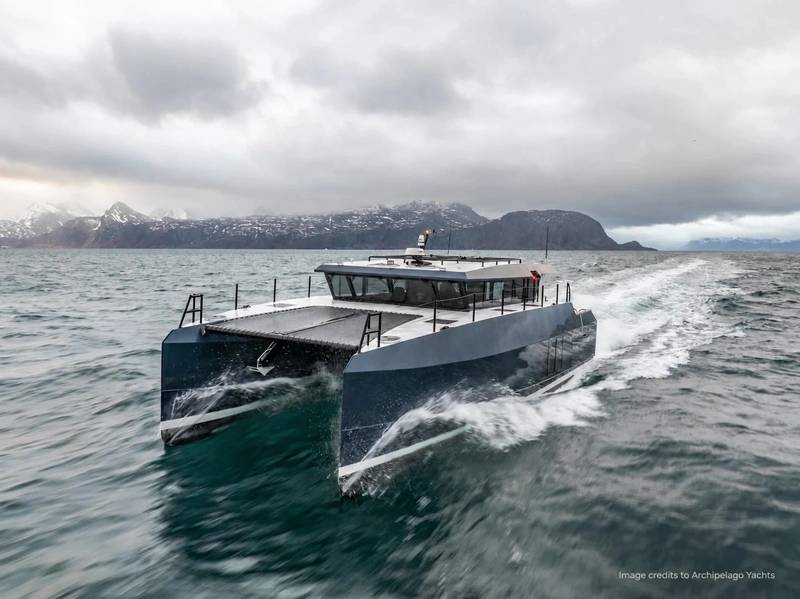
Robosys Automation, a provider of autonomous navigation and vessel control systems, announced the integration of its VOYAGER AI Autonomous Navigation System (ANS) software with FarSounder’s Forward Looking Sonar (FLS) technology, delivering real-time situational awareness, obstacle detection, and navigation decision support for both luxury superyachts and Uncrewed Surface Vessels (USVs).
The integration combines VOYAGER AI's navigation, route planning, COLREGs collision avoidance and autonomous vessel control capabilities with FarSounder's 3D forward-looking sonar technology. The ability to identify and respond to underwater hazards and uncharted shallow waters beyond the limits of conventional navigation sensors means that vessels fitted with this integrated capability are able to detect, track, and autonomously navigate around both surface and subsurface hazards.
As superyachts increasingly adopt advanced digital bridge technologies to improve safety and reduce operator workload, the combination of VOYAGER AI and FarSounder provides captains and crew with a more comprehensive picture of the operating environment. The system continuously incorporates sonar-derived information into VOYAGER AI's decision-making framework, supporting safe navigation in poorly charted waters, remote anchorages, and complex coastal environments.
FarSounder's technology generates a three-dimensional view of the seabed and potential underwater obstacles ahead of the vessel, providing information that traditional echo sounders and charts alone may not deliver. By feeding this data into the VOYAGER AI autonomy stack, vessels can benefit from a more complete understanding of navigational risks and opportunities.
The integrated solution is relevant for the growing superyacht sector, where owners and operators are increasingly seeking technologies that improve safety, support reduced-crew operations, and enable more confident exploration of remote destinations. The combination also aligns with the industry's broader move toward greater automation and intelligent decision support on board.
Beyond the superyacht market, the integration offers advantages for USV operators, where autonomous and remotely supervised vessels frequently operate in areas where underwater hazards present operational risks. By incorporating forward-looking sonar data into VOYAGER AI's autonomous navigation engine, USVs can achieve enhanced mission safety, improved route optimisation, and increased operational resilience.
Related Stories
 AI News
OpenAI boss says world 'right to be afraid' but 'should trust' AI firms
26 minutes ago
 AI News
AI backlash raises political costs of Washington’s hands
57 minutes ago
 AI News
Artificial intelligence industry leaders are calling for safety guardrails
57 minutes ago
 AI News
Google Launches New Gemini Models to Upgrade Enterprise Voice Agents
57 minutes ago
 AI News
U.S. and China face grave AI risks, but mutual distrust stalls cooperation
1 hour ago
 AI News
‘This is not a hoax’: Tech ethicist Tristan Harris warns AI takeover ‘no longer a hypothetical’
1 hour ago
 AI News
Exaforce extends its AI security tool to monitor more than just Claude
1 hour ago
 AI News
Bernie Sanders and Steve Bannon find rare common ground: AI needs the brakes pulled
1 hour ago