
Robotics startup hits $1.6 billion valuation amid China funding slowdown
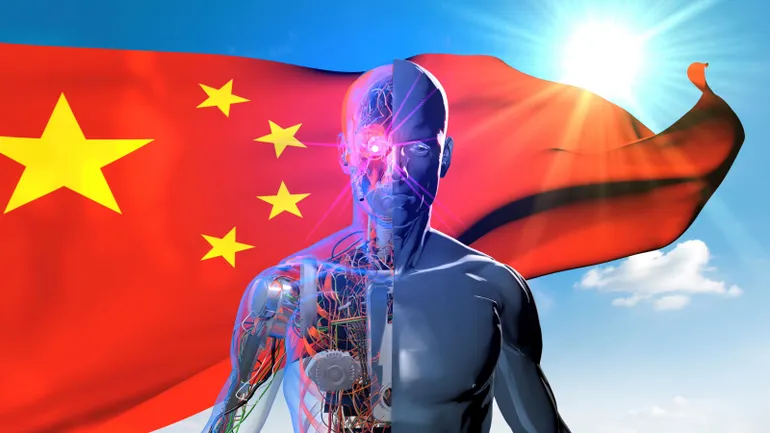
Simplexity Robotics has raised $100 million in a pre-Series A round that brought the 16-month-old company’s value to $1.6 billion.
Ant Group led the round, joining existing investors including Tencent Holdings, HSG and Lanchi Ventures.
The funding puts Suzhou-based Simplexity among a growing number of startups competing in China's crowded robotics market. The country has forged ahead in the burgeoning industry, with Smart Analytics showing it accounted for 97% of humanoid robot shipments in the first three quarters of 2026.
The sector has attracted a wave of new entrants, supported by government efforts to accelerate robotics development. But investment is beginning to cool. Fundraising fell to about $1.6 billion in October, down 67% from its June peak, Bloomberg reported.
Linda Sui, SAG founder and analyst, said the valuation is a sign of “increasingly selective investment in the physical AI sector in China.”
“Investors are shifting their focus from technology demonstrations toward companies with strong physical AI capabilities, practical commercial applications and scalable business models,” Sui told TechTarget.
"The NDRC [China National Development and Reform Commission], described the slowdown as a necessary consolidation, rather than a retreat from the sector, according to Nathanael Cheng, policy analyst at the Research Institute for Democracy, Society and Emerging Technology.
China has acknowledged that the sector is overheated and has warned of a bubble. But that doesn't mean that the national strategic importance of physical AI has changed; it's still a pillar of China's AI strategy," he told TechTarget.
Cheng said he expects the market to see both continued startup investment and failures, as companies compete to develop commercially viable robots.
“I don't think there is any doubt that the road to physical AI will be long, both in getting to the ‘ChatGPT moment’ and the ‘EV moment' for robots,’ he added.
Simplexity also unveiled its second humanoid robot. The iX wheeled model is designed for service and hospitality environments, with capabilities including preparing and serving drinks, delivering items and guiding visitors.
The company's first humanoid, also built on a wheeled base, targets industrial applications including manufacturing, logistics, retail and pharmaceutical packaging. It has been trained to operate CNC machines (tools used to cut, drill and shape materials) to address a shortage of skilled operators.
Simplexity also operates what it says is the world's first intelligent CNC robot production line for Leaderdrive, a major customer and supplier of motion-control components to US robotics companies including Tesla and Figure AI. Other customers include Suzhou Dongshan Precision Manufacturing and Hangcha Forklift.
The company is also developing what it describes as China's first modular humanoid arm, built with independently configurable joint modules that can be disassembled and reassembled into different lengths for specific tasks.
Simplexity has not disclosed how it will spend the new funding.
However, the funding signals continued strategic interest in physical AI, even as the sector faces tighter scrutiny over valuations and its ability to deliver commercially viable applications, according to Sui, of SAG.
“Simplexity’s early industrial deployments and focus on practical commercial applications help explain strong investor interest,” Sui said. “However, high valuations reflect expectations of future growth rather than proven profitability. SAG expects increasing competition and industry consolidation in China over the next few years.”
The biggest barriers to wider adoption, she added, are high upfront costs, uncertain ROI, hardware reliability, operational safety, AI capabilities and integration with existing enterprise systems.
Scarlett Evans is a freelance writer with a focus on robotics and emerging technologies. Previously, she was assistant editor at IoT World Today, where she specialized in robotics and smart city technologies. She also has a background in the mining and resources sector, with experience at Mine Australia, Mine Technology and Power Technology.
Related Stories
 Business
Startups and standup: How one Louisvillian is blending business, baseball
1 hour ago
 Business
Brad Pitt’s new movie is a woke bait-and
1 hour ago
 Business
Employees at Eric Trump
4 hours ago
 Business
Ten JumpStart healthtech founders pitch Dec. 10, including the Browns’ first sponsored startup
4 hours ago
 Business
Huawei found guilty of stealing US trade secrets but acquitted of racketeering
5 hours ago
 Business
Pronto Ventures launches in Turin to accelerate startup growth across Europe
6 hours ago
 Business
‘It feels empty’: is Hollywood film and TV production in a death spiral?
7 hours ago
 Business
Kazakhstan, Uzbekistan Launch Joint Startup Hub in London
7 hours ago