
Schools reopen in Congo’s Ebola epicentre despite concerns from parents and teachers
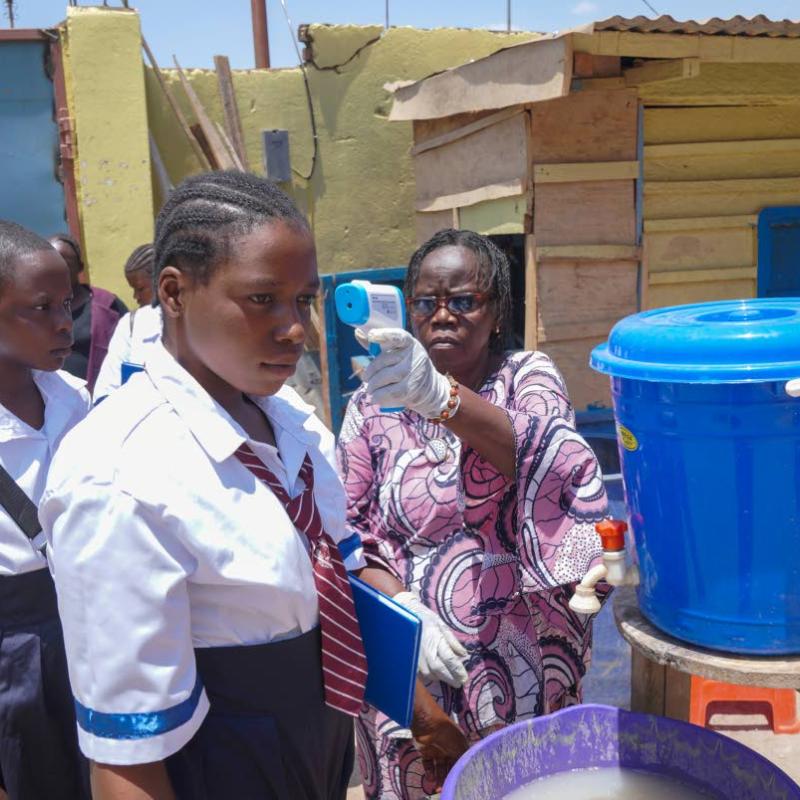
BUNIA, Congo (AP) — A new academic year began across Congo on Tuesday despite concerns by parents and teachers that the country’s Ebola outbreak still poses risks to children in the epicenter.
The resumption of classes comes in the middle of what authorities say is the fastest-growing outbreak of the disease ever, with 2,950 killed among the 6,100 cases confirmed so far since mid-May.
The union representing teachers in Ituri province, the epicentre of the outbreak, had called for a delay in restarting classes, but the government pressed ahead.
UNICEF said it is supporting the authorities to prevent transmissions in schools.
Some schools in Ituri, especially those owned by the government, recorded low turnouts. Authorities in Ituri did not respond to a request for comment on measures to ensure a lack of transmission in classrooms.
Aimerance Vahweka, a parent in Bunia, the capital of Ituri, said the school restart came as a surprise and she is keeping her child at home for now.
“I do not really see an increase in prevention measures,” she said.
Other education officials said they are equipping schools with noncontact infrared thermometers, hand sanitisers and hand-washing basins.
“We also raise student awareness about adhering to hygiene protocols, particularly regular handwashing and the use of hand sanitiser,” said Etienne Ndjabu, a teacher in a Bunia private school.
Experts say major challenges still remain, as many schools lack access to clean water and funding remains below target.
“There are also significant logistical challenges, particularly in remote areas, where the delivery of equipment and learning materials may be delayed,” said Greg Ramm, director for Save the Children in Congo.
Children aged 4 and below have the highest case-fatality rate of any age group in the outbreak at 60%, according to available health data.
“The priority is both to protect the health of students, teachers, and communities, and to preserve, as much as possible, children’s right to learn,” Dounia Dekhili, UNICEF Emergency coordinator in DRC, said.
The latest outbreak, which is caused by the rare Bundibugyo virus, has spread to more than 60 health zones. Authorities believe it had been spreading undetected among communities since at least February.
The World Health Organization said the outbreak is on track to beat West Africa’s regional outbreak between 2014 and 2016.
Follow The Gleaner on X, formerly Twitter, and Instagram @JamaicaGleaner and on Facebook @GleanerJamaica. Send us a message on WhatsApp at 1-876-499-0169 or email us at onlinefeedback@gleanerjm.com or editors@gleanerjm.com.
Related Stories
 Business
Silicon Valley Is Making Its Wildest Promises Ever. This Number From Anthropic Proves It.
3 hours ago
 Business
A little red book called 'The Mission at Corgi' insults boomers. The AI startup says it didn't create it.
4 hours ago
 Business
Lachy Groom backs Indian startup aiming to keep aircraft aloft for a year
7 hours ago
 Business
How to turn your startup into a rocket ship
8 hours ago
 Business
Anthropic signs $35B computing deal with startup backed by Nvidia
8 hours ago
 Business
What’s Your Favorite Business Tool or Service? Cast Your Vote Now
9 hours ago
 Business
Lotte Ventures to Reinvest Vietnam Startup Gains Locally
10 hours ago
 Business
Abegweit First Nation building $18M recreation centre
12 hours ago