
Scientists discover ‘surprising’ link between common weedkiller and superbugs
A [new study](https://www.frontiersin.org/journals/microbiology/articles/10.3389/fmicb.2026.1740431/full) suggests the spread of antimicrobial resistance (AMR), a phenomenon that occurs when bacteria, viruses, fungi, and parasites change so that they [no longer respond to medicine](https://www.who.int/health-topics/antimicrobial-resistance), could be fueled, in part, by a popular weedkiller.
According to the World Health Organization, AMR was associated with nearly 5 million deaths globally in 2019.
It is typically linked to the overuse or improper use of antibiotics, making the recent finding that weedkillers may also play a role something the study's authors call "surprising."
"Here we show that the most common species of multidrug-resistant bacteria from hospitals are not only resistant to multiple antibiotic classes, but also to high concentrations of the weedkiller glyphosate," Dr. Daniela Centrón, a researcher at the Institute of Medical Microbiology and Parasitology in Buenos Aires and the senior author of the study published in Frontiers in Microbiology, says in a statement.
"These results suggest that weedkillers -- which, unlike antibiotics, are widely applied in agricultural environments -- may have the unintended side-effect of selecting for AMR among bacterial communities within the soil."
Tips on how to stop the spread of antibiotic-resistant bacteria. (United Nations/World Health Organization
Even bacteria from a protected nature reserve showed resistance
For their study, Centrón and her team analyzed 68 bacterial strains collected between 2018 and 2020 from sediment in a protected nature reserve in a wetland region north of Buenos Aires, Argentina.
Herbicides were never used inside the reserve, but they are regularly applied in nearby agricultural areas.
Researchers examined how resistant each bacterium was to commonly used antibiotics, as well as pure glyphosate and glyphosate-based herbicides.
One of the study's more notable findings, according to the authors, was that every environmental strain demonstrated at least some resistance to glyphosate and glyphosate-based herbicides, despite the chemicals never being used within the reserve itself.
The researchers say this suggests resistant bacteria may spread beyond areas where herbicides are directly applied.
Hospital strains showed widespread resistance
The team compared its findings against 19 bacterial strains sourced from local hospitals, including drug-resistant species.
Hospital strains "showed widespread antimicrobial resistance," the authors say, with 74 per cent resistant to carbapenems, a class of broad-spectrum antibiotics often used to treat serious infections when other treatments fail.
All hospital strains also demonstrated resistance to glyphosate and glyphosate-based herbicides.
"This means that if these bacteria enter the environment through untreated wastewater from hospitals, they could go on to thrive in agricultural areas where glyphosate is used," first author Dr. Camila Knecht from Dr. Centrón's research group says in a statement.
Researchers say waterways may help move resistant bacteria between hospitals and agricultural environments, allowing them to spread between the two settings.
Glyphosate is the most widely used herbicide in Canada, used for controlling weeds in agriculture and land management, including invasive species and toxic plants, according to the Government of Canada.
Glyphosate use is regulated under Health Canada and the Pest Control Products Act.
This means products containing the chemical require scientific assessment before they can be approved for sale or use, as well as periodic re-evaluations to ensure they continue to meet current health and environmental standards.
Health Canada has established maximum limits for pesticides in food.
"The Canadian Food Inspection Agency monitors compliance with these limits in both domestic and imported foods, while any products exceeding established thresholds are referred to Health Canada for further health risk assessment," the government says on its website.
In Ontario, Quebec, and the Maritime provinces, homeowners are generally prohibited from using glyphosate for routine residential lawn and garden care.
Other parts of the world have different regulations and restrictions.
France, Belgium, and the Netherlands, for example, have banned glyphosate for household applications.
In Germany, its use is prohibited in public spaces.
Researchers call for more testing
The authors of the new study say policymakers should add antibiotic resistance to their list of concerns when evaluating glyphosate products.
"Policies for the use of any pesticide, as well as its metabolites, should stipulate the requirement for co-selection testing with antibiotics before marketing," Centrón says.
"Labels should include a warning that genes for antibiotic resistance can spread from glyphosate-contaminated soils to hospitals through untreated water."
The researchers note that the study did not investigate whether glyphosate directly causes antibiotic resistance. Instead, it examined whether glyphosate may help resistant bacteria survive and spread in the environment.
RELATED: How clouds can spread antibiotic-resistant bacteria
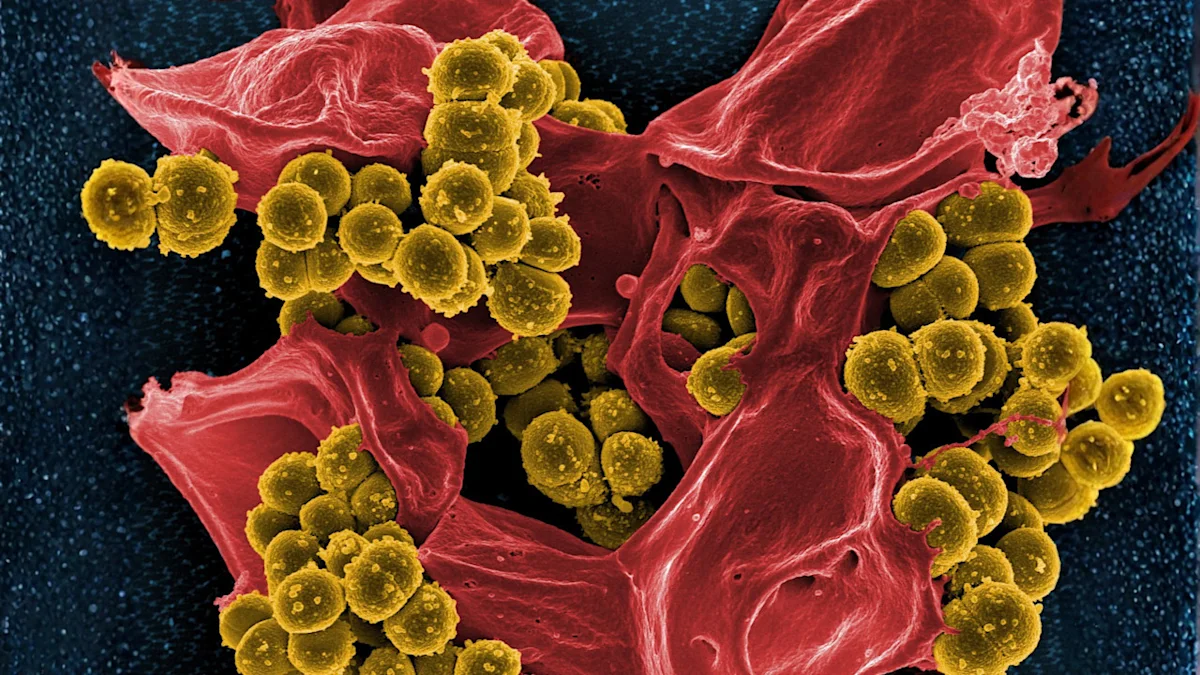
Header image: File photo of Methicillin-resistant Staph bacteria. (National Institute of Allergy and Infectious Diseases (NIAID)/NIH/Flickr/Public domain.
Related Stories
 Canada
Albertans head to polls in historic referendum on whether they want to stay in Canada
1 week ago
 Canada
In the news today: four soldiers killed, Alberta referendum, AI privacy fears
1 week ago
 Canada
How a grass fire at a Canadian military base killed four soldiers
1 week ago
 Canada
How will household electricity rebate reduction, temporary winter pricing change impact Ontarians?
1 week ago
 Canada
Residents told to boil tap water due to bacteria
1 week ago
 Canada
Oil
1 week ago
 Canada
Albertans vote on path to independence as Carney fights to keep Canada united
1 week ago
 Canada
Two of 4 soldiers killed in fast
1 week ago