
'Serious' critique of Carney is what loyalty to Canada looks like, Tory critic says
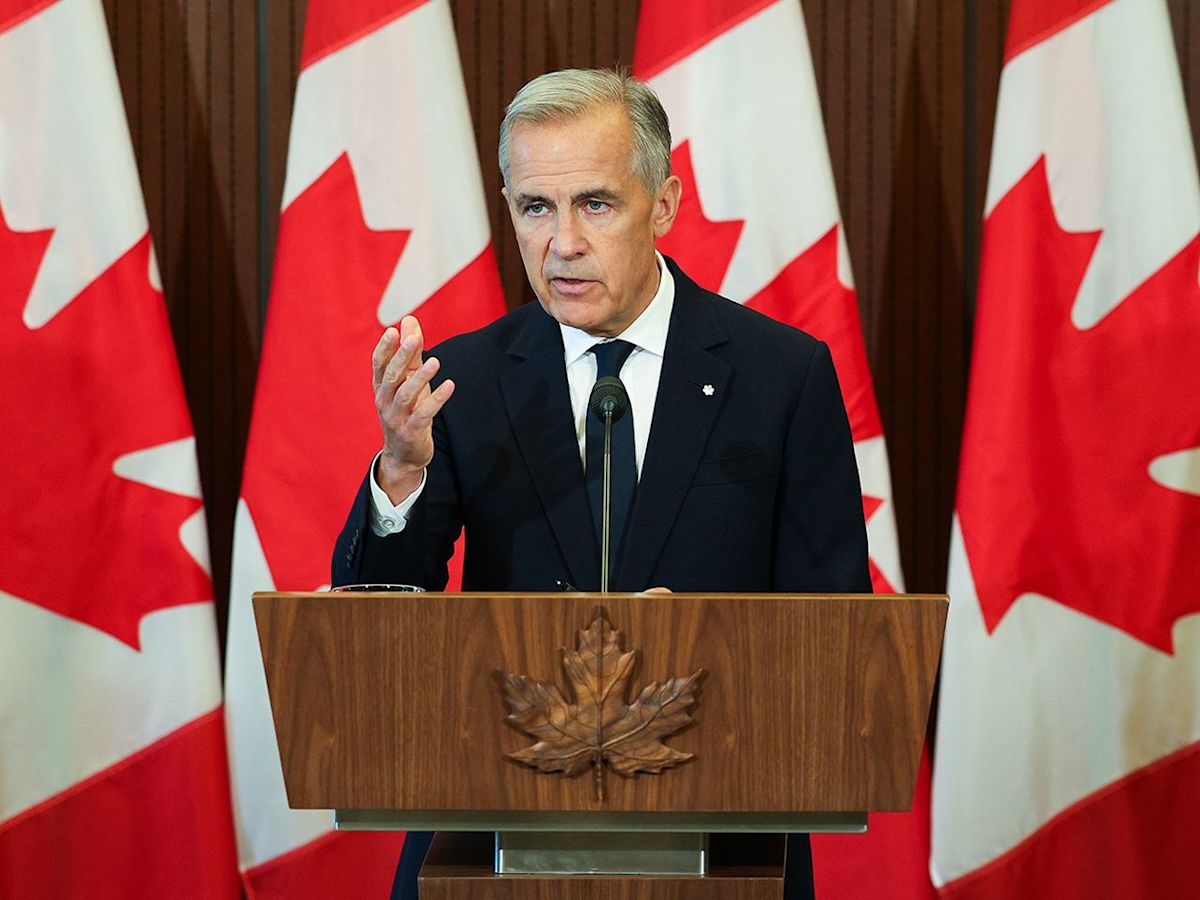
Being the loyal opposition when Trump's tariffs are hitting Canada is a tricky job, Shuv Majumdar admits.
Some voices treat criticism of the prime minister in a crisis as close to treason. The Calgary Conservative MP, named shadow minister for Canada-U.S. relations on June 30 — days before the July 1 CUSMA review deadline — rejects that.
"Our country is not too brittle to have a debate where the loyal opposition — loyal to the Crown, loyal to the debate for the country — wants the best outcomes for our government and for the prime minister in a tough and unpredictable negotiation," he says.
Prime Minister Mark Carney walked away from the table. He has framed the choice as defending sovereignty and shown little public appetite to reverse course. That may be good short-term politics. It leaves Canada waiting on Washington to blink, or living with a protracted tariff war — while Parliament has not been recalled. The House does not sit again until Sept. 21.
I want to know how Conservatives would handle the same untenable situation. The messages from various conservative camps have not always been coherent. Majumdar, the point man on the file for eight or nine weeks, is more straightforward.
"My effort has been to be thoughtful, to be serious, to be level-headed, to not be incendiary," he says. "To stay focused on the national interest and to hold the government accountable."
He is not calling for silence. "Why would you not celebrate that we have a democracy where we can criticize, thoughtfully? When people say debate is treasonous, they're undermining what opposition parties exist to do." Civil society, journalists, think tanks and trade experts all have a role, he adds. "Maintaining freedom is very fragile. It's so easy to concede freedom in a crisis. The harder work is to preserve that freedom through the crisis." Canadians should have learned that during the pandemic.
In the meantime the government is preparing support for tariff-hit businesses and an investment summit. Majumdar says Conservatives have stood with Canada and the prime minister since the new tariffs landed in July; he's "not confident that the government has reciprocated the same statesmanship."
He recalls how in the Harper years, the government briefed the opposition. Critics such as the late NDP MP Paul Dewar were taken into confidence on Ukraine, ISIS, TPP and CETA. Majumdar's confident Harper did the same with Tom Mulcair. Justin Trudeau sent border-town MPs to Congress; Chrystia Freeland used a non-disclosure process with journalists and experts. "We have not seen any of that in a year and a half," Majumdar says. Pierre Poilievre's New York swing this week — apparently with PMO blessing — looks like a shift toward a common front. Fine; but it still leaves the Opposition unbriefed on the talks, the deal text unpublished, and Parliament un-recalled.
Majumdar's core demand is simple: release the text. "Reveal the deal, share the deal, read the opposition or others into the deal so people actually have a better understanding of what was comprehensively on the table, what was the decision point to walk away, and let people judge for themselves."
Carney has said Canada would not sacrifice economic or cultural sovereignty. Majumdar's reply: show Canadians what was actually demanded. "Quebec's cultural sovereignty is a core part of our conservative identity. But what exactly was on the table that would have cost us our cultural sovereignty?"
Counter-tariffs, he acknowledges, are a tool. Conservatives "will pay whatever the price it takes to ensure our sovereignty, our economic security and the livelihoods of our people." The question is, "if you are going to impose counter-tariffs, explain how it's going to get to the outcome you want": a resolution, a long standoff, or a pivot to other markets — and who bears the cost. He wants clarity on aerospace, defence, F-35s, and Arctic or "Golden Dome" arrangements that may have been in play.
What would Conservatives have done differently? They would have moved faster on the "catalytic" decisions Carney was elected to make: defence production, critical minerals, competitiveness and getting government out of the way of resource development.
Parliament, he notes, already gave the prime minister wide authority to move quickly. Conservatives put legislation in front of him to repeal "anti-development" rules that keep investment away. "We're getting accused of not being patriotic just because we don't believe in a single hammer of counter-tariffs. We're building a whole array of instruments."
Canada's strengths should have been taken to Washington in a clear order of national interest: first, the security of Canadians and the border; second, middle-class prosperity and a social safety net that holds the country together; third, alignment with countries that share our values.
He is unconvinced that turning off oil or gas taps is a serious strategy. It would feed separatist sentiment in Alberta and damage Canada's reputation as a reliable supplier. A better idea, he says, is a strategic reserve of oil, gas and critical minerals used as a positive incentive for tariff-free trade with allies — "a carrot, not a stick."
On China, Majumdar is unsparing. Carney went to Beijing, then spoke in Davos of partnering with "Beijing's New World Order" while treating America as the global disruptor, "which is not entirely unfair," he says, "but I think (the disruption) is principally initiated from Beijing." The result, in his telling, was concessions without a comprehensive trade arrangement, "and then comes July and (Carney) gets hammered by unjustified tariffs because he's in a position of weakness."
Geography still binds Canada to Washington. "Our competition with the United States is very multi-layered," he observes, "one of the most complex relationships between two countries in the world. We can't escape whatever direction Washington chooses to go. Our country needs to have the self-respect to fight for our existence."
He does not expect November's U.S. midterms to rescue Canada. He has seen no signal from Democrats in Congress, Senate candidates or governors auditioning to be president that they would roll back these tariffs. "Waiting to see what an election may reveal is not as important as sharpening our pencil, drafting legislation that makes Canada the economic powerhouse it needs to be for the next half-century."
Asking to see the deal is not disloyalty. It is the minimum a self-respecting country should require before it is told to absorb the cost. If the offer really threatened sovereignty, publish it; if it did not, say so. Canadians can handle the argument. What they should not have to handle is a nation-defining trade war on trust alone.
Alberta thinks it has a health care fix. Ottawa, as always, is skeptical
The fight for Alberta's 'soft separatists' — the conservatives who want to send Carney a message
Our website is the place for the latest breaking news, exclusive scoops, longreads and provocative commentary. Please bookmark nationalpost.com and sign up for our daily newsletter, Posted, here.
Related Stories
 Canada
U.S. rep had to swim to safety after emergency landing
22 minutes ago
 Canada
Canada explores closer EU ties as U.S. trade frictions grow
23 minutes ago
 Canada
‘Doesn’t fix anything’: Report into death of Winnipeg woman released, family says it leaves questions unanswered
23 minutes ago
 Canada
Labour Day weekend in Toronto: 15 events to get you outside
26 minutes ago
 Canada
U.S. group calls for end to tariffs on sports gear
1 hour ago
 Canada
NEWS OF THE WEEK: Phoebe Dynevor reportedly weds
1 hour ago
 Canada
Carney pushes idea of making Canada ‘associate member’ of EU, WSJ reports
2 hours ago
 Canada
Aviva Klompas: Palestinians deserve the dignity of accountability
3 hours ago