
SK Innovation E&S aids young Indonesian, Busan entrepreneurs to tackle climate crisis
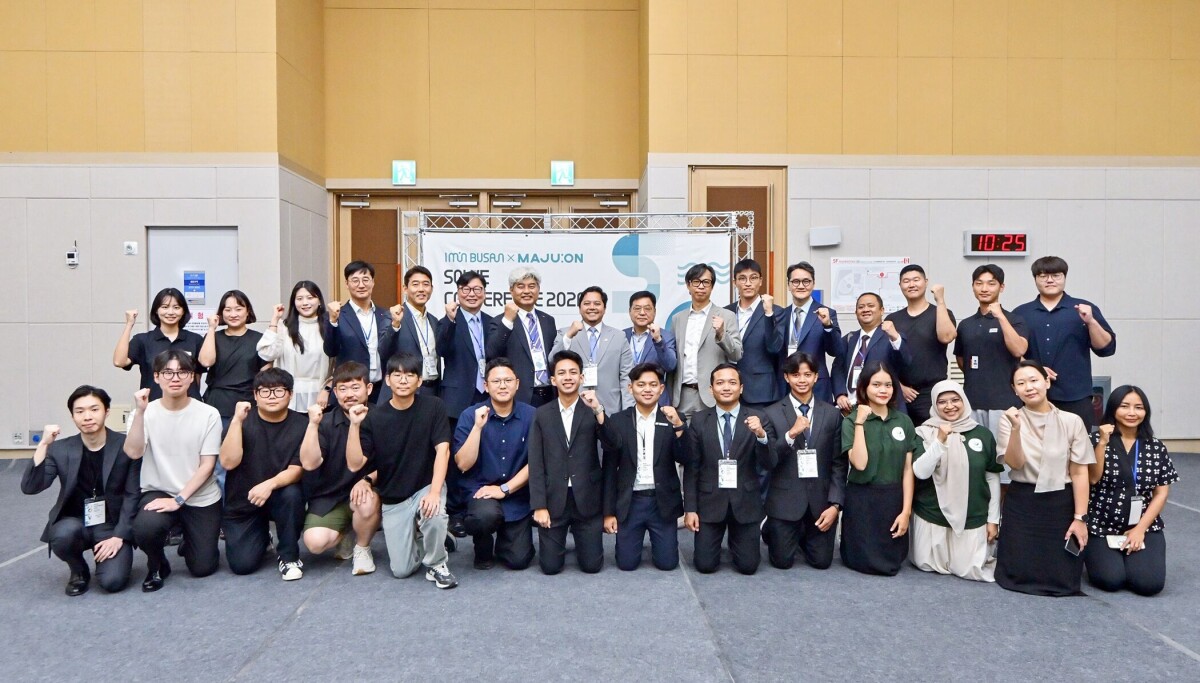
SK Innovation E&S aids young Indonesian, Busan entrepreneurs to tackle climate crisis
The Korean energy giant hosted Solve Conference 2026 in the port city, bringing together startups, government officials and experts.
BUSAN – Korea is a leader in technology and innovation, and Indonesia has a young population at the crossroads of Asia. SK Innovation E&S is betting that pairing the two can help address the climate crisis.
The Korean energy giant’s latest approach is to support Indonesian entrepreneurs in building companies from the ground up, from early-stage ideation to commercialization.
SK Innovation E&S held Solve Conference 2026 in Busan on Tuesday, part of a six-day Climate Solve Week program to connect young Korean and Indonesian entrepreneurs backed by the company. The event discussed further cooperation efforts of the two countries, bringing together roughly 250 climate experts, entrepreneurs and Indonesian government officials, along with SK-backed startup founders.
SK Innovation E&S started funding startups in Busan in 2024 before expanding to Indonesia last year, launching the Maju:On project, which drew 270 startup teams from eight Indonesian universities and provided support to 130 selected teams to help turn their ideas into viable businesses.
"Indonesia has a population of 280 million — more than four times Korea's 52 million, and it is an extraordinarily young country with an average age of 32 compared to Korea’s 46,” said Chi Yong-min, the head of the sustainability management office at SK Innovation E&S during the conference.
"What we are building is a bridge between scattered pockets of talent in Busan and Indonesia — a foundation for cooperation among the public sector, private companies and academia," Chi said. "And the goal is to make sure that connection doesn't end after a single event, but continues."
Aigra and Life Guards, two Indonesian startups from the program that won awards, were also invited to Busan to network with Korean startup founders and a two-day "benchmarking tour" of Busan's startup scene.
Aigra, which placed second in the program, built an AI system that monitors storage conditions to prevent agricultural spoilage and post-harvest losses, while Life Guards developed a coating spray made from discarded potato starch that extends the freshness of fruits and vegetables by more than 10 days.
Ali Andika Wardhana, the deputy chief of mission at the Indonesian Embassy in Korea, said that SK’s entrepreneurship program complements the broader energy partnership SK is building in Indonesia — spanning liquefied natural gas (LNG) as well as carbon capture and storage.
"The Indonesian government and the embassy want Korean companies to strengthen not just their presence in Asia, but the linkages between Indonesian and Korean companies across supply and value chains — in Korea and globally," he said.
SK's footprint in Indonesia dates to 2006, when the company invested in the Tangguh gas project and began importing LNG under long-term supply agreements.
In 2025, SK secured development rights to three energy blocks — Serpang, Binaiya and North Ketapang — through a government-led bidding process.
The company is also pursuing a joint research effort with the Indonesian government to transport carbon dioxide captured in Korea to Indonesia for storage.
"We are working to make that kind of project scalable and more economical," Wardhana said. "If we can achieve real success with this initiative, we can replicate it and offer the model to the rest of the world."
Korea is now Indonesia's seventh-largest source of foreign investment, with bilateral trade currently valued at $18 billion and projected to reach $30 billion by 2030.
SK's latest push also arrives at a delicate moment for Indonesia's startup ecosystem, which has struggled since the collapse of eFishery, an aquaculture technology company once valued at more than $1 billion.
The company's unraveling amid allegations of large-scale accounting fraud has compelled the country to avoid using the word "unicorn" for startups altogether, abandoning its former strategy of concentrating resources in a handful of marquee ventures in favor of cultivating a broader base of early-stage ventures with long-term growth potential.
BY SARAH CHEA [chea.sarah@joongang.co.kr]
Related Stories
 Technology
Portugal’s digital transformation is creating a bigger role for cloud specialists
32 minutes ago
 Technology
Central Coast launches $525,000 innovation fund for space, aerospace technologies
33 minutes ago
 Technology
Legal Tech Is Booming. a New VC Firm Wants Lawyers in on the Action.
1 hour ago
 Technology
ICESCO Calls for Youth Engagement in Crisis Management, Access to Knowledge and Technology
1 hour ago
 Technology
India’s green economy is being built far beyond the usual EV and solar narrative. From waste and textiles to used cooking oil, a new generation of entrepreneurs is turning environmental challenges into businesses. But startups alone cannot build this...
2 hours ago
 Technology
Tesla FSD Now Approved in Slovenia, Its Sixth European Market, France and Sweden Could Be Next
2 hours ago
 Technology
IHC Acquires 80% Stake in Marlan Space: Expanding into Space Technology
2 hours ago
 Technology
Elastic Chief Technology Officer Sold Shares Worth Over $26M
3 hours ago