
SolarDuck, MARIN Awarded $3.6m to Advance Offshore Floating Power Hub
SolarDuck, MARIN Awarded $3.6m to Advance Offshore Floating Power Hub
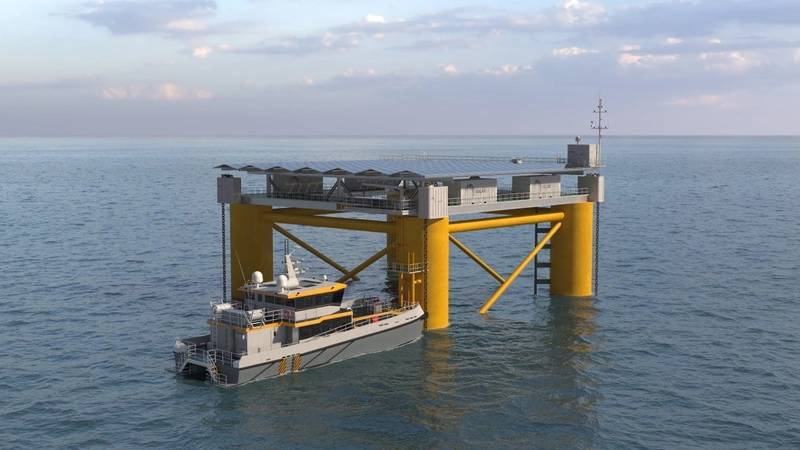
Offshore floating solar company SolarDuck and the Maritime Research Institute Netherlands (MARIN) have been awarded a USD$3.64 million (€3.2 million) subsidy from the Netherlands Enterprise Agency (RVO) for the Steady Seas research program. The project will advance the foundational design of SolarDuck's Offshore Floating Power & Utility Hub (OFPH), a single-platform offshore solar solution developed to provide reliable power, communications and other utilities to remote offshore and subsea assets.
As offshore energy activity moves further from shore, the need for reliable in-field power is becoming increasingly important. Subsea oil and gas infrastructure, Carbon Capture and Storage (CCS) projects, offshore monitoring systems and other remote assets often depend on long subsea cables, umbilicals or local generation using diesel generators. These solutions can be costly, complex to install, vulnerable to damage and carbon intensive.
SolarDuck's Offshore Floating Power & Utility Hub is designed to offer an alternative: a redeployable offshore platform that generates renewable power where it is needed. In addition the OFPH supports continuous operations through integrated energy storage and auxiliary systems. This has the potential to reduce the lifecycle costs of CCS and subsea tie-back projects and consequently unlock investment opportunities.
Steady Seas builds on the operational experience and data gathered through SolarDuck's DEl+ Merganser project in the Dutch North Sea. Under the new program, SolarDuck will lead the overall OFPH design and system integration. MARIN will contribute hydrodynamic analysis, simulations, and basin testing to validate the platform's behavior, reliability and wave response under realistic offshore conditions.
The results will support the next step toward demonstration projects with offshore industry partners.
The Steady Seas project combines applied research and technology development to address key technical questions for the Offshore Floating Power & Utility Hub, including hydrodynamic performance, mooring and motion behavior, integration of power and communication systems and the interface with subsea infrastructure.
The program will translate lessons from earlier offshore solar pilots into a robust basic design for a sector-specific platform that can support offshore oil and gas, carbon capture and storage and other remote offshore applications.
Following completion of the research phase, SolarDuck intends to move towards demonstration in collaboration with industry partners. Joint Industry Projects are currently being established to test the Offshore Floating Power & Utility Hub in operational offshore conditions and validate its ability to power and control remote assets in real-life environments.
Related Stories
 Technology
InnoEx 2026 to spotlight AI, green innovation and new growth models
1 week ago
 Technology
Regina’s tech renaissance: How a new batch of startups try to become the next big thing
1 week ago
 Technology
Lab named after teenager who helped improve tech for disabled
1 week ago
 Technology
QUT, PNG Enhance Partnership with Tech & Research MoU
1 week ago
 Technology
Three Aussie startups that raised $19.5 million this week
1 week ago
 Technology
Glamox Acquires UK Defense Lighting Specialist Consolite
1 week ago
 Technology
Tornado watch issued for parts of Manitoba
1 week ago
 Technology
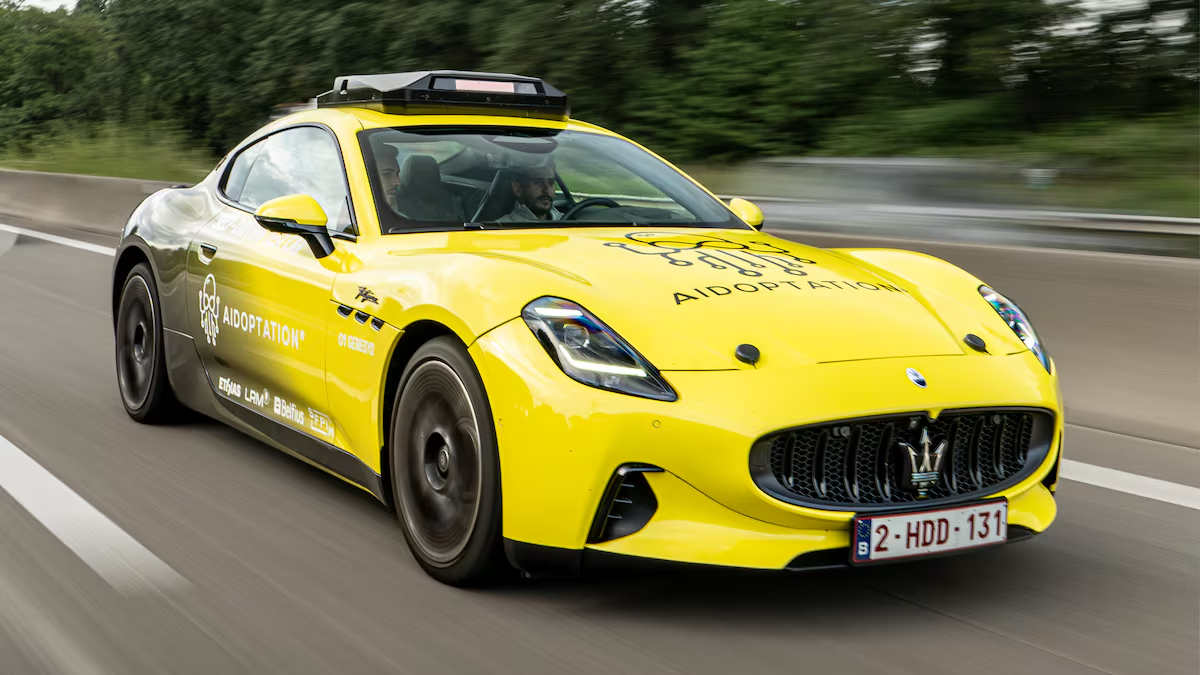
Aidoptation’s Edge Drive technology lets L3 systems handle highway crash avoidance without driver takeover
1 week ago