
Sonam Wangchuk and the Politics of Conscience | 2026
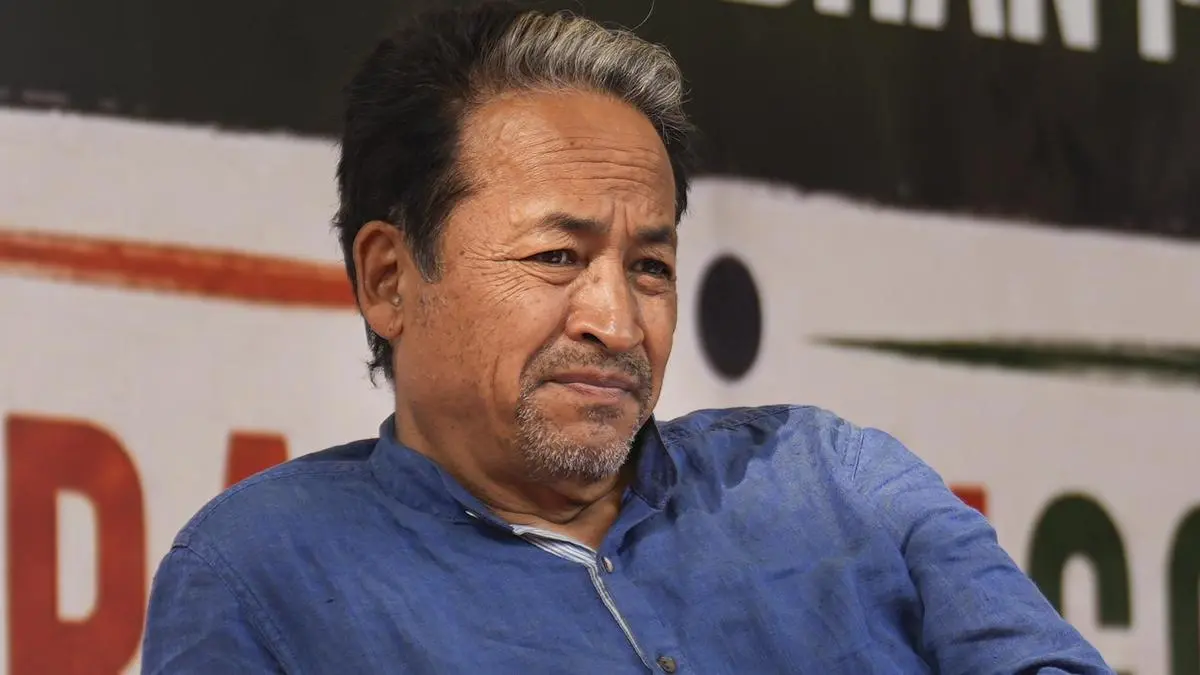
How does one become Sonam Wangchuk? Yes, Wangchuk asks questions of the government and to the government. But that alone does not explain how he became who he is.
As an engineer, he tried to reform the government school system. He is no anti-state rebel, not even an anti-government one. He did not arrive on the scene to lecture. He came without an ideology. He came to work, with the vision and commitment of a publicly active citizen.
The publicly active citizen may not sound enough political to certain radicals, but drawing from classical and modern republicanism (Aristotle to Rousseau), Hannah Arendt in her work The Human Condition (1958) revived and strengthened the idea of a politically engaged citizen who derives political value through public engagement for the common good.
Wangchuk’s first attempted hunger strike, in January 2023, was for an ecological cause. He wanted to fast near Khardung La, in Leh. The authorities, who did not act on his demands, also prevented him from fasting. All he wanted was for the state to guarantee protection for Ladakh’s vulnerable ecosystem. The state that allows mining industries to ravage the earth failed even to respond to Wangchuk.
The Ramon Magsaysay Award he won in 2018 did not stop Wangchuk from making political demands of the government. Ecology is political. And being a publicly active citizen does not mean being a docile one.
Finally, in March 2024, Wangchuk began his first fast-unto-death, demanding constitutional safeguards for Ladakh against industrial and mining lobbies. Later that year, he also walked from Ladakh to Delhi to press his demands; police detained him and his fellow marchers at the Singhu border. Wangchuk walked for ecology, and for the earth. He fasted in the name of the earth’s ecological future.
Governments do not think like Wangchuk because their politics is about instrumentalising the present. The future does not weigh on the government’s mind, as it once did on Jawaharlal Nehru’s, who spent sleepless nights and filled endless pages in Ahmednagar prison dreaming of India’s future. But a government that will not take the future seriously fears those who do. That is what makes Wangchuk political. The state’s fear of his ecological conviction is a fear that shields those responsible for crimes against human habitation.
There must have been something genuinely vulnerable, and disturbing, about the Cockroach Janta Party’s protest against the state of India’s examination system, launched after the NEET-UG paper leak. Student suicides linked to the crisis were reported through the summer. Wangchuk took to the cockroach idea and joined the protest, calling himself an “honorary cockroach”.
He made the CJP’s cause his own, fasting since June 28. For days, little happened. Ordinary people, parents anxious for their children’s future, came to meet him and the other activists. Eminent citizens, Arundhati Roy among them, later appealed publicly for the fast to end. As news of Wangchuk’s deteriorating health spread on social media, political leaders from the opposition, too, urged him to stop.
Some radical minds questioned Wangchuk’s method. What is the point of appealing to a deaf and indifferent government by risking one’s health and life? The government, by definition, has no conscience, the argument goes. So what is the hunger-striking political artist appealing to? The questions are legitimate, but they miss the point.
Gandhi never fasted to impress the government. It was a matter of calling, a method of truth: putting truth on trial, before the world. Wangchuk has done exactly that. Through his sincerity and vulnerability, he has brought people together in no time. His fast has become the political centre of the conscience of citizens who still believe in the idea of the good. When bodies and voices gather around such an event, it marks a churning, something important to the life of a democracy being uttered through the act of gathering itself.
This is not a gathering born of a demagogic appeal, unlike the Anna Hazare-led India Against Corruption movement. This time, the appeal to gather is more collectively empowering, because the protest at Jantar Mantar has declared its own vulnerability at the centre. People are offering their voice and presence to strengthen it. Without calculating the consequences, Wangchuk has achieved what the country needed: people responding to a call for justice.
To listen to oneself, to what Gandhi called the “small” or “inner” voice, was to stand opposed to history and, at the same time, to make history listen. Wangchuk has that self-belief. To become Wangchuk, to become anything at all, that inner voice must be taken seriously. The transformation of that voice into political action is what makes a political subject.
When people see someone answering his own conscience with dignity and resolve, it leaves a mark. The mark of a democracy lies in how people respond to someone who responds to the call of others. For Gandhi, fasting was a matter of calling. Listening to his conscience, Wangchuk has led people to do the same.
Manash Firaq Bhattacharjee is a poet, writer and political science scholar.
Also Read | BJP’s sneaky name game for MGNREGA is its own funeral chant
Also Read | An essential meditation on the Mahatma
Related Stories
 India
India
Modi to visit Canada as Carney looks to finalize trade deal with India by end of year
5 hours ago
 India
India
Sri Lankan court to deliver verdict on deadly Easter bombings
19 hours ago
 India
India
Haifa 1918: India, Israel and the politics of memory
20 hours ago
 India
India
Sachin Tendulkar
1 day ago
 India
India
Families of Air India bombing victims 'utterly shocked' to learn investigation is inactive
1 day ago
 India
India
Instagrams Takedown of Digital Rights Groups Post Exposes Metas Politics of Censorship
1 day ago
 India
India
The CFO Code: Decoding How India’s Top CFOs Think, Build And Scale
1 day ago
 India
India
India Free Trade finale brings odd pairings
1 day ago