
South Korea's 'Try Everything' Draws Crowds at DDP as Physical AI Robots Steal the Show
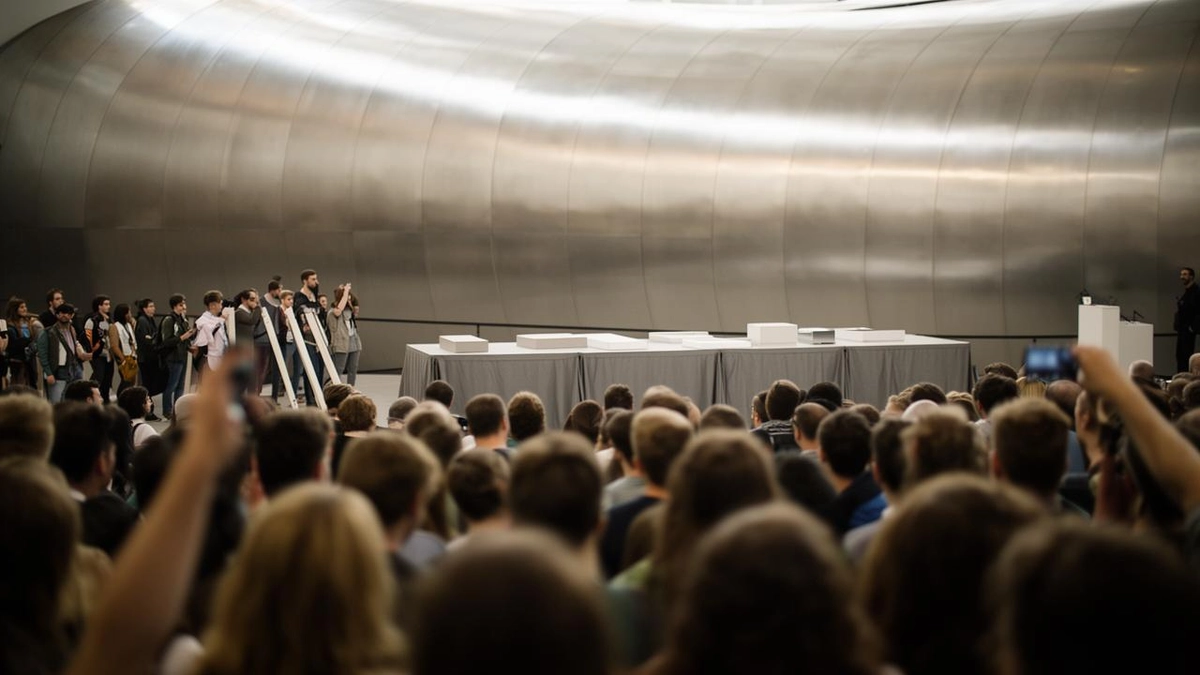
Seoul's Dongdaemun Design Plaza (DDP) was packed with visitors for the global startup festival "Try Everything 2026." Even on the afternoon of September 10, as the event wound down, lines stretched from every experience booth, with visitors who tried on industrial wearable robots exclaiming in amazement.
Co-hosted by the Seoul Metropolitan Government and Maeil Business Media Group, the event brings together startups, investors, large corporations, and startup support organizations from South Korea and abroad to explore investment opportunities, business partnerships, and overseas expansion. This year's slogan, "AI Changes Everything, Now Try Everything," put the future of industries and the startup ecosystem transformed by artificial intelligence front and center.
The core theme of this year's event was "physical AI"—AI that moves beyond software into the physical world to assist human labor. At the Hyundai Robotics booth, the industrial wearable robot "X-ble Shoulder," designed to prevent shoulder joint injuries, drew significant attention. The device can be worn for approximately eight hours without a separate battery and reduces strain on the shoulders and arms during overhead work that requires lifting arms above the head.
When a demonstrator donned the vest-style X-ble Shoulder and raised both arms overhead, the device connected to the back moved to support the arms. Even with repeated lowering and raising motions, the robot tracked shoulder movements and provided assistance. Its applications are expanding from overhead component assembly on automotive production lines to aircraft maintenance, shipbuilding, and agricultural sites where repetitive overhead work is common.
Kim Jong-woo, head of Robotics Business Team 1 at Hyundai Motor and Kia's Robotics Lab, said, "Since its launch last year, the X-ble Shoulder has been expanding beyond manufacturing, starting with Hyundai and Kia's domestic plants in South Korea, into aviation, shipbuilding, and agriculture." He added, "It is particularly useful in settings like Korean Air aircraft maintenance work or fruit orchards where workers must hold their arms up for extended periods."
The autonomous mobile robot platform "MobED," also showcased at the same booth, captured visitors' attention as well. When placed on uneven flooring, its four wheels adjusted to different heights to keep the body level, and the chassis remained remarkably stable even while traversing slopes. It is a platform-type robot that can be adapted for various purposes—from delivery and logistics to camera equipment transport and mobile advertising—depending on what equipment is mounted on top.
The Samsung Life Insurance booth also proved popular. Visitors standing in front of an AI screen saw a virtual customer appear, asking questions just like a real client. The setup was designed to allow insurance agents to practice before meeting actual customers face-to-face.
The venue featured booths from 81 startups in total—41 South Korean startups and 40 international startups from 16 countries. With 17 global zone booths and five large corporate pavilions, the event went beyond simple technology exhibitions to create a space where startups, investors, and large corporations could connect technology to real business and investment opportunities. Participating companies set up hands-on experience booths so visitors could directly experience how startup technologies can be applied in daily life and industrial settings.
At the opening ceremony the previous day, Erik Brynjolfsson, a world-renowned AI scholar and professor at Stanford University, delivered the keynote address. He assessed that generative AI is fundamentally changing how startups are founded, emphasizing that "with the spread of generative AI and vibe coding, we have entered an era where anyone can quickly build real products without coding experience." He added, "Entrepreneurs should not stop at writing business plans—they must use AI to build products directly and validate them in the market," and explained that "repetitive, routine tasks should be delegated to AI, while entrepreneurs focus on finding new problems and business opportunities that AI cannot easily solve."
Related Stories
 AI News
Could AI really 'kill all humans'? Breaking down the dire warnings about the technology's existential risk
23 minutes ago
 AI News
Chinese military researchers and tech giants caught using Claude — US frontier model, coded 16 air-defense suppression tools targeting Taiwan, drafted anti
1 hour ago
 AI News
5 Reasons Why Users Ditch Claude
1 hour ago
 AI News
When Will Artificial Intelligence Make Us Richer? The Productivity Puzzle
1 hour ago
 AI News
€5bn EU venture fund backs AI medical assistant Tandem Health
1 hour ago
 AI News
27 year old Anthropic researcher who quit AI industry says the biggest decisions on humanity's future are
1 hour ago
 AI News
SA calls for global oversight of artificial intelligence
2 hours ago
 AI News
AI will transform capitalism
2 hours ago