
St. Catharines, Lincoln, Ont., end flooding state of emergency
St. Catharines, Lincoln, Ont., end flooding state of emergency
Mayors still seeking provincial aid as residents continue cleanup
States of emergency declared in St. Catharines and Lincoln in the Niagara Region due to recent flooding have ended, but the mayors of both municipalities say residents are still dealing with insurance claims, cleanups and extensive damage.
The municipalities are also calling on the province to help with recovery efforts that include repair work to thousands of homes inundated with sewage-tainted water.
St. Catharines Mayor Mat Siscoe announced on Thursday the end of a state of emergency declared on Aug. 3, the day after the second of two storms that each dumped more than a month's worth of rain on the city. Those storms followed an earlier storm on July 21 that saturated the ground to the point where it could not absorb any more water.
On Friday, the town of Lincoln ended the state of emergency it declared on Aug. 3.
The crisis has not yet been resolved, both municipalities said.
“Our recovery is not over,” said Siscoe. “Many residents are still dealing with significant damage to their homes and the difficult work that comes with recovering from a flood."
He continued: "Ending the state of emergency is an important milestone, but we will continue to support our community, work with our partners and advocate for the resources St. Catharines needs to recover and become more resilient.”
Last month, Siscoe called for a long-term action plan to protect his city from future extreme rainfall events, asking staff to speak to experts to develop an action plan and funding strategy and to expand the city's homeowner flood protection program.
Since the storms, the city received more than 3,500 applications for its flood alleviation program, a program that the city said had previously supported about 30 applicants a year with an annual budget of $150,000.
In late August, city politicians transferred $20 million from reserve accounts and budgets to a new Emergency Flood Alleviation Program designed to reimburse eligible homeowners for 90 per cent of the cost (up to $5,000) of eligible flood protection devices.
The city said it's also seeking provincial and federal flood relief support and help with longer-term storm and sewer infrastructure needs.
On Aug. 27, the Town of Lincoln formally requested the province consider activating its Disaster Recovery Assistance for Ontarians (DRAO) program.
That program pays up to $250,000 to people, farmers, small businesses and not-for-profit agencies for emergency expenses, repairs and replacing essential property after natural disasters.
In late August, the province's municipal affairs and housing ministry told CBC News it's "working with the City of St. Catharines to assess storm-related flood damage to determine whether there are any areas affected by overflowing creeks, rivers, or lakes where uninsured damage may be eligible for assistance under the DRAO program."
The ministry didn't specify if people's flooded basements could be considered for disaster recovery funds.
CBC News asked the ministry again on Friday if it will activiate DRAO for the Niagara communities affected by the flooding.
The Town of Lincoln said it's been collecting detailed information about the impacts of the flooding, but said DRAO hasn't yet been activated for any area in Lincoln.
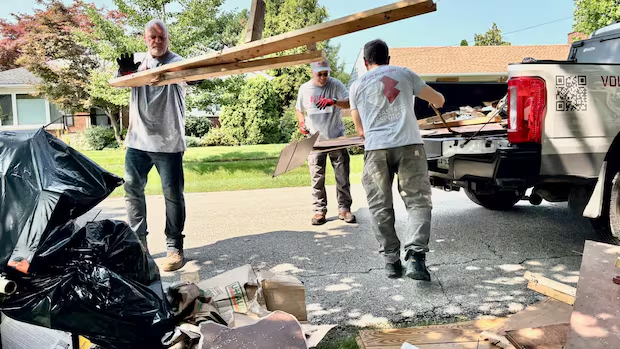
After the Aug. 2 storm, which resulted in many homes being flooded twice in five days, volunteers with Team Rubicon Canada rushed to the aid of St. Catharines and Lincoln, helping to clean out the flooded homes of the most vulnerable residents. Samaritan's Purse and the Mennonite Disaster Service also contributed volunteers.
Rubicon said its emergency response, which ended on Aug. 29, involved 110 volunteers who toiled for more than 1,600 hours to clean 175 homes.
"When flooding overwhelmed families in St. Catharines and Lincoln, Greyshirts – many of them from the local community and across the Golden Horseshoe – stepped up to help their neighbours get back on their feet," said Team Rubicon Canada CEO Mischa Kaplan, referring to the grey tops their volunteers wear.
The crisis brought out the best in people, said Lincoln Mayor Sandra Easton.
"I want to thank our residents for their resilience, and our staff, emergency responders, volunteers, community organizations and partners for coming together to support our community during an incredibly challenging time," she said on Friday.
Navigating cleanup and damage after Ontario's storm? Here's what you should know about insurance
‘You’re at the mercy of insurance companies,’ says St. Catharines, Ont., homeowner impacted by floods
If DRAO is activated in an eligible area, applicants will still be required to first pursue available insurance coverage, along with documentation from the insurer outlining the coverage available and the cause and extent of the loss, the Town of Lincoln said.
DRAO is designed to return a home to a safe condition, but may not cover the cost of replacement of finished basement features such as flooring, furnishings and other non-essential items, the town said.
Paul Forsyth is a St. Catharines-based CBC reporter covering communities in the Niagara Region. He has decades of reporting experience in Niagara, having worked for Niagara This Week, the St. Catharines Standard and the Welland Tribune before joining CBC. You can reach him at paul.forsyth@cbc.ca.
Related Stories
 Community
New accessible dock launches at Thunder Bay’s Boulevard Lake
6 days ago
 Community
Community fair held to encourage Toronto’s residents to vote
6 days ago
 Community
Wainwright community grapples with aftermath of military base disaster
6 days ago
 Community
Dawson Creek voters embrace Dwaine Dilworth as their newly elected mayor
6 days ago
 Community
'Looking for a change': Fort Nelson mayor eager for B.C. election
6 days ago
 Community
Calm space garden needs younger helpers to survive
1 week ago
 Community
Israel-Lebanon agreement shines light on long
1 week ago
 Community
As the new film hits theaters, we rank Street Fighter's LGBTQ+ characters
1 week ago