
Startup Teragen Energy bets on fuel cells for data centers
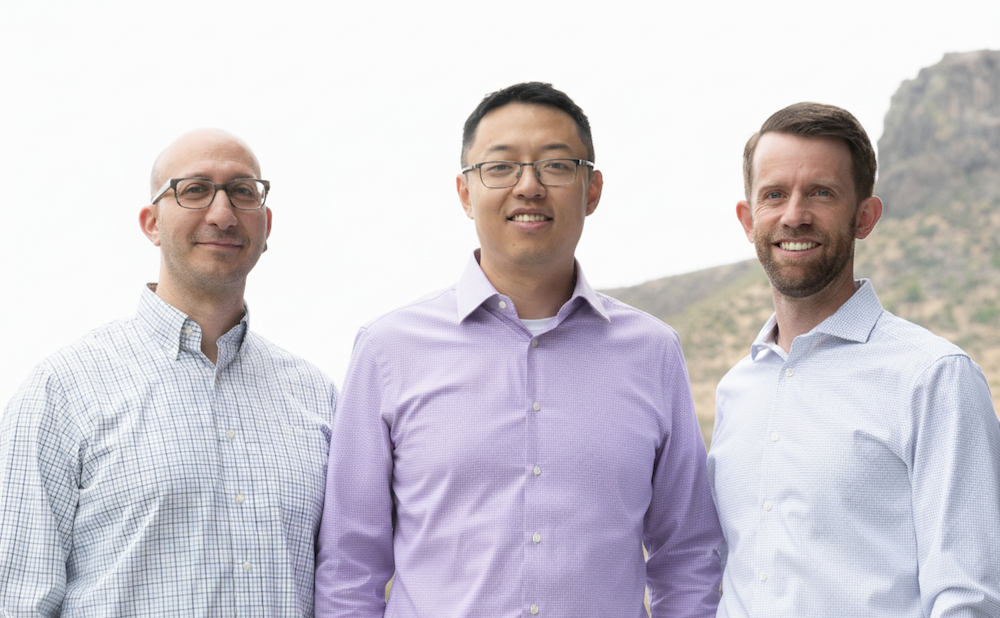
Teragen Energy, co-founded by CEO Ruofan Wang, PhD, EWMBA 25, Chief Commercial Officer Emerson Reiter, EMBA 24, and CTO Joshua Persky, just closed a $6 million pre-seed funding round. Teragen is developing advanced fuel cell systems to power data centers, advanced manufacturing, and other industries. In this Q&A, Wang and Reiter discuss the problem Teragen is solving and the classes that helped them build their startup.
Haas News: How did you decide to start a company together at Haas?Ruofan Wang: I was interviewing Emerson as a subject-matter expert for an assignment in Vivek Rao’s Advanced Innovation course at Haas—a class built around design thinking, rapid prototyping, and customer interviews. We hit it off and kept talking after the semester ended, and later on, we became co-founders.
Haas News: What are your backgrounds, and how do they connect to the company’s technology?Wang: Before business school, I was a postdoctoral researcher at Lawrence Berkeley National Laboratory, where I used to be a scientist. I co-invented this technology that now we’re licensing it from Berkeley Lab.
Reiter: I’m a Stanford-trained engineer who came to Haas after working for multiple energy companies in the Denver area. I started my career at Pacific Gas & Electric on the wholesale power market side and as a technical project leader at the National Renewable Energy Laboratory.
Q: What are you building using this technology?
Wang: We’re building an on-site, non-combustion fuel cell system that’s cleaner and cheaper to manufacture than a gas turbine, produces negligible air pollution, and can run on natural gas with a path to clean hydrogen down the road.
Q: Can you discuss the problem the company is solving?Wang: AI infrastructure is consuming electricity faster than the grid can supply it. Utility upgrades take up to a decade and cost billions of dollars. Developers are leaning on diesel and gas turbines that are expensive, slow to deliver, and loud and polluting enough to cause local opposition. Our solution provides faster, quieter, more affordable power that data centers, utilities, and project developers can use without waiting on the grid. The goal is to phase out gas turbines entirely.
Q: Which parts of the Haas curriculum shaped how you built the company?
Wang: Kurt Beyer’s entrepreneurship class, John Metzler’s opportunity recognition seminar, and Vivek Rao’s Advanced Innovation taught us how to pressure-test an idea, build a pitch, and find white space in a crowded market.
Reiter: (Visiting Associate Professor) Steven Huff’s marketing course and Professor Toby Stuart’s Entrepreneurship & Innovation Immersion were both helpful. One piece of advice stuck with me: don’t wait for the best answer, grab a right answer and keep moving, because speed matters more than perfection.
Wang: We recently closed a $6 million pre-seed round and finalized our licensing agreement with Berkeley Lab. We’re in a technology validation phase, scaling the fuel cell from lab scale to a commercial demonstration, and hiring roughly 10 people at a technology center in Southborough, Massachusetts. Within a year, we expect to have a working prototype ready to show data centers, utilities, and developers, alongside a push to close a follow-on raise to fund manufacturing at scale.
Q: What would a possible exit look like for Teragen?
Reiter: It’s too early to plan around a specific outcome, though plausible paths include GE, Siemens or Mitsubishi, which provide power generation equipment, or something along the lines of Bloom Energy, a fuel cell leader providing clean energy to multiple industries. We’re encouraged now by a broader shift in venture appetite. Investors who have spent the last decade chasing software and AI applications are increasingly flowing toward deep tech and energy infrastructure.
Related Stories
 Business
This startup is building a single platform to manage operations and suppliers
2 hours ago
 Business
The Legacy Question: What Happens When A Startup Founder Passes Away?
4 hours ago
 Business
Ukraine has been trying to bring the war to Russia. More Russians are beginning to feel it
5 hours ago
 Business
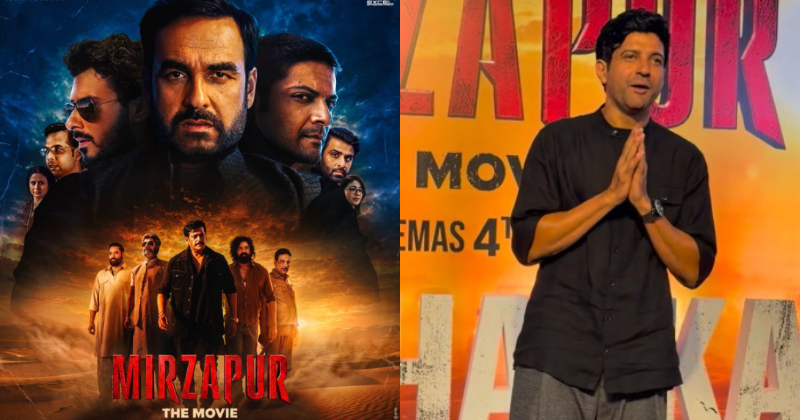
Mirzapur: The Movie Becomes Producer Farhan Akhtar's Biggest Hit Beating Don 2, Gully Boy
5 hours ago
 Business
Palo Alto Networks founder Nir Zuk raises $245 million for new cybersecurity startup
5 hours ago
 Business
Honda invests in rare-earth
5 hours ago
 Business
French cardiac monitoring startup Implicity reports 26% lower mortality as it raises €35 million
6 hours ago
 Business
Secretive defense startup Covenant emerges from stealth with $250 million at over $1 billion valuation
6 hours ago