
Terry Newman: Carney's quest to 'Make America Great Again'
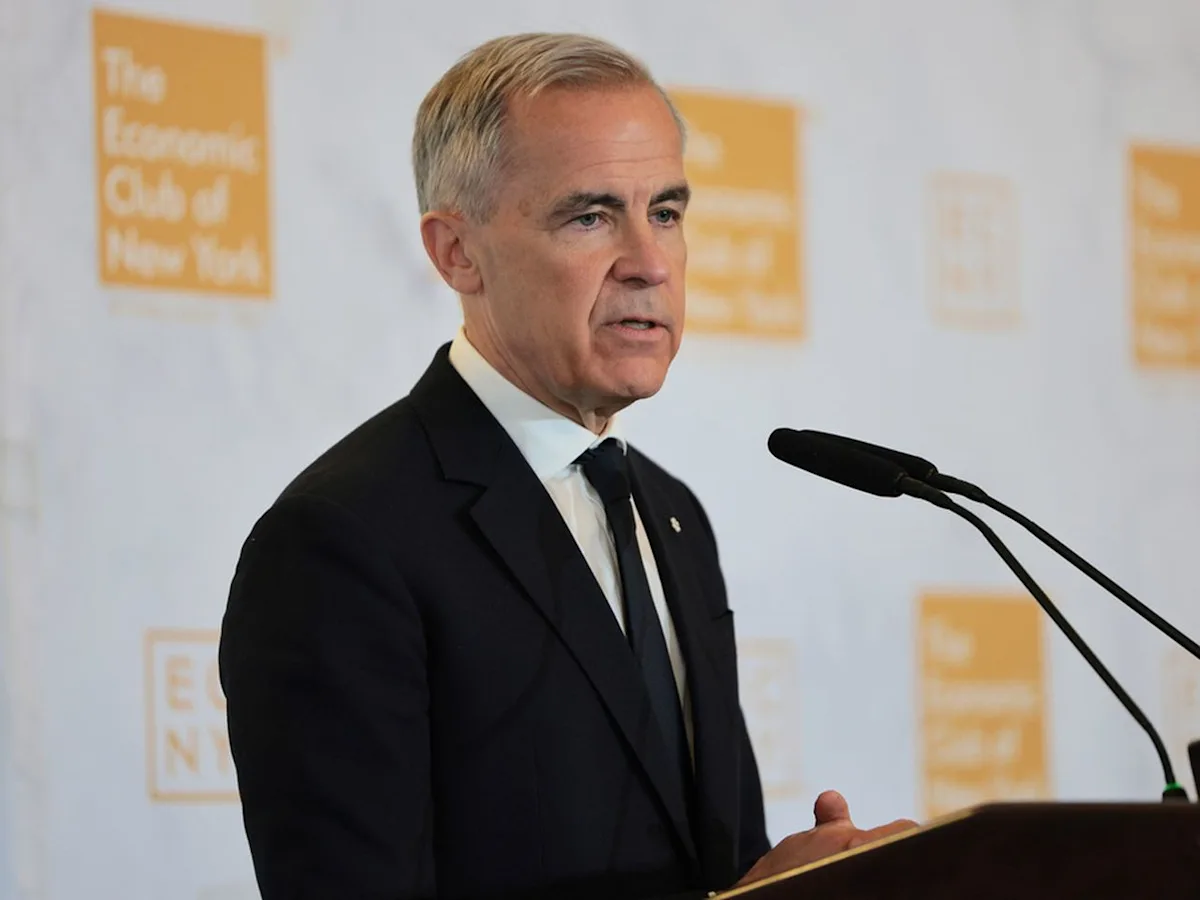
“I’m going to draw on an insight from the Finnish president, my friend Alexander Stubb, who observed that people consistently — myself included — do three things: over-rationalize the past, over-dramatize the present and underestimate the future.”
This is what Canadian Prime Minister Mark Carney told a room full of attendees at the Economic Club of New York on Thursday.
In a statement, the Prime Minister’s Office said that Carney “outlined Canada’s economic strategy of building strength at home and diversifying partnerships abroad, including a new economic and security partnership with the United States.”
What the statement didn’t include was Carney’s implied admission that he had made a mistake by trying to cut Canada off from its largest trading partner — and that he had told the room Canada would now “help make America great again.”
Of course, there was no actual admission of fault. That’s not Carney’s style. But it was heavily implied.
While Carney admitted he was someone who over-rationalizes the past, over-dramatizes the present and underestimates the future, he didn’t directly link these behaviours to the antagonistic relationship he chose to pursue with the United States in response to President Donald Trump’s tariffs.
Instead, he spoke vaguely about past failures over Brexit and the 2008 financial crisis.
Carney told the room that when he looks “back at the right path out of the global financial crisis and the right response to Brexit,” both “now look very clear, in hindsight.”
He explained that when he and other economists were at the table at the time, there were “relatively few who identified those paths,” and even “fewer still who had the courage of their convictions to walk them. Because in a crisis, the fog and fear are real.”
It sounded to me like Carney may have been softly conceding that during moments of great uncertainty — like the Brexit referendum — the establishment (including himself) often gets the politics and the long-term consequences wrong.
As governor of the Bank of England during the Brexit vote, Carney publicly weighed in against the leave vote, suggesting it was the “biggest domestic risk to financial stability,” and could possibly cause a recession.
Conservative MP Jacob Rees-Mogg referred to Carney as “the high priest of project fear” and suggested that his “reputation for inaccurate and politically motivated forecasting has damaged the reputation of the Bank of England.”
Lord Lamont, a Vote Leave spokesperson, also criticized Carney, saying: “The governor should be careful that he doesn’t cause a crisis. If his unwise words become self-fulfilling, the responsibility will be the governor’s and the governor’s alone. A prudent governor would simply have said that ‘we are prepared for all eventualities.’ ”
Carney continued his New York speech, telling attendees that “The right response to these tectonic forces, the global rupture that I described at the start, the right response today is clearer than it may feel.”
He said that Canada is focused on what it can control, citing international partnerships that make Canada “a much stronger, more resilient, more independent country.”
This isn’t just good for Canada and all Canadians, he told the room, “it’s also good for the United States, because a stronger Canada is a better ally.”
At this point, I experienced whiplash. Carney had previously said repeatedly that Canada’s relationship with the U.S. — one “based on deepening integration of our economies and tight security and military co-operation — is over.”
In New York, he tried to shove his past comments down the memory hole, saying that the two countries had differences “over the centuries” that have always been worked out thanks to shared values and common interests.
He highlighted just how intertwined and dependent the two countries are on each other, calling it “mutual strength.”
Then came the kicker. He told the room: “Let’s be absolutely clear. Canada strong will help make America great again.” This was followed by a little bootlicking of his American audience.
He wished the U.S. a “happy birthday,” and called it “the most dynamic, resilient and inventive country the world has ever seen,” with values that should “continue to serve as guides to its future and the future of the rest of the world.”
He continued: “That future should include a new partnership with Canada,” one “that re-imagines co-operation in specific sectors that are deeply challenged by global competition.”
The Canada of today, he told the audience, is different from the Canada of the past, claiming that the country is “predictable and reliable in a world that’s anything but.”
Really? Was telling Canadians that “our old relationship with the United States … is over” something that a “predictable and reliable” country would do? I don’t think so.
The fear drummed up against Canada’s neighbour and most important trading partner worked great for Carney politically — but how much has it cost Canadians?
This column was originally published in Right? A National Post Newsletter. Sign up now.
Terry Glavin: The Kamloops 'graves' and the poisoned chalice of 'reconciliation'
Donna Kennedy-Glans: Alberta vote isn’t about rage-quitting Canada — it’s about renewing Confederation
Related Stories
 Canada
Albertans head to polls in historic referendum on whether they want to stay in Canada
6 days ago
 Canada
In the news today: four soldiers killed, Alberta referendum, AI privacy fears
6 days ago
 Canada
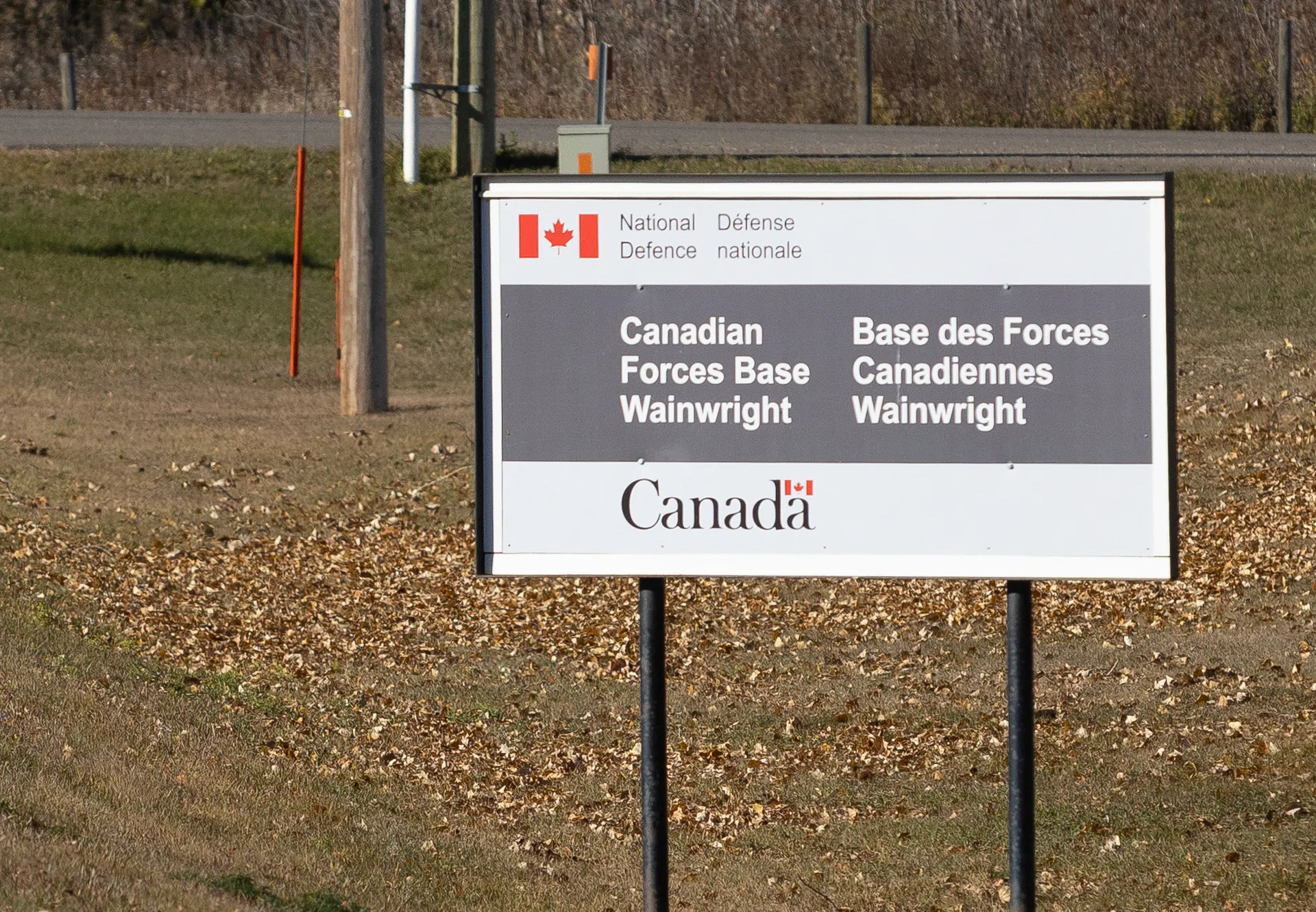
How a grass fire at a Canadian military base killed four soldiers
6 days ago
 Canada
How will household electricity rebate reduction, temporary winter pricing change impact Ontarians?
1 week ago
 Canada
Residents told to boil tap water due to bacteria
1 week ago
 Canada
Oil
1 week ago
 Canada
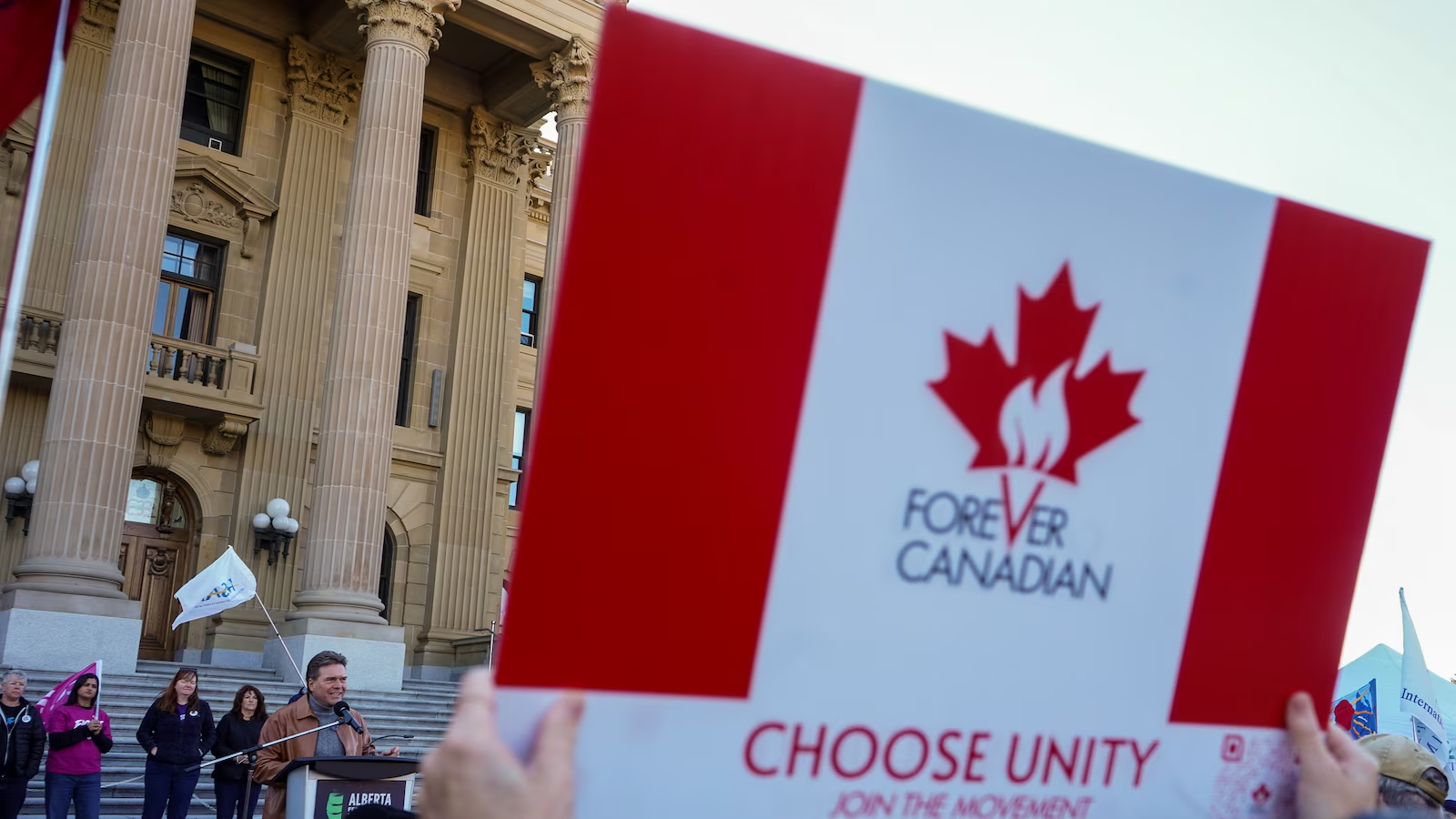
Albertans vote on path to independence as Carney fights to keep Canada united
1 week ago
 Canada
Two of 4 soldiers killed in fast
1 week ago