
The AI shift turning everyday investors into mini quant funds | Technology News (HT Tech)
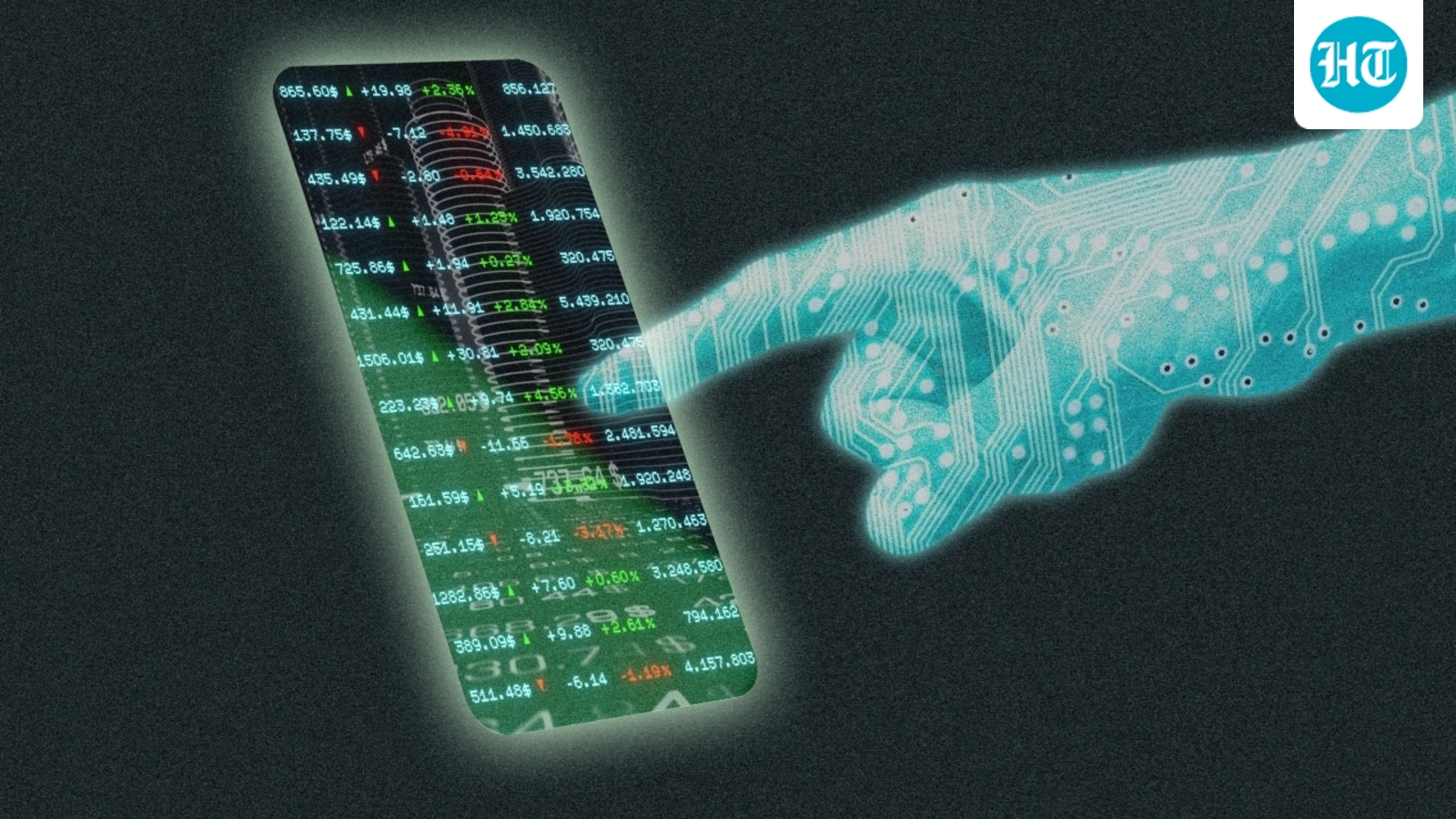
The AI shift turning everyday investors into mini quant funds
Americans are vibe-coding trading algorithms and handing over their stock portfolios to AI agents. Welcome to the world of the robot retail investor.
Like many of Wall Street’s top money managers, Colin Edsman has a team helping him stay on top of his investments.
There is Alex, who scans the market regularly for promising stocks and exchange-traded funds. Sarah, who checks over open positions each day before the close. Elena, who whips up a weekly performance report.
There is just one difference: Alex, Sarah and Elena aren’t coffee-chugging analysts pulling all-nighters at their terminals. They are Claude agents, working round-the-clock from Edsman’s laptop on his kitchen table. And so far, they are outperforming most of the accounts he runs himself.
“It runs sort of like a hedge fund would,” Edsman said of his agentic trading portfolio, which is kept in a separate account from his other investments at Robinhood. The hairstylist and stay-at-home dad said that giving the agents names has helped him keep track of their assigned tasks.
Americans are already using artificial-intelligence agents to book vacations, draft emails and automate other tasks. Now, everyday investors can hand over control of their stock portfolios as well. Several brokerages, including Robinhood and Webull, have launched features that make it easy to connect to Claude, Codex or other agents. From there, an agent can buy and sell assets on its own.
Executives predict the technology will reshape the world of retail investing. Traders say it gives them the power to make objective decisions, crunch numbers at a superhuman scale and earn impressive returns without even watching the market. Skeptics worry it could expose less-experienced investors to new dangers.
“For individual investors, this is a real breakthrough,” said Irene Aldridge, an engineer and former quant trader who now researches the intersection of AI and financial markets. At the same time, she said, “Do this at your own risk.”
Professional investors have long had access to high-powered computers and algorithmic tools that could sift data, spot market signals and automatically execute trades—sometimes in a matter of milliseconds. Some 10 years ago, The Wall Street Journal illustrated how so-called quants were taking over Wall Street.
For the retail crowd, such sophisticated strategies were accessible only to the tech-savvy few. Now, AI assistants can build an automated strategy from simple written prompts.
For example, agents could be instructed to buy energy stocks as oil prices rise, sell an options contract once it generates a certain return or even monitor the president’s social-media posts for market signals.
The ultimate goal, industry leaders say: A team of agents that can run your investments like a group of mini money managers, allowing brokerage customers to put everything from options trading to tax harvesting on total autopilot. Many Americans use the set-it-and-forget-it method for tasks like buying index funds or reinvesting dividends. Agentic trading, they say, makes that approach possible for even the most advanced day-trading strategies.
“These people are becoming mini hedge funds,” said Neil McDonald, U.S. chief executive at Moomoo. The trading platform made agentic trading available in April. By the end of the year, McDonald estimates some 20% of the brokerage’s trading volume could be executed by agents. “This is revolutionary.”
It is a shift for individual investors, who have played an ever-expanding role on Wall Street. Just over a decade ago, everyday Americans were just starting to buy stocks on their smartphones. In 2026, they have driven rebounds from selloffs, sent a group of chip stocks to the moon and made the world’s biggest-ever initial public offering a success.
Now, individuals can play the market with more precision than ever before, said Dean Ahrens, a 19-year-old investor and content creator—without being glued to their screens.
Ahrens said he has automated one options strategy with an agent that would be nearly impossible to execute otherwise. His Codex agent sifts through heaps of options flow data to identify big, aggressive trades, likely coming from institutional players. Then the agent scores the trades based on a variety of factors. Once it identifies a top “high-confidence trade”—and checks again that it meets a certain list of criteria—it piles in, aiming to ride the momentum.
The results have impressed him. Ahrens said he has increased his account at Public from an initial balance of $3,000 to $8,000 over just a few months. He added that one trade, two options contracts tied to the chip maker Micron Technology, earned a return over 500%.
“I’m thinking about how I can bring it into my overall portfolio,” he said. “It’s nice to make money without having to lift a finger.”
Retail investors have long been derided as “dumb money” for their supposed tendency to chase rallies or panic-sell when stocks fall. Whether or not that stereotype still holds true, investors who have tried trading with agents say one of the best parts of letting it run is taking the emotion out of investment decisions.
“I’m not in the moment wondering if I’m being too greedy,” said Angel Gutierrez, a full-time options trader who built an agent that scores contracts to determine when to sell. “It’s kind of like a software version of me with no emotions.”
Others worry the technology might only amplify the herd mentality that has burned some traders in the past. One working paper distributed by the National Bureau of Economic Research found that AI models asked to build a general investment strategy recommended concentrated portfolios, stocks with high valuations and companies with the most frequent media coverage.
“AI takes risk, recommends a narrow set of assets, focuses on specific industries, and does not appear to exhibit better performance” than passive benchmarks, researchers wrote.
The widespread use of agents that scour the same publicly available sets of data could also create volatility in markets, said Aldridge, the former quant trader, as agents crowd into similar positions.
It is a phenomenon that even the pros have fallen victim to: the “quant meltdown” of 2007, when a number of quant funds rushed to sell simultaneously, sparking deep losses in a prelude to the Great Financial Crisis.
Brokerage executives said their customers are implementing the agents thoughtfully, and that their platforms have guardrails to manage risk. At Robinhood, AI-managed portfolios are kept in a dedicated separate account and send notifications for every trade. Edsman, Ahrens and Gutierrez said they hadn’t experienced any major losses or instances of their agent going rogue.
For Edsman, the stay-at-home dad, the promise of the technology is worth experimenting with something untested. He is hoping for a world in which agentic trading becomes so easy to use that his 57-year-old mom can make some extra cash in retirement—playing the market in a way that would have been unimaginable for everyday people just a few years ago.
“This could change the way people make money,” he said.
Write to Hannah Erin Lang at hannaherin.lang@wsj.com
Related Stories
 Stocks & Markets
Inside the crackdown on illegal vapes and illicit tobacco
1 hour ago
 Stocks & Markets
Small investors became a major stock market force. Now, they risk getting pushed back into the dark
2 days ago
 Stocks & Markets
Trane Technologies stock gains on conference news and strong recent results
2 days ago
 Stocks & Markets
Daba, Coronation Open Nigerian Market Access to Global Investors
2 days ago
 Stocks & Markets
Retail investors lose big in options markets, research shows
2 days ago
 Stocks & Markets
The top 5 books on trading psychology and behavioural finance
2 days ago
 Stocks & Markets
Does Fake News Sway Financial Markets?
2 days ago
 Stocks & Markets
Fink: ‘Tokenization Can Open Door to More Investors’
2 days ago