
The highly strategic city that the Canada Investment Summit forgot
Prime Minister Mark Carney was in Toronto this week selling Canada as a place that still builds things. The prospectus for his inaugural investment summit runs to 167 projects: mines, ports, LNG, data centres, powered by the usual nation-building adjectives.
Nobody in that room had to plow the roads that get the ore to the smelter. Paul Lefebvre does.
Lefebvre, Greater Sudbury's mayor, is asking Ottawa and Queen's Park a rude little question: if this city is going to carry a national industrial load, why does the profit leave town before the potholes are filled?
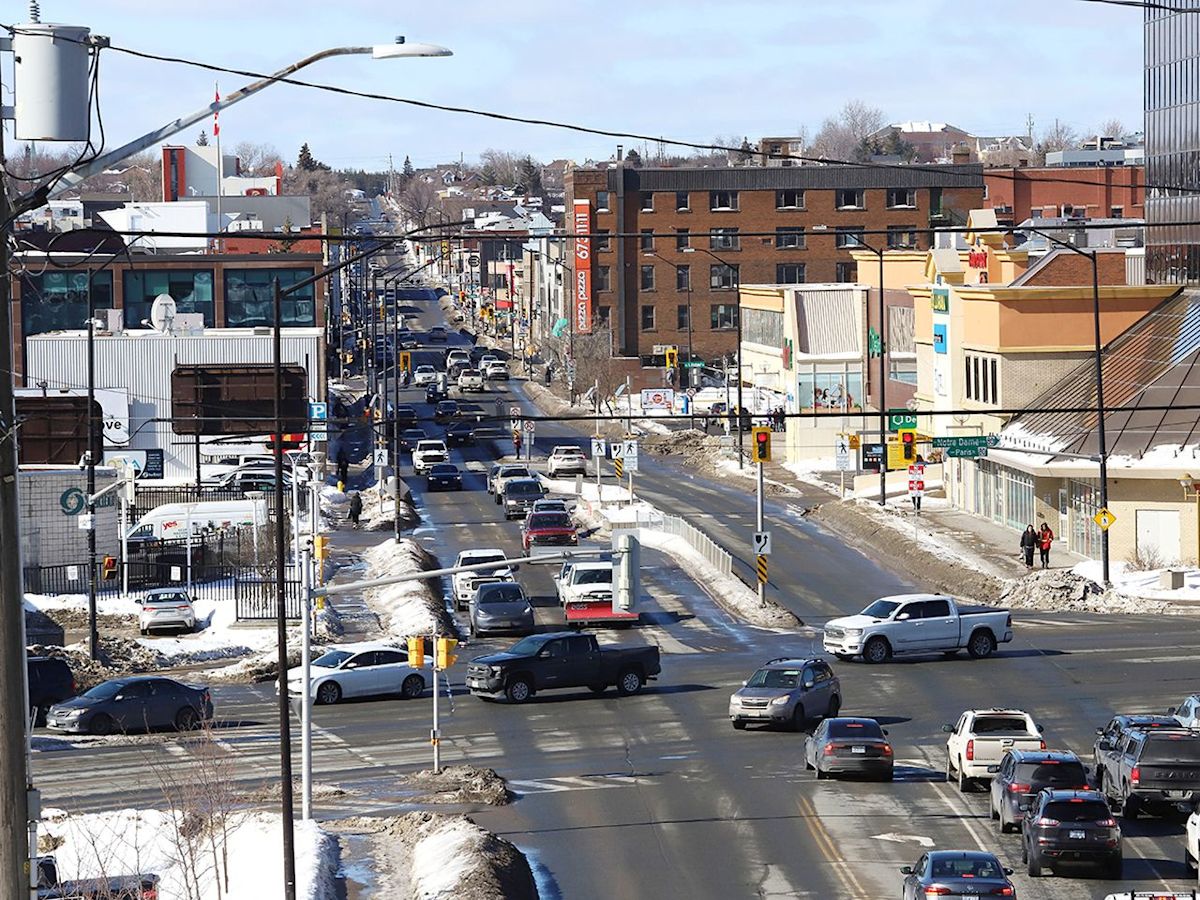
Sudbury is not a pit stop with a gift shop. It is Ontario's largest city by land area — more than 3,200 square kilometres of Canadian Shield, lakes and rural road. Mike Harris-era amalgamation in 2001 glued seven municipalities into one; people live from one edge to the other. "We have roads going everywhere," Lefebvre says, "rural roads that are very costly to maintain."
A few weeks ago Doug Ford was on site at Glencore's Craig Mine for first access to ore at the Onaping Depth project. To get that ore to the smelter, Lefebvre says, the trucks run about 70 kilometres, all of it on municipal pavement. Nine operating mines, more coming, two smelters — the whole circuit lies inside city limits. "This does not exist anywhere else in the world," he says, meaning both mining and processing inside a 50-kilometre radius.
Ontario's mining tax is 10 per cent of profit on non-remote mines and five per cent on remote ones. Sudbury's camp is not remote so companies pay the higher rate. That revenue does not land at Sudbury's Tom Davies Square; it goes to Toronto's Queen's Park. Corporate income tax goes to Ottawa. The city is left with property tax on the assessable surface land and buildings — to support a road network built for a national supply chain.
Lefebvre will not join the bar-stool chorus that the mining companies should simply be shaken down. "Mines are paying their taxes and their royalties," he says. The frustration is aimed at the split of revenues. "Help us help the province grow this," he tells me. "We're pro-mining here." He even likes Carney's new capital-cost break. He just cannot pave 3,600 lane-kilometres with applause.
Trying to squeeze more from the assessment roll has already failed. After the last big Municipal Property Assessment Corp. review a decade ago, the value of assessed mining properties in Sudbury was cut by about 47 per cent. The city spent years at the Assessment Review Board and lost in 2025. There is a provincial consolation prize; the Ontario Community Infrastructure Fund is real money for small, rural and northern places. The funding available to a community is also capped at $10 million.
This startles me; I still think of Sudbury as the poster child for Big Nickel. In the last world war, International Nickel and the Sudbury workforce supplied on the order of 95 per cent of Allied nickel. In February 1942, C.D. Howe told Sudbury nickel workers that if production there stopped, "the whole character of the war will be changed." In the early 1960s, the same city put up a ring of civil-defence sirens and sent kids under their desks at school. We are happy to call the place strategic; we are less eager to pay for the roads that still move the metal.
Lefebvre is not a naïf about the partisan map. He was a two-term Liberal MP under Justin Trudeau. Progressive Conservative Premier Doug Ford heads the provincial government and two NDP MPPs hold the local ridings in Sudbury. Lefebvre is running for re-election as mayor on Oct. 26. "My job as mayor is to develop good relations with the province," he says, "and I've done that."
The ask on the table is to designate Greater Sudbury as a special economic zone (SEZ) and park some of the mining-tax stream where the trucks actually roll. There's an important distinction: Ontario's new SEZ law is a permitting tool; it does not, by itself, redirect royalties. That part is still a negotiation, the mayor explains.
Lefebvre encourages Indigenous participation in the mining sector, and has taken his pitch to the chiefs of the two First Nations whose communities sit in and around the city. "They were shocked when I told them, 'No, no, no. We don't get direct benefits,'" from the province or the companies.
Operating Sudbury mines and smelters did not turn up among the named Investment Summit files. Yet Lefebvre is not wounded: Vale is Brazilian, with a Saudi slice; Glencore is Swiss; KGHM, working the Victoria Mine, is Polish and state-tied. "Why would they be on the list when they can fund themselves?" he posits.
The local name he wants noticed — for investment — is Magna Mining, a Canadian outfit bringing old mines back with people who used to work them. Frontier Lithium, on the Carney prospectus, is Sudbury-headquartered; the deposit is in the northwest of the province.
For a country that has spent a year talking about nickel as a weapon in an economic war with Washington, Lefebvre's take on America is almost unfashionably calm. The only operating U.S. nickel mine, he says, is in Michigan. The ore is milled there; the concentrate still comes to Sudbury to be smelted. Sudbury metal has fed American armour and aerospace alloys since before the last world war. "It's a strong partnership," he muses. "I think sometimes we forget that."
The summit will produce communiqués. Those ore trucks will still chew up the roads. Sudbury has to find money for that; for the homelessness and addiction that have hit the North, hard; and for everything else.
If Canada wants the minerals, it can decide whether the city that already has the mines, the smelters and the muscle memory is a partner — or just the struggling host city that keeps the roads open while the resource revenue leaves town.
'Serious' critique of Carney is what loyalty to Canada looks like, Tory critic says
Alberta thinks it has a health care fix. Ottawa, as always, is skeptical
Our website is the place for the latest breaking news, exclusive scoops, longreads and provocative commentary. Please bookmark nationalpost.com and sign up for our newsletters here.
Related Stories
 Canada
Italy to ban veils in schools, limit foreign students per class, Meloni says
20 minutes ago
 Canada
Billionaires abound in California. Why not tax their wealth?
20 minutes ago
 Canada
Carney heading to Saint-Pierre-et
21 minutes ago
 Canada
Carney in Saint-Pierre-et
21 minutes ago
 Canada
CTV News in the Arctic: The pilot, the icebreaker and the polar bears
21 minutes ago
 Canada
Denmark says Greenland sovereignty safe under Trump’s deal
1 hour ago
 Canada
U.S.
1 hour ago
 Canada
After disease ripped through bat populations, people are starting to see them again. Here’s why.
1 hour ago