
The human touch in an AI
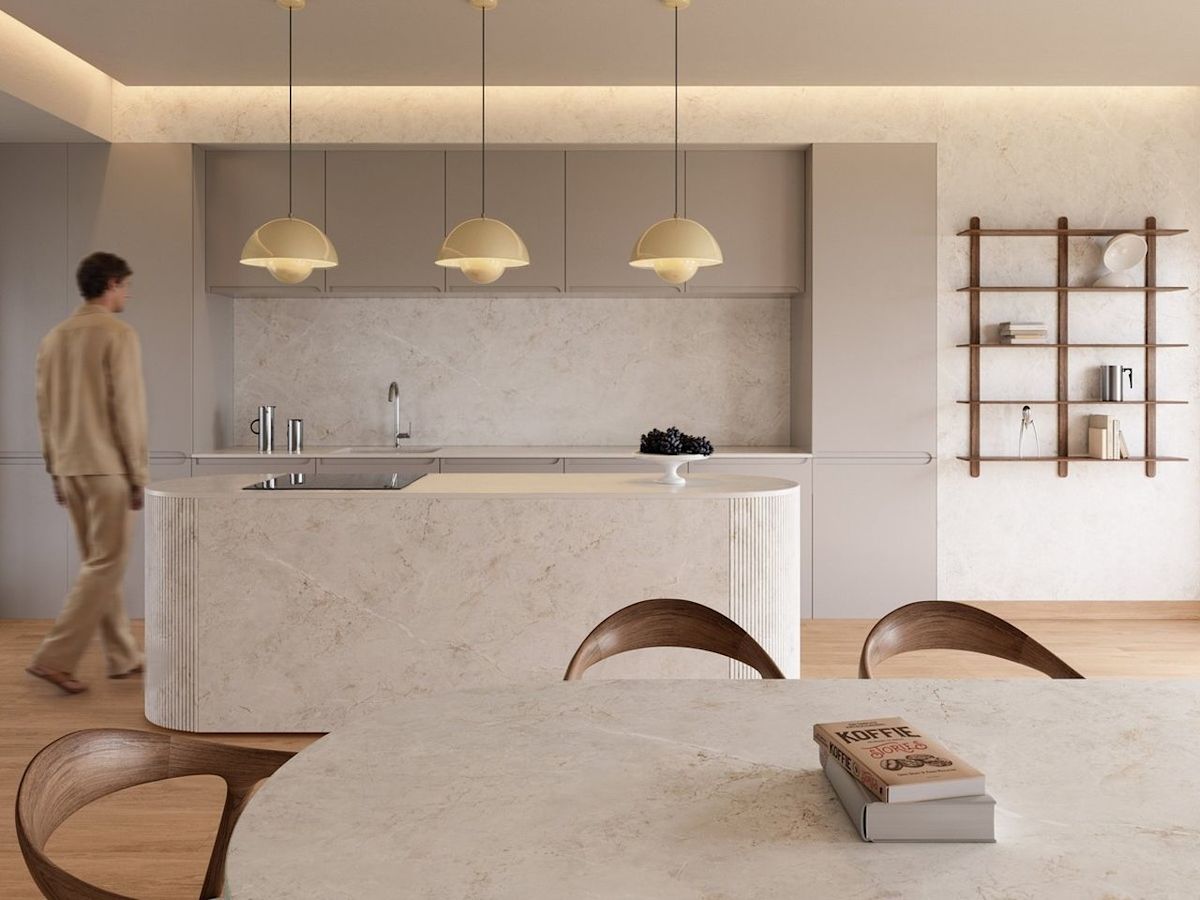
Artificial intelligence is speeding up the design process, helping clients visualize spaces and giving professionals more ways to experiment. But it needs to work in tandem with human judgment, experience and an understanding of what can actually be built.
Julia Yudova, general manager at Cosentino Vancouver, says AI is compressing the design process and making experimentation easier.
"AI is making design more iterative and much faster. At Cosentino, what might have taken four or five iterations can sometimes happen in one. The opportunity is to explore more possibilities, the challenge is making sure efficiency never comes at the expense of originality. AI should expand creativity, not standardize it," she says.
That distinction — between generating possibilities and making good design decisions — runs through the industry's adoption of AI.
Yudova says designers are increasingly treating the technology as another tool in the creative process rather than something that replaces them.
"We're seeing AI become more of a creative partner than a replacement. It can challenge an initial idea with new directions and combinations, but designers still bring the judgment, understanding the client, the space, the material and what will actually work."
Reisa Pollard of Beyond Beige sees the same shift. She says AI is already accelerating concept development, letting designers explore ideas and present several directions before committing substantial time to detailed drawings or sourcing.
It is also changing the client relationship. People who have difficulty visualizing a finished room can respond to images much earlier, she says.
Pollard says the apparent realism of AI-generated work can be misleading.
"AI can create something that looks convincing without necessarily being accurate, buildable or appropriate for the client. A beautiful image is not the same thing as a well-designed space. It may ignore building codes, budgets, material limitations and the realities of construction," she says.
AI learns from what already exists, so if it's used without a strong point of view and direction, it produces attractive but generic rooms. The designer's taste, experience and ability to understand the person behind the project become even more important, says Pollard.
"They're different, but complementary. Prefabrication brings precision to how something is made. AI brings intelligence and speed to how we design and decide what to make. The real opportunity is connecting those two worlds," says Yudova.
Neither approach has to result in cookie-cutter design, says Pollard. Prefabricated components can still be used in highly customized architecture, while AI can support a deeply personal interior.
"The determining factor is the creativity and judgment of the person using the tool," she says.
The technology is also moving beyond image generation.
At Cosentino, Yudova says AI is being used to accelerate materials research and reduce repetitive work in sales and customer service.
"AI isn't just changing what we design, it's changing how we work. The biggest impact may be freeing people to spend more time on creativity, research and higher-value decisions," she says.
Beyond Beige is finding similar uses behind the scenes. AI can help organize information, summarize discussions, develop preliminary written content, improve internal systems and provide a starting point for research or brainstorming, says Pollard.
But she stresses that the technology remains an assistant, not an authority. Its output needs review and fact-checking, and firms also need to consider privacy before entering client or project information into an AI platform.
The speed of technology is creating a new challenge, says Pollard. And it's to do with expectations. Clients may come to expect unlimited options and instant revisions simply because AI can generate them.
"The challenge for designers will be to use that speed to create clarity rather than simply creating more noise."
Studio Roslyn's duelling hues may seem jarring, but they make total sense
Why Monos' Vancouver HQ doesn't look like an office
Related Stories
 AI News
AMD agrees to buy World Labs to fill out its AI stack
19 minutes ago
 AI News
Trump says he and tech leaders signed AI agreement that is 'morally binding'
19 minutes ago
 AI News
United States
19 minutes ago
 AI News
Trump touts self
19 minutes ago
 AI News
Trump signs executive order to launch AI
1 hour ago
 AI News
Trump vows to never 'stifle' AI as he gathers with tech executives urging caution
1 hour ago
 AI News
Ex
1 hour ago
 AI News
As AI fears ‘spread’, Donald Trump to meet CEOs of Meta, Google, Nvidia, Anthropic and other tech compani
1 hour ago