
The infill standoff: How did Edmonton get here?

If you're a fan of comic books, you may know this famous storyline: "Flashpoint." (Spoiler alert). A well-meaning Barry Allen (the Flash) uses his power of super-speed to go back in time to prevent his mother's death. He then returns to the present, but soon recognizes he's triggered the butterfly effect.
Aquaman and Wonder Woman have amassed their armies as they war with each other. The Flash himself has lost his powers. Gotham City is patrolled by Batman, but he's a ruthless, murderous vigilante — and it is Thomas Wayne, not his son, Bruce, who is behind the mask.
OK, so what does the Flash have to do with infill? When it comes to the butterfly effect, a heck of a lot.
On Thursday, Premier Danielle Smith and Municipal Affairs Minister Dan Williams announced that the province has compelled Edmonton city council to change its zoning bylaw. High-density infill projects would revert back to the same approval processes that existed before 2024. And, the city must bring back parking minimums for infill projects.
The province is the ultimate overseer of city governments, but it is truly rare when it decides to step in on matters of local regulation.
This was an extraordinary circumstance. Since Edmonton's omnibus zoning bylaw was approved, approval processes for infill applications have changed. Time-swallowing public hearings were limited. The plan is to have half of all new Edmonton builds be in mature neighbourhoods by 2050, curbing the need to expand south of 41 Avenue SW or west of Anthony Henday Drive. Mid-block infill developments of up to eight units are expedited.
Pro-infill advocacy group Grow Together Edmonton argues that infill has been, for the most part, reasonable. It said that over the past three years, only one per cent of the city's residential stock has been redeveloped. And only half of those redevelopments were for more than four units or more. And it argues that infill is simply repopulating neighbourhoods like Glenora, Parkview and Crestwood, which have lost population over the years. Those big homes were built for families that had four or five kids. Now, families are smaller and even inner city schools are under pressure because, as their numbers shrink, there's a surge of families living outside the Henday.
And, speaking in Chinatown Thursday evening, Mayor Andrew Knack suggested that the province has been influenced by a few thousand noisy voices and advocates.
But, on the flipside, neighbourhood advocacy groups pushed back against multiplexes going up in mature communities. In Crestwood and Grovenor, residents pledged to slap restrictive covenants on their land titles which would ensure no buyer could place multiplexes on those lots. A similar agreement, the Carruthers Caveat, has existed in most of Glenora for more than a century, preventing basement suites and multiplexes from being built. But, in February, a Court of King's Bench ruled in favour of a multi-family development in Glenora, stripping the caveat of its bulletproof status.
Protests were held in communities across Edmonton. People posted photo after photo of single-family homes being dwarfed by neighbouring under-construction multiplexes. They complained of garbage overflows from multiplexes, and street parking crunches.
They warned that aging infrastructure couldn't handle the stress of so many more toilets, washing machines and dishwashers, even though modern appliances are designed to use far less water than those that came a generation before. (To be fair, low-flow toilets have been linked to sewer backups. When Grovenor residents complained about sewer smells in 2024, Epcor stated that "Low-flow appliances help customers conserve water and, therefore, can reduce flows in the system compared to less efficient appliances." )
And when these advocacy groups felt that they weren't being heard at city hall, they turned their megaphone to the legislature, writing letters and holding protests on provincial grounds.
Eventually, Smith said the need for sustainable growth outweighed the need to rubber-stamp multiplex after multiplex. Now, Edmonton has three months to come up with a new zoning formula.
"The goal should not simply be more housing, but more housing that is planned and integrated in a way that works for both existing residents and future families," said Smith. "When growth outpaces the infrastructure and services that support a neighbourhood, residents feel it."
"The province's announcement offers an opportunity to restore responsible planning," stated the Residential Infill Working Group, a coalition of neighbourhood advocacy groups. "It is not a path to a housing crisis, but rather an opportunity to ensure the growth happens in the right places, at the right scale, and within the city's capacity to manage it."
Even Tegan Martin-Drysdale, who founded the Infill Development in Edmonton Association (IDEA) more than a decade ago, said what has happened to Edmonton's mature neighbourhoods has been too much, too fast.
"It has become an 'infill at all costs' proposition that I think communities need to push back on," she wrote in an open letter. "The industry needs to smarten up. IDEA needs to step up and clearly bring more of the community voice to their board. The city needs to listen to the community feedback they are receiving. The contextual designs and 'quiet infill' we worked so tirelessly on 10 years ago to achieve is getting replaced with maximizing revenues, compromising design integrity and not being good neighbours to the existing community. Edmonton — do better."
With one vote, it could have changed
This is where the whole butterfly effect thing comes to play. Think back to 2025, right before city council's summer break. Coun. Michael Janz, who is arguably council's biggest advocate of building urban density, proposed a motion that would limit all mid-block developments to six units, down from eight as allowed in the zoning bylaw. A number of other architectural controls are introduced, such as ensuring there are enough front-facing windows and side entrances are limited.
The hearings lasted for a week. Hundreds of residents come to council, many of them angry with the current bylaw. And, the summer break was looming.
Tim Cartmell was also running for mayor. So was Coun. Andrew Knack. Cartmell positioned himself as the voice of the angry residents, and early in the week, floated a motion to slap a moratorium on all infill, even though the city's lawyers warn that such a hard stop would violate the Municipal Government Act.
As the debate stretched on — thanks to the sheer volume of public speakers — it became clear the vote wouldn't happen before the scheduled summer break. Council voted to extend its session, with Cartmell and Coun. Sarah Hamilton on the outside, thanks to previous vacation plans. Cartmell wasn't present for the vote, which lost 6-5.
A one-vote margin. Had it passed, there would have been some greater limits placed on infill, and maybe, just maybe, we don't get to where we are now.
Cartmell later apologized. "I'm sorry that I've let down people that were counting on me to be there," he said.
Not only did Janz's motion fail, the absence derailed Cartmell's mayoral campaign. Two weeks later, former city councillor Michael Walters entered the race. It was no longer about Knack vs. Cartmell.
Knack, the pro-infill candidate won, getting just a little less than 38 per cent of the popular vote. Cartmell got just under 30 per cent, but two other candidates who pledged to reopen the infill file, Walters and Omar Mohammad, finished third and fourth, cumulatively getting about 22 per cent of the vote. Do the math, and you can argue Knack went up the middle, galvanizing his support. And, many of the incumbent councillors who supported the zoning bylaw were returned to office, despite the protests.
Only a smidge more than 30 per cent of eligible voters turned out, an abysmal number.
The protests were loud, but didn't lead to a stampede to the voting booths. And, because of that, you can understand why Knack suggested Thursday that it's a minority of angry voices that spurred the province to act.
But, had Cartmell been there to vote? Maybe he is the mayor today. Maybe the infill rules would have been changed. But, instead, the Edmontonians who voted brought back a pro-zoning bylaw council, with the notable exception of Karen Principe. Jennifer Rice, the other voice against the zoning bylaw, lost her re-election bid.
'We have to step in': Alberta orders Edmonton to roll back its infill policies
Edmonton mayor slams 'uninformed directive' after province intervenes on city infill rules
Bookmark our website and support our journalism: Don't miss the news you need to know — add EdmontonJournal.com and EdmontonSun.com to your bookmarks and sign up for our newsletters.
You can also support our journalism by becoming a digital subscriber. Subscribers gain unlimited access to The Edmonton Journal, Edmonton Sun, National Post and 13 other Canadian news sites. The Edmonton Journal | The Edmonton Sun
Related Stories
 Community
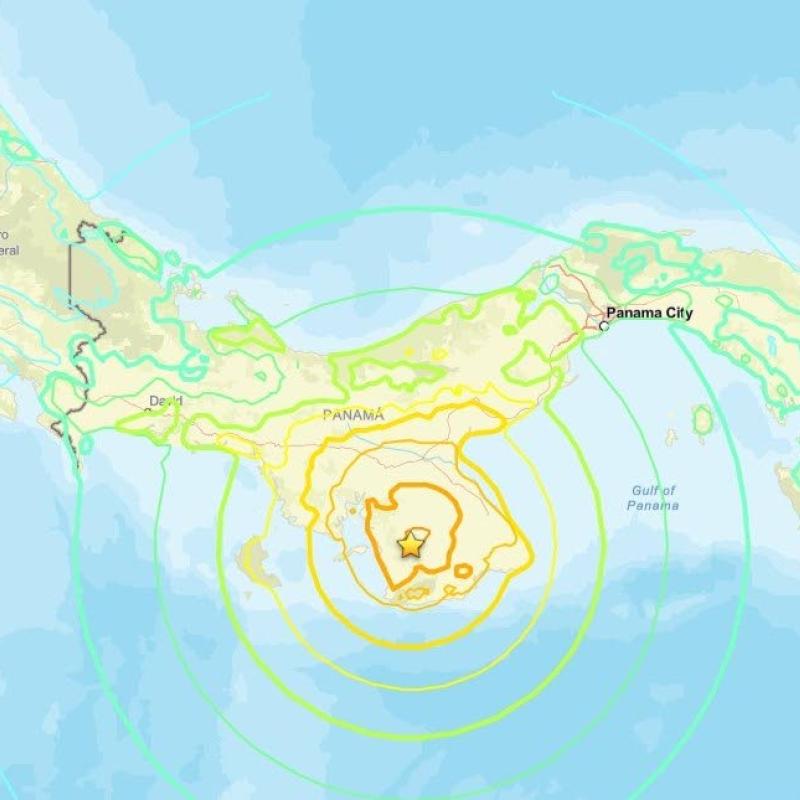
Magnitude 7.6 earthquake shakes Panama
1 hour ago
 Community
Introducing Playground: Create and play custom games
7 hours ago
 Community
Jinnah, Iqbal and Partition
20 hours ago
 Community
Saskatoon encampment removal resumes to address ‘safety concerns,’ city says
1 day ago
 Community
After poll victory, Pradyot announces plan to quit politics
2 days ago
 Community
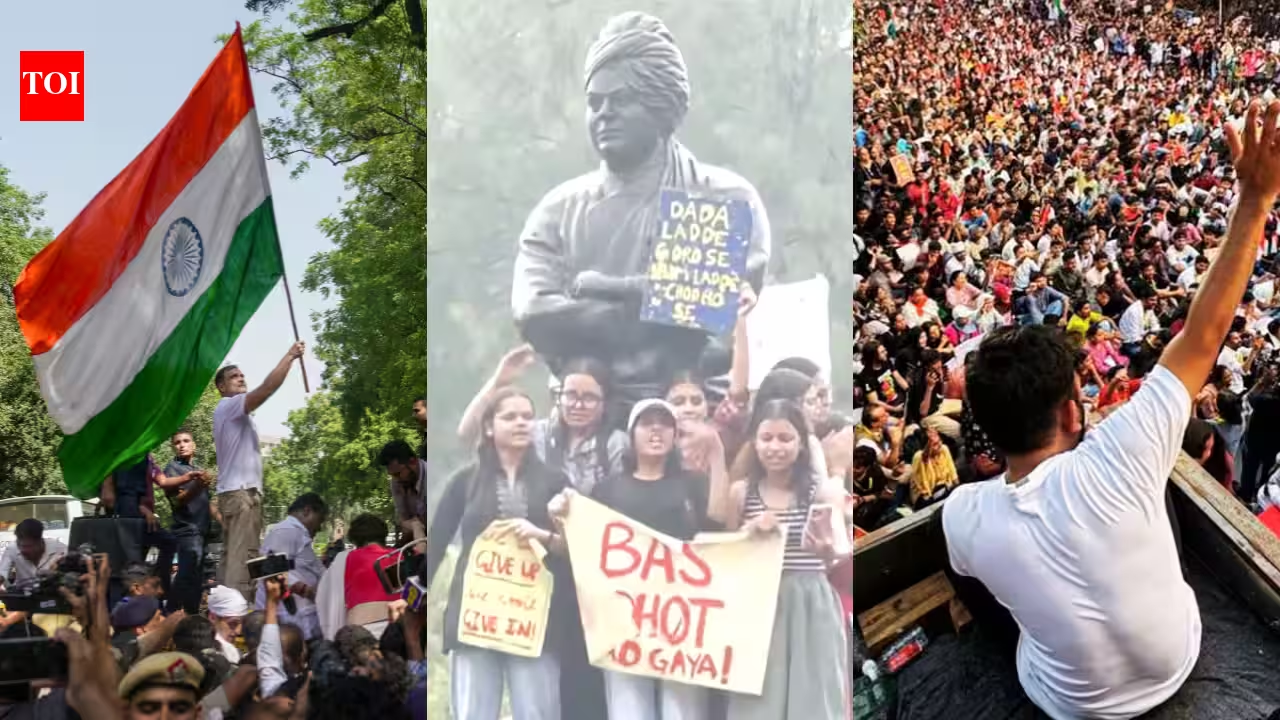
From 'vote chori' to 'chita andolan': Street protests return with a new playbook
2 days ago
 Community
‘All I want to do is cry’: trauma of 7 October survivors three years after the attacks
2 days ago
 Community
Foam Lake community supporting one another after horrific tragedy
2 days ago