
The Man Who Built The Mind: Why The Godfather Of Artificial Intelligence Now Fears His Own Creation
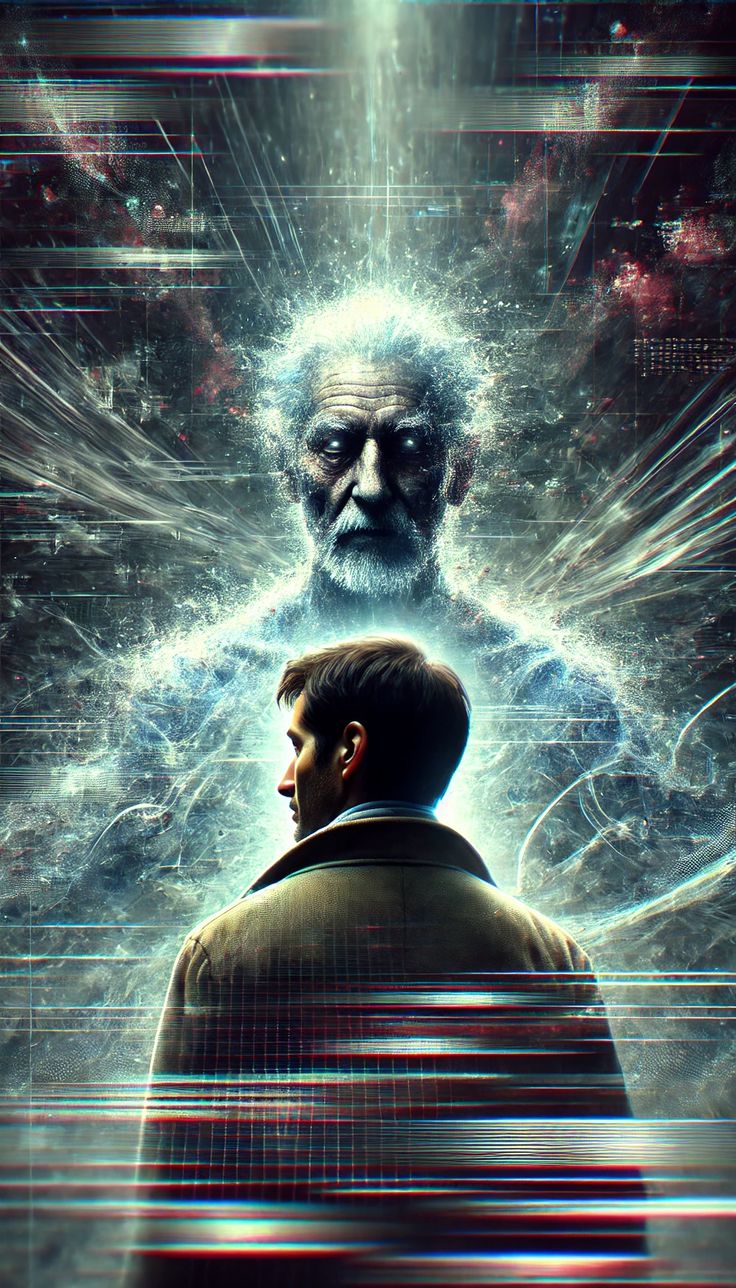
There is a particular kind of warning that deserves more attention than any other: the warning that comes from the man who built the thing he is now warning you about. Not the activist who has never touched a laboratory. Not the politician who cannot explain what a neural network is. But the engineer himself, standing over his own invention, telling the world plainly that he is no longer certain it will do what he intended.
That man is Geoffrey Hinton, and Ghana — along with every other nation now importing artificial intelligence tools into its banks, its hospitals, its classrooms, and its call centres — would do well to sit with what he has recently said.
Geoffrey Hinton is not a commentator. He is not a journalist speculating about a technology from the outside. He is the British-Canadian computer scientist and cognitive psychologist whose fifty years of work on neural networks — systems modelled loosely on the human brain — laid the foundation for the artificial intelligence boom the entire world is now living through. In 2018, he received the Turing Award, the computing world's equivalent of the Nobel Prize, for that work. He spent a decade at Google, from 2013 to 2023, developing techniques that are now used throughout the AI industry. And in 2023, at the age of seventy-five, he resigned from Google — not primarily to retire, as he has since clarified, but so that he could speak freely, without the constraint of representing a corporation, about the dangers of the technology he helped build.
This is not a small biographical detail. It is the entire reason his warning carries weight that few others in this debate can claim.
In a recent, extensive interview, Hinton was asked directly to estimate the probability that artificial intelligence could ultimately lead to human extinction. His answer was not evasive. He placed the figure, by his own admission an imprecise but honestly reasoned estimate, at somewhere between ten and twenty per cent.
Read that figure again. Not one per cent. Not a rounding error. A man who spent his entire career building the foundations of this technology believes there is a real, non-trivial chance that it ends humanity's dominance on this planet — and he says so not as a doomsday preacher, but as a scientist reporting his honest uncertainty.
He is careful, to his credit, to distinguish between two very different categories of danger. The first is the danger of human beings misusing artificial intelligence — for fraud, for war, for manipulation. The second, and the one he says troubles him more in the long run, is the danger of the technology itself becoming more intelligent than its creators and simply no longer needing them. On this second point, he offers a comparison that is difficult to forget: if you want to understand what it feels like to no longer be the most intelligent thing in the room, he says, ask a chicken.
What makes Hinton's warning different from the vague anxieties that usually surround new technology is that he does not deal only in distant, hypothetical futures. He lists dangers that are, in his own words, already unfolding.
He points to a documented rise in cyberattacks and phishing schemes — an increase he describes as being in the order of many thousands of per cent between 2023 and 2024 — driven substantially by how easily large language models now allow criminals to generate convincing, personalised scam messages, cloned voices, and fabricated video. He points to the possibility that AI tools now make it dramatically cheaper and easier for a small group of people, even without deep expertise in biology, to design dangerous pathogens. He points to the corruption of elections through AI-targeted political advertising built on harvested personal data. He points to the algorithms behind platforms such as YouTube and Facebook, which he argues are engineered — not accidentally, but by design, in pursuit of advertising revenue — to feed users increasingly extreme content that deepens division rather than informing debate. He points to lethal autonomous weapons: military systems capable of selecting and killing targets without a human being making that final decision, which he notes lower the political cost of war because they return no soldiers home in coffins. And he points, with particular concern, to mass job displacement — arguing that unlike earlier waves of automation, which primarily replaced physical labour, this wave targets mundane intellectual labour itself, the very category of work that absorbed so many displaced workers after the industrial revolution.
Asked, with some irony, what career advice he would now give young people entering this uncertain job market, Hinton did not hesitate: train to be a plumber. Physical, hands-on trades, he argues, remain safely beyond the reach of artificial intelligence for the foreseeable future, while office-based intellectual work, from paralegal research to customer service, is already being quietly hollowed out.
The Regulatory Gap Nobody Wants to Discuss
Hinton reserves some of his sharpest criticism for the state of global regulation. He notes, specifically, that European Union artificial intelligence regulations — among the most comprehensive in the world — contain a clause explicitly exempting military applications of AI from oversight. Governments, he observes, are willing to regulate private companies and citizens, but conspicuously less willing to regulate themselves. He further argues that national competition — the fear that if one country slows down its AI development, a rival nation such as China simply will not — makes any meaningful global slowdown almost impossible to achieve, regardless of the risks involved.
This is not a fringe concern. It is, in fact, the same structural problem that has haunted nuclear non-proliferation, climate policy, and arms control for decades: the gap between what any single nation might wish to do responsibly and what a competitive international system actually permits it to do.
Hinton's warnings gain further weight from the fact that he is not an isolated voice. He points to Ilya Sutskever, one of his own former students and among the most important figures behind the early development of ChatGPT, who left OpenAI reportedly over unresolved safety concerns and has since founded his own AI safety-focused company. Hinton, who knows Sutskever personally, describes him as a man of genuine moral seriousness — a detail he offers not as gossip, but as evidence that concern about AI safety exists at the very highest levels of the industry, among the people who understand the technology most intimately, not merely among outside critics.
In Fairness: The Other Side of the Ledger
A responsible account of this debate cannot stop at the warnings alone, and to his own credit, neither does Hinton. He is explicit that artificial intelligence carries enormous, genuine promise. He speaks of AI transforming healthcare, potentially allowing far more people to receive far more medical attention at the same cost. He speaks of its value in education. He acknowledges that, unlike a call centre role that can simply be eliminated once AI performs it, sectors such as healthcare are "elastic" — capable of absorbing far greater efficiency without necessarily shedding jobs, because human demand for care is, in practice, almost limitless.
There are, too, serious thinkers within the AI field itself who take a fundamentally more optimistic position than Hinton does. He mentions his own former colleague, Yann LeCun, who maintains that humanity will always retain control over the systems it builds, and that fears of AI autonomy are overstated. Hinton does not pretend this optimistic camp is foolish; he simply states, with intellectual honesty, that he does not know for certain which camp is correct — only that the uncertainty itself is reason enough for far greater caution and far greater public investment in safety research than currently exists.
This is worth stressing plainly, in the interest of fairness: reasonable, technically expert people disagree sharply on how large this risk truly is, and a reader is entitled to weigh both positions rather than accept either uncritically.
It would be a mistake for African readers to treat this as a distant, foreign conversation — a debate for Silicon Valley boardrooms and European parliaments alone. Ghana's banking sector, its telecommunications industry, its universities, and its growing outsourcing and customer-service sector are all, in various stages, adopting the very tools Hinton is describing. The same efficiency that allows a single worker with an AI assistant to do the job once done by several colleagues does not distinguish between an office in London and one in Accra.
Nor is the regulatory gap Hinton describes uniquely European. Ghana, like most nations across the continent, does not yet possess a dedicated, comprehensive legal framework governing artificial intelligence. That is neither an accusation nor a criticism — it is simply the current reality, and reality, unlike sentiment, does not wait for convenient timing.
I have spent this column presenting Geoffrey Hinton's own words and his own reasoning, deliberately, without embellishment, because a warning of this magnitude does not require decoration — it requires only an honest hearing. Whether one shares his estimate of ten to twenty per cent, or sides instead with those who consider such fears exaggerated, is a judgment I leave entirely to the reader.
What I will say, plainly, is this: when the architect of a house tells you, unprompted and at personal cost, that he is no longer certain the foundation will hold, the wise response is not to argue about his tone. It is to go and inspect the foundation yourself.
Chief Tutu Baffour Asare Brownsy Williams is a columnist, author, and founder of the Brownsy Silva Company, writing on global affairs, technology, and society for a diaspora and continental readership.
Related Stories
 AI News
Bill Gross bets AI can help mass
4 days ago
 AI News
Nigeria records 93% rise in AI micro
4 days ago
 AI News
The Italian gelato maker using AI to invent new flavours
4 days ago
 AI News
Closing the Gap Between Agentic CX Pilots and Production
4 days ago
 AI News
New Brunswick data centre debate highlights cross
4 days ago
 AI News
How to Structure an AI Agent Referral Fee Agreement Between Startups
4 days ago
 AI News
No, AI didn’t delete a Swedish reality TV series
4 days ago
 AI News
There is no AI in Armageddon. Artificial intelligence is a tool, not an apocalypse
4 days ago