
The Nobel prize in chemistry 2026 as it happens
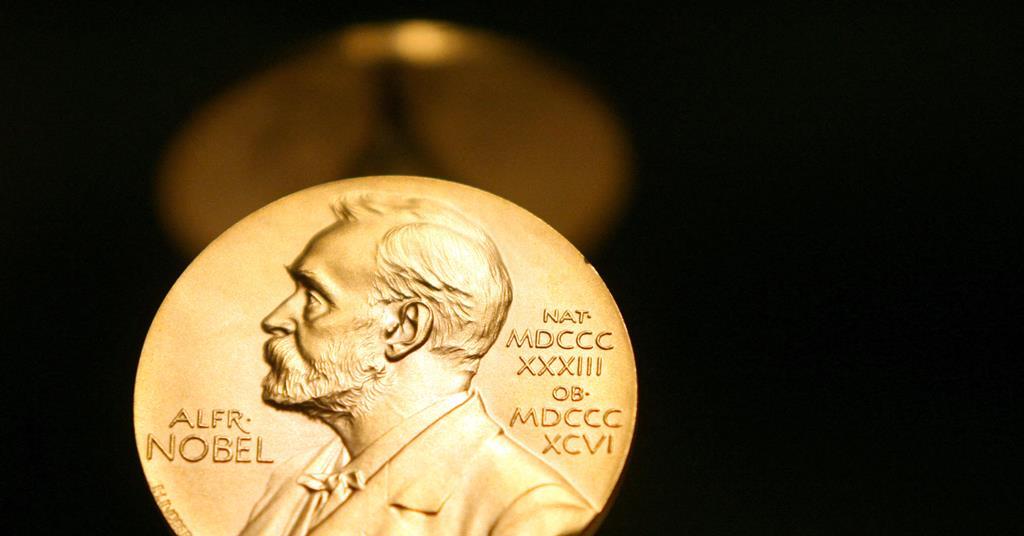
The pair won the prize for ‘the discovery of non-linear effects and autocatalysis in asymmetric organic synthesis’
Following the chemistry prize we always take a look at the winners’ academic family tree. It charts who they were mentored by and who they’ve mentored. Looking at Henri Kagan’s academic family tree he was mentored by Jean Jacques, a French chemist born in 1917. He was in turn mentored by Marcel Delépine – born in 1871 – who like Soai has a reaction named after him. The Delépine reaction is for the synthesis of primary amines.
Kenso Soai is not on the academic family tree yet, unfortunately. It’s a massive project that’s still being built!
11.38am A prize a long time coming?
Henri Kagan is 95 making him one of the oldest science laureates out there. He appears to have been inactive for the last decade or so and has published anything since 2014. Kenso Soai is 75/76 and his last paper came out in 2024, and was on asymmetric autocatalysis but of course. Soai is one of those rare chemists who has secured eternal fame through having a reaction named after him. The Soai reaction is an autocatalytic alkylation that can generate increasing yields of a single enantiomer or mirror image molecule.
11.24am Has this one come out of leftfield?
This one has proven something of a surprise for us at Chemistry World. We can’t remember Kenso Soai or Henri Kagan listed on anyone’s predictions for the chemistry Nobel prize. Neither are citation laureates at Clarivate’s ISI which is often a good predictor of future winners. Henri Kagan has won the Wolf Prize in chemistry – often seen as a good predictor of future Nobel success and the Ryoji Noyori prize too. However, these prizes were both back in the early 2000s and were for asymmetric catalysis, a related field, rather than on this concept of how a chemical reaction can drive homochirality. Kenso Soai has not won any of the prizes that we tend to associate as predictors of future Nobel success, although he did win the Chirality Medal in 2005. Neither of the two new chemistry laureates featured on ChemBark’s pretty comprehensive list of predictions either. The origins of homochirality did not feature as a topic either…
No time to update, so I’m sticking with last year’s Nobel🏅odds. Just ignore the winners ☺️ and decedents 😔. My personal choice would be for DNA synthesis to finally be recognized.
Have a look at our heat map (below) for which prizes are best predictors of going on to win a Nobel prize in chemistry.
11.18am The Nobel prize’s live feed has closed now
Some rather drawn out discussion with Kenso Soai on his favourite molecule that had us groaning in the office(!) brings this live feed to a close. Stick with us as we’ll be publishing a news story on this very soon, providing you with more trivia about today’s worthy winners and an explainer that takes you through the who, what, where and why of solving the puzzle of homochirality that has won today’s chemistry Nobel prize.
Apparently, Henri Kagan could – or should – have been on the 2001 chemistry Nobel prize for asymmetric catalysis. At least that was according to France’s then science minister who wrote to the Nobel committe to complain about the omission of Kagan. The 2001 chemistry prize went to Barry Sharpless, Ryoji Noyori and William Knowles.
It seems Kenso Soai was indulging in a spot of recreational consumerism when he got the call from the Swedish Academy of Sciences. He clearly wasn’t sitting by his phone hoping for that call! Here’s Henri Kagan talking about his career.
11.00am ‘Reshaped our understanding of molecular chirality’
Homochirality – the fact that life favours one handedness of molecules over another – has been a longstanding puzzle in chemistry running for over 100 years and one we’ve covered many times. Louis Pasteur was one of the first to look at this.
10.53am ‘We are all chiral’
Molecules used by all life, such as the amino acids that are building of proteins, are chiral. This means that they exist in two versions, two enantiomers, that are mirror images of one another. Life is highly selective and only works with one, whether it’s sugars or amino acids. The duo offered a possible answer to how the reactions that form these molecules result in a single enantiomer – or homochiral mixture – that would then be used by life.
Source: © Niklas Elmehed/Nobel Prize Outreach
10.49am We have two new chemistry laureates
Henri B. Kagan and Kenso Soai take the prize for their work explaining how a chemical reaction can drive towards the production of just one enantiomer or mirror image of a molecule.
BREAKING NEWS 🎖️ The Royal Swedish Academy of Sciences has decided to award the #NobelPrize in Chemistry 2026 to Henri B. Kagan and Kenso Soai! The laureates have provided a solution to a chemical mystery that is over a century old. 👉 Read more: www.kva.se/en/news/the-nobel-prize-in-chemistry-2026[image or embed]
Looks like they’ve got through to at least one of the next chemistry laureates and they’re almost ready to start with the committee arriving at the press conference. One nanophysicist on the panel. A sign of the next winners, surely?
The live feed has started so we’ll be ready to go shortly it would appear.
Just before we hear who the latest winners are it’s worth remembering and celebrating the lives of four chemistry laureates who have died this year – Rudy Marcus, Louis Brus, Ada Yonath and Hideki Shirakawa. Rudy Marcus may be less familiar to regular readers as he won his Nobel prize way back in 1992 and lived to 102, two weeks short of his 103rd birthday. His seminal contribution was to greatly expand our understanding of electron transfer reactions in chemical systems, the important process that underlies many vital biological functions such as photosynthesis and respiration. Brus won more recently in 2023 for the synthesis of quantum dots that can now be found in displays and used in medical imaging. Yonath, who died in August, was the driving force behind the research that mapped the ribosome in greater detail than ever before (she had an interest in science from an early age and one of her first experiments led to her falling from the balcony of her apartment after trying to measure how heigh the ceiling was!). This work has helped scientists understand how ribosomes manufacture the proteins that fulfil so many roles in our bodies from giving our cells structure to catalysing chemical reactions. Shirakawa’s contribution for which he received Nobel recognition was the discovery and development of conductive polymers. This work led to the formation of a whole new field of polymer science and an industry based around it.
Source: © Alamy Stock Photo and © Getty Images
Louis Brus, Rudy Marcus, Hideki Shirakawa and Ada Yonath (left to right)
10.30am Boranes and bonding 50 years on
Fifty years ago, William Lipscomb (1919–2011) received the 1976 Nobel prize for ‘his studies on the structure of boranes illuminating problems of chemical bonding’. Chiefly, he determined that these compounds shared two electrons among three atoms, now known as three-centre two-electron bonds, which helped explain boranes’ unusual geometry, unexpected dipole moments and how they were apparently electron deficient. Former group member Douglas Rees described Lipscomb as ‘one of the most underappreciated stars of chemistry’, noting the breadth and depth of his contributions.
France Briggs explores how those insights underpin current research on 2D borophene-based materials, borane cage hybrid supramolecular frameworks (a subclass of MOFs) and boron-containing medicines, including compounds designed to combat antibiotic resistance.
Known affectionately as ‘The Colonel’, Lipscomb wore a string tie, and was a regular and enthusiastic participant in the Ig Nobel prize ceremonies.
10.27am We’ll be chatting about the winners on Friday – join us
Join Chemistry World at 3pm BST (4pm UTC) on 9 October for a free webinar exploring this year’s Nobel prize-winning science. Confirmed speakers include members of the Chemistry World team and David Pendlebury, head of research analysis at the Institute for Scientific Information at Clarivate, and we’re currently inviting additional guests. Previous panels have featured former associates of the laureates and even one of the Nobel laureates themselves. Register now to be the first to hear as more speakers are confirmed.
10.24 am Revisiting molecular machines
Ten years ago, Ben Feringa shared the chemistry Nobel prize with Fraser Stoddart and Jean-Pierre Sauvage for the development of molecular machines. Here, he talks to Nature Chemistry about the future of the field 10 years on from that prize, offers advice for early-career chemists and addresses the big challenges the field faces. Despite molecular machines winning the chemistry prize a decade ago, surprisingly scientists still can’t agree on what one is.
Source: © Jonas Ekstromer/AFP/Getty Images
Ben Feringa, who won the 2016 Nobel for his work in supramolecular chemistry and molecular machines
Looks like the Nobel chemistry committee have agreed on the next winners of the Nobel prize in chemistry. Only around 25 minutes to go now!
The decision has been made! ✨ Who do you think our Secretary General Ellen Moons will be calling today? In about an hour, we’ll reveal the 2026 Nobel Prize in Chemistry. Don’t forget to tune in to the live broadcast at 11.45 a.m. CEST at kva.se! 🎬 #NobelPrize @nobelprize.org[image or embed]
The value of the cash prize that comes with the Nobel has varied a lot over the past 125 years. In 1901 the prize amount was 150,782 Swedish kronor (SEK), equivalent to over 8 million SEK (£600,000) in today’s money.
The historical numbers show that the nominal prize amount was not increased during the first and second world wars, which meant the overall value as a percentage of the original amount dropped dramatically because of inflation to 28% and 29%, respectively.
In the 1980s and 1990s the nominal prize amount was increased quite rapidly from 8.8 million SEK in 1980 (34% of the value of 1901 prize amount), to 9 million in 2000 (132% of the value of the 1901 prize amount), reaching 11 million SEK in 2023.
This year the prize amount will be increased again by 1 million SEK to 12 million SEK per prize.
9.58am Nobel prize quick crossword
This year we’ve created a special Nobel-themed quick crossword to keep you busy while we wait for the announcement expected at 11.45 GMT.
9.54am A little extra on buckminsterfullerene
Source: © Neil Withers / Royal Society of Chemistry
More from Neil on yesterday’s #SussexC60Nobel30 event: ‘Suzanne Carville was at school when she watched the 1992 BBC Horizon documentary ‘Molecules with sunglasses’ which told the story of how Kroto, Smalley and Curl discovered buckminsterfullerene and then raced to make it in large enough quantities to properly study. She then wrote to Kroto, asking how she could make C60 in school. Sadly this proved impossible, but he invited her to his labs at Sussex where she made some with Jonathan Hare, carefully taking it home on the train. Carville went on to study chemical physics at Sussex and do a PhD too – she now teaches chemistry and physics and uses the story of C60 to inspire her students.
I also have very fond memories of watching that documentary as a 13-year-old, and I think it is among the reasons I’ve ended up where I am today. The story of the discovery of C60 inspired me and many others, and hopefully today’s Nobel prize will have a similar effect on future generations of scientists.
As we saw below, scientists began moving around the world, particularly post-second world war. With political headwinds turning against immigration with the rise of populism around the world it’s important to highlight that free movement has been a boon for science. An analysis by Nature revealed that more than 30% of this century’s science Nobel prize winners are immigrants. You can see the journeys they took in these data visualisations.
Our features editor Neil Withers went to an event at the University of Sussex yesterday that celebrated the 30th anniversary of the Nobel prize being awarded to Sussex’s Harry Kroto for the discovery of C60. Kroto shared the prize with Bob Curl and Rick Smalley of Rice University in Houston, US. Neil picked up this story while he was there:
‘At the #SussexC60Nobel30 event I spoke to several people who were either in Kroto’s group or in the chemistry department at the time when the prize was announced. One postdoc had even brought in some champagne to keep in the fridge because he had an inkling that the prize might be going to Kroto. The postdoc had checked the Nobel prize’s website that morning, but found nothing about the prize (this was 1996 and well before websites could easily stream live broadcasts). But when he checked after lunch, there it was, so he may have been the first person to tell Kroto he had won the prize!’
Kroto then went to check his answerphone (ask your parents, kids), and sure enough there was a message from the chair of the Nobel committee. The answerphone tape still exists, and you can hear the message on Sussex’s YouTube channel:
Jonathan Hare, who was in Kroto’s team at the time, said that they never used to check the phone messages, as it was usually full of spam messages from double glazing salesmen!
9.38am Mapping where Nobel laureates are born and where they win
This map reveals where chemistry Nobel laureates were born (the red end of a thread) and where they conducted their Nobel-prize winning work (the yellow end of the thread). The drop down menu breaks the chemistry Nobel prize era into periods to enable easier visualisation of trends.
The Nobel prize is an all European award shortly after the awards are set up with all the prize-winning work done there. There is one notable move though, with Ernest Rutherford emigrating from New Zealand to the UK to conduct his prize-winning work on radioactive elements. (Apparently, there is no evidence that the quote most associated with Rutherford that ‘all science is either physics or stamp collecting’ was ever said by him. So it’s likely that winning the chemistry prize wasn’t too hard to swallow for him.)
The chemistry prize was briefly suspended for 1916 and 1917 during the first world war. Fritz Haber was the winner in 1918 for developing his eponymous process that can be used to produce fertilisers. Although perhaps his award could have been delayed or put off indefinitely given his work on chemical weapons for the German military. During this period the chemistry Nobel continued to be dominated by work conducted in European countries. However, there were signs of change in the air with Harold Urey (discoverer of deuterium), Irving Langmuir (surface chemistry) and Theodore William Richards (work on elements’ atomic weights) representing the growing scientific power of the US.
Following the second world war and into the Cold War the US and the USSR jostled for position in the world. Chemistry was a key part of countries’ efforts to develop nuclear weapons and there was a fierce competition between the US and USSR in nuclear science, a period known as the transfermium wars. The Nobel committee rewarded just Edwin Mattison McMillan and Glenn Theodore Seaborg with the 1951 prize for the discovery of transuranium elements. Arguably Soviet scientists could have made a claim to a portion of that prize having discovered some of these elements too. The only Soviet scientist to win a chemistry Nobel during this period was Nikolay Nikolaevich Semenov, who shared the 1956 prize with Cyril Hinshelwood for their work on reaction mechanisms. At this point Europe and the US claim roughly equal numbers of laureates.
This period marks the growth of the US in a true scientific superpower. The direction of travel is only one way, with scientists who went on to win a chemistry Nobel prize emigrating to the US and not coming the other way. While the US only pipped Europe by a four chemistry prizes it marks the first time the US had passed this milestone. This period also throws up a couple of other notable firsts, including the first chemistry prizes to go to Japan and Canada marking their scientific coming of age. The only Soviet scientists that won a chemistry prize were those that left the USSR. One prize winner is notable for his unusual journey to the prize: Luis Leloir left France for Argentina with his parent when he was just two years old. He went on to win the chemistry prize in 1970 ‘for his discovery of sugar nucleotides and their role in the biosynthesis of carbohydrate’ and remains Argentina’s only chemistry laureate (Argentina does boast two medicine prize laureates).
During this brief period the big picture for the chemistry prize is dominated by the US. It’s interesting to see the migration from east coast US to west as institutes there grew in wealth and scientific stature. The longest journey from home to the prize during this time was Alan MacDiarmid who left his native New Zealand in 1950 and ended up performing his groundbreaking research on conductive polymers at the University of Pennsylvania in the US over 8000 miles away. He’s closely followed by Ahmed Zewail, who moved from Egypt to the US where he won the chemistry award in 1999 for his work on ultra-short laser pulse microscopy.
The 21st century sees the US continue to dominate the chemistry prize, with scientists working at its institutes securing more than double the number of awards than all the countries in Europe combined. Despite the rising scientific power of China, which by many measures is now the world’s premier research area, no one working in China has ever won a chemistry Nobel. This isn’t that surprising though as the Nobels are often awarded 20 years or more after the initial groundbreaking work is conducted as the research community and Nobel committee awaken to the potential of these new ideas. It seems highly probable that we will see a chemistry winner in the next decade or so and last year the Institute for Scientific Information (ISI) at Clarivate made Tao Zhang at the Chinese Academy of Science one its citation laureates for his work on single-atom catalysis. As of 2002, 83 of ISI’s citation laureates have gone on to win a Nobel prize in medicine, physics, chemistry and economics.
9.34am How are Nobel laureates chosen?
Despite being one of science’s most prestigious prizes, the process of awarding the Nobel prize is still shrouded in mystery. This year, we’ve taken a look under the bonnet to bring you the lowdown on the nominations process, how long it takes, who gets a vote and how the final decision is made.
9.29am Data crunching and the Nobel prizes
Over the years at Chemistry World we have trawled through a lot of Nobel prize data. We’ve used this to bring you stories on the medals, laureates’ families, the nominations process, which institutes and countries have the most prize winners, does past award success predict future Nobel success and more. We’ve picked a few of our favourites for you and popped them below.
9.25am Who will win – predictions please
Every year there’s plenty of buzz around who might win and no shortage of people prepared to put their reputations on the line to make an educated guess at who might take win chemistry’s top prize. This year, citation laureates selected by the Institute of Scientific Information run by data analytics firm Clarivate include: David Allara from Pennsylvania State University, Ralph Nuzzo from the University of Illinois at Urbana-Campaign and Jacob Sagiv from the Weizmann Institute of Science in Israel. Their work on self-assembled monolayers has led to applications, in coatings, catalysis and electronics. David Liu has also been selected for work on gene-editing technologies (it’s worth remembering that Jennifer Doudna and Emmanuelle Charpentier won the chemistry prize for gene-editing in 2020, so he is unlikely to win any time soon in my opinion). The final ISI pick for chemistry this year was Harry Gray and Jay Winkler from the California Institute of Technology for their work on electron transfer in proteins, something important in a range of biological processes. Several of the physics and medicine citation laureates are also chemistry adjacent working in fields such as phosphorescent organic light-emitting diodes and magnetoelectric multiferroics.
Source: © Emmi Korhonen/Lehtikuva/AFP/Getty Images
David Klenerman and Shankar Balasubramanian are favourites to win a chemistry Nobel prize for their work on next-generation sequencing
In a special episode of The Chemical Breakdown podcast, Chemistry World team members discussed who they’d like to take that all-important phone call from Stockholm.
Features editor Neil Withers wants to see Harry Gray recognised for his work on electron transfer in proteins, while senior science correspondent Jamie Durrani wonders whether Kevan Shokat’s work on targeting RAS proteins could eventually join the Nobel conversation.
Predictions from across the team include editor Phillip Robinson making the case for the chemistry behind GLP-1 anti-obesity drugs, while Patrick Walter backs Shankar Balasubramanian and David Klenerman for next-generation DNA sequencing. Mason Wakley backs Richard Sarpong, Mark Levin and Bill Morandi for skeletal editing, and Emma Pewsey tips James Collins, Michael Elowitz and Stanislas Leibler for synthetic gene circuits.
Chemical & Engineering News held their annual webinar and an expert panel made their picks for who they thought would win this year. Amy Prieto of Colorado State University chose Harry Gray and Jay Winkler for long-range electron transfer in proteins. She also picked David Allara, Ralph Nuzzo and Jacob Sagiv for self-assembled monolayers, who were also picked as citation laureates.
Ross King at the University of Cambridge and Chaochao Dun at the University at Buffalo both thought next generation DNA sequencing could win, selecting Shankar Balasubramanian and David Klenerman as recipients. King also added in Hagan Bayley at Oxford Nanopore for his pioneering work on nanopore sequencing technologies. Dun also tipped perovskite solar cell inventors Tsutomu Miyasaka, Nam-Gyu Park and Henry Snaith.
David Pendlebury, head of research analysis at the Institute for Scientific Information at Clarivate, who will be joining us for a free webinar after the announcement to provide analysis on the winners, has picked solar cells, DNA sequencing, atom-transfer radical polymerisation, single-atom catalysis or self-assembled monolayers as topics that he thinks could win this year’s prize.
Every year we take a snapshot of how women have fared in the Nobel prizes. As you can see, women are still significantly underrepresented in the prizes.
This year, Nature has created a quiz to test how well you know these 26 female laureates in the sciences. (Those with sharp eyes will note that there are 27 women who have won in the infographic above but only 26 female laureates in the Nature quiz. This is because one woman won a Nobel prize twice in two categories.)
9.01am The chemistry Nobel prize in numbers
Every year we look at the statistics for the chemistry prize. So far, 117 chemistry prizes have been awarded since 1901 – the eagle-eyed among you will have noticed that if one prize is awarded every year then that should be 124 prizes in all. However, the prize wasn’t awarded on eight occasions – six of those were due to world wars and another was awarded a year late and on the last occasion the committee considered that no breakthrough of suitable significance had been made. That was the case in 1924, which was the year no-one won the Nobel prize in chemistry. Since 1943 there’s been an unbroken run of prize giving, which is set to continue this year.
Of those 117 chemistry prizes, 63 have been given to just one person, 25 to two laureates and 29 shared by three laureates. It’s now rare for a single scientist to win the chemistry prize and the last to do so was Dan Shechtman in 2011 for his work on quasicrystals – crystals that display short range order, but longer-range disorder. (Shechtman’s discovery was not accepted by some chemists at the time with chemistry giant Linus Pauling labelling him a quasi-scientist.)
Out of the 200 individuals awarded a chemistry Nobel prize, two have won it twice: Barry Sharpless for asymmetric epoxidation and click chemistry, and Frederick Sanger for sequencing insulin and developing the technology that enabled DNA sequencing.
Source: © Jonathan Nackstrand/AFP/Getty Images
At 97, John Goodenough was the oldest winner of any science Nobel prize
The youngest person to ever win a chemistry prize was Frédéric Joliot, who was 35 years old when he won it with his wife Irene Joliot-Curie for their work on radioactive elements. The oldest was John Goodenough, who was 97 years old when he won the prize for work on lithium-ion batteries – he is the oldest Nobel laureate in any category. Goodenough was still active in research up until his death at 100, a month short of his 101st birthday.
Of the 200 individuals who have won a chemistry Nobel prize, only eight have been women. The last was Carolyn Bertozzi, who won in 2022 for her research on biorthogonal chemistry.
While we wait for the announcement, the Nobel Prize Foundation has created a quick quiz that covers all aspects of the awards.
Andy Brunning at Compound Interest creates great graphics every year of the winners of the chemistry Nobel prize. Here are the last four years worth.
This year's #NobelPrize in Chemistry will be awarded tomorrow 🏅 Here's a reminder of the research that has won in previous years, including molecular sponges, the prediction of protein structures, and clicking together new medicine molecules: www.compoundchem.com/category/nob... #ChemSky 🧪[image or embed]
Now that you’ve refreshed your memory of last year’s chemistry Nobel prize, dive into this long read on a growing corner of MOF research: multivariate MOFs (MTV-MOFs). These materials combine multiple organic ligands and different metal nodes within a single framework; unlike the more uniform MOFs most chemists are familiar with.
Mason Wakley spoke to several researchers, including chemistry Nobel laureate Omar Yaghi, encouraging the community to embrace complexity. ‘A lot of people shy away from it, but I think it’s a big opportunity to transform our chemistry,’ Yaghi told Chemistry World.
The appeal of MTV-MOFs is not complexity for the sake of it. Researchers are trying to emulate the controlled complexity found in biological systems, where many different components work together to produce sophisticated functions.
That same complexity, however, creates a whole host of challenges, not least accurately characterising such materials.
A quick recap, if you need one, that last year’s chemistry Nobel prize was won by Susumu Kitagawa, Omar Yaghi and Richard Robson for the discovery and development of metal–organic frameworks (MOFs).
Source: © Christine Olsson/TT News Agency/AFP/Getty Images
Susumu Kitagawa, Omar Yaghi and Richard Robson (left to right)
We caught up with Kitagawa earlier this year, when he told us about his vision of providing virtually all of the chemical resources humanity needs by mining ‘the invisible gold’ all around us – air. We followed that up with a more personal interview where he told us about the importance of ‘luck, stubbornness and perseverance’ in science. To emphasise the importance of those last two, Kitagawa told The Japan News that criticism of his groundbreaking 1997 paper on 3D metal–organic frameworks was ‘devastating’ and left him almost in tears.
Source: © JIJI Press/AFP/Getty Images
Susumu Kitagawa won the 2025 chemistry Nobel prize for his work developing stable 3D MOF structures
8.31am Who’s won so far in 2026?
On Monday the medicine or physiology prize winners were announced. Karl Deisseroth at Stanford University, US, Peter Hegemann at Humboldt University of Berlin, Germany, and Georg Nagel at the University of Würzburg, Germany, won for ‘their discoveries concerning light-gated ion channels and optogenetics’. Their work coupling light-activated proteins with nerve cells has allowed researchers to investigate which behaviours are linked to firing of different neurons, revolutionising the study of neuroscience. This means complex behaviours such as anxiety, fear and thirst and can now be understood in greater molecular and cellular detail than ever before.
Source: © Nobel Prize Outreach/Niklas Elmehed
Karl Deisseroth, Peter Hegemann and Georg Nagel (left to right) won the medicine prize for their work on optogenetics
And on Tuesday, the winner of the physics Nobel was Francis Halzen for coming up with the idea of using a huge piece of ice beneath Antarctica to spot high-energy neutrinos being produced by exceptionally violent cosmic events. His work helped kickstart a new era of neutrino astronomy that could help us understand more about the most extreme events in the universe.
Francis Halzen won the physics prize for coming up with the concept of a neutrino detector based around a cubic kilometre of ice
8.25am: Welcome to Chemistry World’s coverage of the Nobel prize in chemistry as it happens
Good morning and thanks for joining us for the most eagerly anticipated annual event in the chemistry calendar – the Nobel prize in chemistry. I will be your guide to all the news and events in the run up to the announcement of the prize at 11.45 CEST/UTC (10.45 BST), barring any issues getting hold of the new laureates. We’ll be posting on X and Bluesky and you can find us on Facebook and LinkedIn too and me at PatDWalter. You can watch the prize announcement live on the Nobel Foundation site (cameras usually turn on around 11.40 CEST/10.40 BST). We hope you’ll stay with us too over the next couple of hours in the run-up to the announcement as we’ll be posting some analysis on the chemistry prize, look at who’s tipped to win and some Nobel trivia.
Following the prize announcement, we’ll also be hosting a free webinar on Friday afternoon (15.00 BST). We’ll be joined by special guests, including David Pendlebury from the Institute for Scientific Information at Clarivate, to talk about the research that won the chemistry prize this year and why it was rewarded with a Nobel nod.
If you’ve ever struggled with chemistry at school or failed an exam there’s still hope for you. Thomas Lindahl, who won the chemistry Nobel in 2015 for his work elucidating how the body repairs DNA, was failed by his chemistry teacher.
Carolyn Bertozzi, who won in 2022, had a similar experience to Lindahl.
”I did not think about chemistry. In high school I did not like chemistry. In the United States, when you tell someone you are a chemist like half of the time the response you get is ’Oh, I hated chemistry in high school.’ This is a common response in the United States and it is a common joke between chemists that everybody hated chemistry in high school. But I actually did hate chemistry in high school. I really didn’t think about it until college and then I discovered it accidentally, really.” When students in Stockholm, Sweden, asked chemistry laureate Carolyn Bertozzi about her scientific path, she admitted that she did not like chemistry at first. Today she is a chemist who took click chemistry into living cells. She developed bioorthogonal reactions which take place inside living organisms without disrupting the normal chemistry of the cell. These reactions are now used to explore cells, track biological processes, and improve the targeting of cancer pharmaceuticals. For this she was awarded the 2022 chemistry prize. Read more: https://t.co/FhLGOU3Awk
Chemistry Nobel laureate wants humanity to focus on mining ‘invisible gold’ all around us
Polymer sponge could save stars of the silver screen from ‘vinegar syndrome’ destruction
It’s time for consensus on science’s place in government
Related Stories
 World
World
The Latest: Trump doesn’t commit to repaying federal funds already spent on controversial ads
19 minutes ago
 World
World
Israelis mourn anniversary of Oct. 7 attacks as Palestinians grapple with war it sparked
19 minutes ago
 World
World
‘Let ’em take out’ Los Angeles and San Diego, Trump says of Iran
1 hour ago
 World
World
Japan's beer majors raided over cartel allegations | NHK WORLD
1 hour ago
 World
World
World Rugby clarifies law on dangerous tackles
1 hour ago
 World
World
CNN: US, China discussing reciprocal nuclear site visits | NHK WORLD
2 hours ago
 World
World
Events Industry Eyes $2.5 Trillion Future as Live Experiences Surge
2 hours ago
 World
World
ASIA/KAZAKHSTAN
2 hours ago