
‘The Odyssey’ review: Christopher Nolan’s epic palimpsest of destiny and design finds its way home
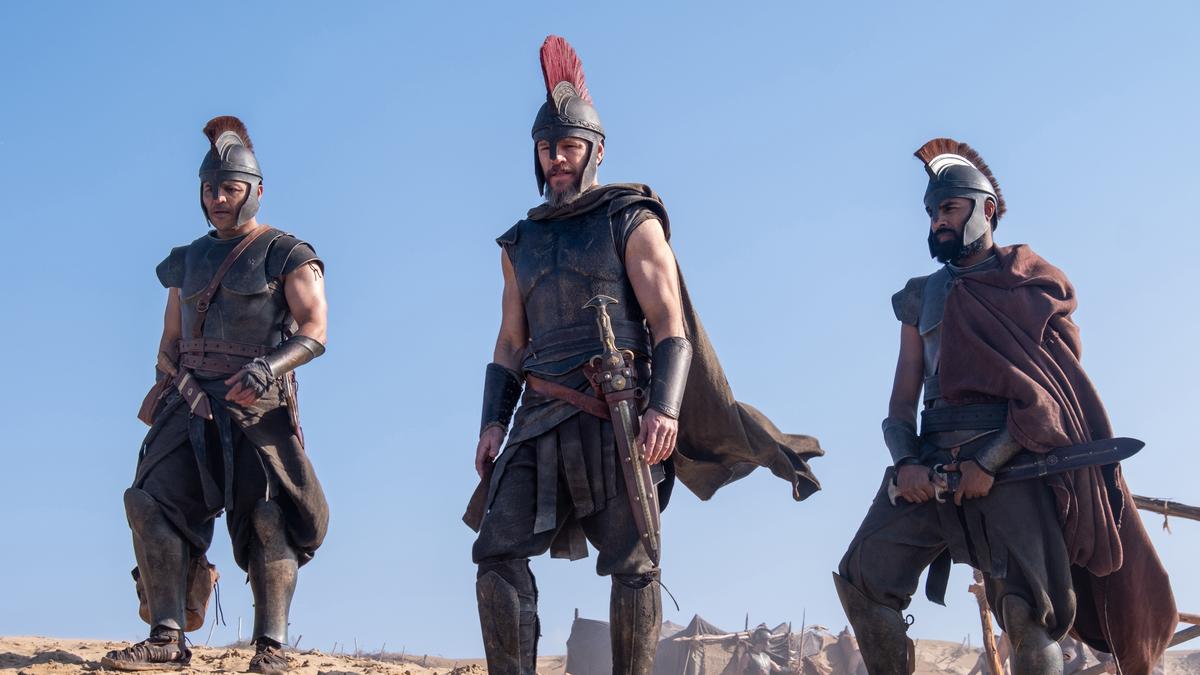
It remains one of literature’s longest-running debates whether Homer was ever a person at all, or simply the accumulated voice of generations of storytellers gradually refining the same epic homecoming across centuries. Three thousand years since their time, one of the most defining storytellers of the modern age has finally found his way to that very tale, bringing with him a film that feels, in every conceivable sense, like the cumulative expression of everything his career has been converging upon. The Fates conspired to bring Christopher Nolan to The Odyssey. Or perhaps it was the other way around. Either way, it is difficult to imagine a filmmaker better equipped to shoulder Homer’s poem into the 21st century.
The acclaimed Academy Award-winner has now reached the rarefied cultural tier where every one of his major motion picture events arrive pre-canonised in the cultural consciousness (nowhere more fervently than in India). But his adaptation of the age-old homecoming epic does something almost perverse for his most loyal bhakts, peeling away much of the conceptual self-regard that has defined most of his work and discovering a version of himself that feels calmer, more reflective and surprisingly modest. It may be his biggest film, yet it also feels like his least interested in reminding you of the fact.
Based on the foundational Greek epic traditionally attributed to Homer, The Odyssey follows the legendary war hero Odysseus on his arduous decade-long voyage home to Ithaca after the Trojan War, as monsters, gods and his own fatal flaws repeatedly frustrate his return. Nolan adapts Emily Wilson’s more digestable translation of the poem with Matt Damon as the wily king of Ithaca, alongside Tom Holland as his son Telemachus, Anne Hathaway as his steadfast wife Penelope, and a sprawling ensemble that includes Zendaya, Lupita Nyong’o, Robert Pattinson, Charlize Theron, Jon Bernthal, Himesh Patel, John Leguizamo and Samantha Morton.
Nolan opens the story at the end of another. Troy has fallen, the victors have long since sailed home, and Odysseus remains marooned somewhere between myth and memory after twenty years away from Ithaca. His return unfolds through a fractured chronicle of terrors, temptations and old sins, while back home Penelope and Telemachus struggle to hold together a kingdom slowly being consumed from within by opportunistic suitors.
Looking back at his filmography, it’s difficult to decide whether The Odyssey represents a departure for Nolan or the oldest film he has ever made. He has spent the better part of three decades making films about men simply trying to get home. Sometimes that journey cuts through fractured memory, sometimes through dreams, black holes, collapsing timelines or history itself, yet it almost always circles the same anxiety that whatever waits at the end may no longer recognise the person returning to it. So the deeper Homer begins infiltrating his adaptation, the harder it becomes to shake the feeling that his filmography has been reverse-engineering this story for years.
A still from ‘The Odyssey’ | Photo Credit: Universal Pictures
The richness of this adaptation is in its double act of translation. Nolan renders the epic startlingly prosaic and his instincts repeatedly tug Homer toward modernity. He domesticates the ancient poem into something emotionally legible for contemporary audiences, though deciding whether that amounts to translation or sanitisation proves considerably more rewarding than litigating fidelity to Homer.
Matt Damon ultimately carries that reinterpretation through one of the strongest performances of his career. Homer’s favourite epithet for the titular hero Odysseus, was polymetis (the man of many wiles), which in hindsight feels custom-built for Damon. Be it Jason Bourne, Tom Ripley, Colin Sullivan, Dr. Mann, or even Will Hunting; he seems drawn to men who survive by cunning and deception, and The Odyssey finally gives that screen persona its patron saint. Nolan exploits that accumulated screen history beautifully, allowing us to project those earlier performances onto an Odysseus whose brilliance repeatedly condemns both himself and everyone unfortunate enough to trust him.
Tom Holland too, benefits enormously from approaching heroism sideways. Freed from the obligations of wearing latex, Holland finally gets to approach the Hero’s Journey from the wings instead of the centre of the stage, which gives him considerably more to chew on.
The Odyssey likewise boasts one of the strongest ensembles Nolan has ever assembled. Himesh Patel and John Leguizamo are some of the film’s revelations, each carving memorable, deeply human performances from roles that exist largely to orbit Odysseus’ legend. But the less said about the now obligatory casting discourse, the better. Discovering a sudden passion for Bronze Age ethnography only when a Black woman is cast as Helen feels disgustingly convenient, particularly in a film where literally nobody is Greek. If anything, Lupita Nyong’o’s Helen has already managed to start a war before the film has even opened, and Homer would probably consider that inspired casting.
A scene-stealing Samantha Morton walks away with the film. Her Circe ranks among the year’s great supporting turns, elevating one of The Odyssey‘s most gruesome episodes into a nightmarish showcase of practical body horror. The fact that Nolan achieves the entire sequence physically only makes it more astonishing. If the long-circulating rumours of Nolan finally making a horror film ever materialise, Circe’s grotesquerie paired with the towering Cyclops Polyphemus, staged like Goya’s Saturn Devouring His Son clawing its way out of the canvas, already feels like an extraordinarily persuasive proof of concept.
That said, Nolan’s familiar blind spots remain stubbornly visible, particularly in women like Anne Hathaway’s Penelope, whose interior lives still struggle against scripts that seem more fascinated by the burdens carried by men. It’s one of the few recurring limitations an artist this far into his career still hasn’t quite outgrown. Even so, the sheer confidence of the filmmaking keeps pulling the film clear of its own shortcomings.
Visually, Nolan remains Nolan. He lavishes incredible attention upon production design, practical engineering, geography, movement and logistical clarity, while individual compositions rarely linger in the imagination with the same force as the ideas animating them. His films still move faster than they look, even as the pacing meanders.
Amidst Scylla, Charybdis, the Sirens, the Laestrygonian giants and even the depths of Hades itself, Nolan’s vision still gravitates toward engineering problems more instinctively than relying on the willing suspension of disbelief that fantasy offers. Fortunately, Hoyte van Hoytema and Ludwig Göransson keep pulling the film back toward sensory exhilaration — the former photographing the Mediterranean with an earthy, almost geological severity that eschews postcard beauty, while the latter produces the most understated score of his career, that slips effortlessly between ancient textures and overwhelming percussion.
The film’s gripping final act, anchored by a previous Trojan Horse sequence that carries the same dreadful inevitability as Oppenheimer‘s Trinity Test, suggests Nolan is still working through many of the same political anxieties. I never agreed with his aggrandised, almost apologist reading of the scientist responsible for a literal nuclear holocaust, and I remain fundamentally unconvinced by his instinct to frame architects of unimaginable violence through the language of personal burden, whether that means the father of the atomic bomb or the man behind history’s most devastating weapon in disguise. Yet, Nolan also feels markedly more reflective here about the repercussions of war on an intimate human scale.
It’s almost radical, finding a blockbuster of this magnitude remain unwilling to narcotise its audience with the lotus flowers of cheap, easy entertainment, but I’m still uncertain whether it’s Nolan’s finest film, or even his most accessible. It is, however, the film that finally explains why the rest of his filmmaking journey looks the way it does. Even if I couldn’t quite bring myself to properly empathise with Odysseus, the craft and the storytelling proved penetrating enough to make me genuinely experience the burden he carries. And so, after years of insisting audiences should stop trying to understand his films and simply feel them, Nolan has finally delivered the most convincing vindication of his own advice.
The Odyssey is currently running in theatres
Related Stories
 Shows & Concerts
Spotify debuts Concerts Near You playlist: How To Add Events
1 hour ago
 Shows & Concerts
Big concerts, fun festivals: 18 Wilmington events for this weekend
1 hour ago
 Shows & Concerts
Rita Deanin Abbey Art Museum Announces Summer Events and New Concert Series
4 hours ago
 Shows & Concerts
Upcoming Concerts in Dubai: The Best Live Events for The End of 2025 and Beyond
11 hours ago
 Shows & Concerts
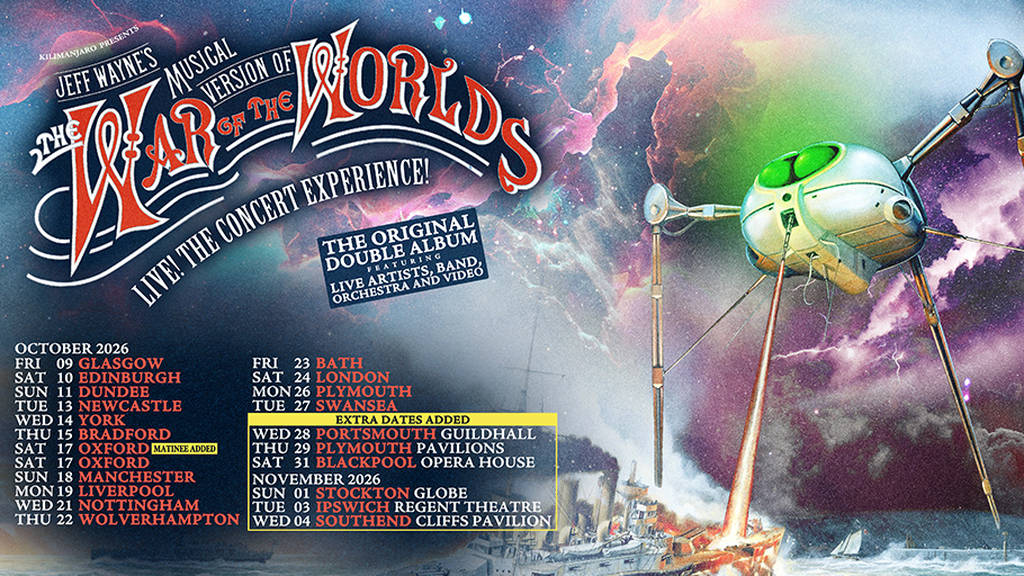
Jeff Wayne’s Musical Version of The War of The Worlds LIVE! The Concert Experience tickets, dates and venues
12 hours ago
 Shows & Concerts
KUTX 98.9 cranks SXSW 2026 to full volume with 35+ performances, nonstop coverage and free public events
1 day ago
 Shows & Concerts
Historic Snowbirds performance in Saint John attracts thousands
3 days ago
 Shows & Concerts
Top 20 Concerts & Live Shows in Houston This Week: August 24 to 30, 2026
5 days ago